The City | The Move
This was the first time I had seen a city, and a fear came creeping over me, drawn from everything I saw that had no place within the quiet borders of the world I had previously inhabited.
Град
Ние бевме родени во мало село и на него и неговата близина беше ограничен нашиот скромен неколкугодишен опит.
Целиот наш свет беше строго заграден со сртовите на Бабуна, Сивеџ, Липа, Златоврв и Сурун. Нашите птици летаа во тој круг и никој од нас и не помислуваше дека тие можат да го наминат. Планините беа и нашата предела спрема небото. Си велевме често како би било да се качиме горе и со остен да го буцаме Господ.
Град
Ние бевме родени во мало село и на него и неговата близина беше ограничен нашиот скромен неколкугодишен опит.
Целиот наш свет беше строго заграден со сртовите на Бабуна, Сивеџ, Липа, Златоврв и Сурун. Нашите птици летаа во тој круг и никој од нас и не помислуваше дека тие можат да го наминат. Планините беа и нашата предела спрема небото. Си велевме често како би било да се качиме горе и со остен да го буцаме Господ.
Но широчината со секој ден подмолно нè потчинуваше. Ние моравме да признаеме дека надвор од нашиот хоризонт се наоѓа градот. По саботите таму одеа и се враќаа пазарџиите и ни донесуваа шеќерчиња, шеќерни петлиња на стапче и симиди или ѓевреци. Што ќе биде, боже, градот?
И тогаш се случи, едно наше другарче, прво од нас, да го види тоа чудо. Ништо не можеевме да разбереме од неговите каживања, само нашето љубопитство се зголемуваше. Нашето другарче ни кажуваше дека во градот имало оптегнати тељови, а на нив стоеле врапчиња. Градските деца ги гаѓале врапчињата со стрели. Ништо не ни беше јасно од тоа. Ние не знаевме што се тоа стрели и не можевме да замислиме какви се тие оптегнати жици.
Но од тоа кажување нарасна нашата нестрпивост да го видиме најпосле тој град. Едно летно попладне, штом тивна горештината, нашиот мал одред тргна по патчето кон Сивец, по сосем самостојно решение, без да му се каже некому. Знаевме дека по тој пат се оди в град.…
Преселба
Тоа лето се разбра дека ние ќе се делиме и ќе одиме в град. Како ги делиле нивјето и имањето, јас не знам, но ја паметам онаа вечер кога ги делеа домашните работи. Тоа стана во онаа просторија што ја викавме дома, каде што е огништето со тланикот и верушките, и каде што заправо се поминува најголем дел од животот во стара селска куќа. На две еднакви купчиња ги клаваа по ред тепсиите, ваганите, лажиците и друго, а потоа фрлаа жрепче. Иако делбата се вршеше при најголемо спокојство, сепак не можеше да се каже дека немање напнатост. Во очите на жените одвреме навреме ќе светнеше некоја зрачка што покажуваше кој дел повеќе ги превлекува.
Трајко овчарот плачеше и ги бришеше јадрите солзи. -“А, бре, Коневци,што ви стана да се делите при оваа убава живот?” –велеше тој, уплашен од неизвесноста што го чека. Беше научен баба Дунавка одвреме навеме да му го наполни тагарчикот со мазник, беше како верен пес прибран во оваа куќа, а сега таа се растура и тој треба да бара друго засолниште.
Најпосле се приближи и денот на селењето. Слушав како некои жени и велеа на мајка ми: Нема да ви биде лесно в град. Блаже ви е разгален и само ќе ви бара да му купувате шеќерлиња. Боца, мојата малку постара од мене другарка, беше жалосна што се одам и што ќе нема со кого да си игра. Но мене ми беше сè едно, мене ме влечеше промената.
Кога нашите воловски коли, натоварени до врвот, кинисаа, веќе се смрачуваше. На една од нив, врз покровите, за нас децата, за мене и моите две сестри, направија постела. Ние набргу заспавме.
Одеднаш нешто ме разбуди длабоко во ноќта. Само што ги отворив очите, ме пречека раскош. Јадри ѕвезди, какви што никогаш дотогаш не сум видел ниту потоа ќе видам, се спуштиле над мене како кичери, така што ми се чини дека можам со рака да ги достигнам. Мојот живот ќе остане во сеќавањето засекогаш засводен од тоа ѕвездено небо, и тогаш кога ќе разберам дека такво нешто се доживува само еднаш.
Од разговорот на луѓето разбрав дека се загреала оска на колата и дека сега ја ладат со вода покрај некое чешмиче.…
The City
We were born in a small village, and our few years’ experience was limited to life within it and its immediate surroundings.
Our whole world was tightly hemmed in by the mountain crests of Babuna, Sivec, Lipa, Zlatovrv, and Surun. Our birds flew around that circle, and none of us thought they could fly beyond it. The mountains also marked the limits of our place beneath the sky. We would often say to ourselves, what would it be like if we were to climb a mountain and poke the Lord with a cattle prod.
But with each passing day, that vastness insidiously oppressed us. We had to acknowledge that beyond our horizons lay the city. On Saturdays, the villagers would go back and forth to the market to sell their goods, and they brought us sweets and candied apples and buns—simits or gevreks. Good Lord, what must this city be?
And then it happened—one of our young friends, the first among us, got to see that wonder. We couldn’t understand anything he was telling us, but our curiosity grew. Our friend told us how in the city there are wires strung tight, and sparrows sit on them. The city kids fired at them with slingshots. None of this made any sense to us. We didn’t know what those slingshots were, and we couldn’t imagine what those stretched wires might be.
But from his story, our impatience grew to see the city at last. One summer afternoon, as soon as the heat of the day had eased, our little band set out along the path toward Sivec, following our independent resolve, without telling anyone. We knew this path led to the city.
We walked along in high spirits, in lively conversation, absolutely delighted that soon we would see with our own eyes something that had so stirred our thoughts.
We were already drawing near the saddle between Sivec and Lipa. From there on down began the unknown. In the distance you could hear the clanging of bells and the lowing of cows. It was nearly sunset, the time when the village animals come down.
Suddenly, in a clearing some dogs were barking, but we had no reason to be afraid, after all, those were our Šaro and Murdžo. We also caught sight of the solid figure of our shepherd, Trajko, with his sack over his shoulder.
“Where to?” he asked us.
“To the city,” we said, barely looking at him, hurrying forward as if we didn’t want to lose a second.
We passed him, but his ominous voice reached our ears:
“Go on, keep going, but over by that hazelnut tree there’s a crouching wolf; his tongue’s out, and he’s waiting for you.”
It felt as though our knees had frozen. We debated a brief moment, then we turned and headed back down to the village. “Heh-heh-heh,” we could hear Trajko chuckling behind us.
We put off our acquaintance with the city for better times.
The Move
That summer it was clear that our family would be separated and we would move to the city. How the fields and property were divided, I don’t know, but I do remember the evening when the household goods were divided. It occurred in the space we called home, by the fireplace, with its hearth and pothooks, where indeed, life was largely spent in an old village house. They were arranging pans, plates, spoons, and other things into two equal piles and then drawing lots. Although the division was carried out amidst great calm, it was not without tension. In the women’s eyes from time to time there would flash a spark that showed which pile appealed to them most.
Trajko, our shepherd, was whimpering and wiping away big tears. “My dear Konevtsi, what happened to make you leave this beautiful life?” he said, frightened by the unknown future that awaited him. He had trained Grandma Dunavka to put a savory pie into his sack every now and then; he was like a loyal dog taken into our home, but now the household was being dismantled, and he would have to find another haven.
At last, the day of our move drew near. I overheard several women telling my mother, “It’s not going to be easy for you in the city. Blaže is spoiled, and he’s going to be begging you to buy him sweets.” Boca, my friend, who was a bit older than me, was sad that I was going, because now she’d have no one to play with. But that was all the same to me; I felt drawn to the change.
When our oxcarts, filled to the brim, set off, it was already growing dark. On top of one of the carts a bed had been arranged for us children, for me and my two sisters. We quickly fell asleep.
All at once, something awakened me deep in the night. When I opened my eyes, an opulence greeted me. Huge stars whose like I had never seen before, nor would see again, were hanging just above me in clusters, and it seemed as though I could reach out my hands and touch them. Мy life would remain forever vaulted in the recollection of that star-studded sky, even after I came to understand that such a thing is experienced only once.
From the others’ conversation, I understood that an axle had overheated and was now being cooled down with water from a small fountain.
It was well into daylight when we entered the city. Good Lord, what is this wonder? This was the first time I had seen a city, and a fear came creeping over me, drawn from everything I saw that had no place within the quiet borders of the world I had previously inhabited.
Overcome with this fear, for several days I didn’t step outside our yard, which was enclosed with a high wall. At last I found the courage to take my first steps into that new world. I would stop at the gate and look at what was happening on our street. Then I would head down to the corner, to discover a whole new grid of similar streets. I would turn back, running as if I were being pursued.
But the day arrived for me to go to school. My mother, just as anxious as I was, saw me as far as the gate, where she handed me my little bag. I began to sob desperately, as if I were being left to the mercy of my fate, and refused to budge.
At that moment, from around our corner, a child in clogs appeared, setting off to school. My mother asked for his help, and he took me by the hand and I set off as well. At school, we sat down on the same bench, and so we remained, inseparable friends. That child, so decisive in my inclusion in city life, is, even to this day, my dear friend Koce Solunski.
In my later life, I have found myself in many situations that alarmed me, and I have had to overcome my fear. I have adapted to huge cities in different countries, asking myself how I would survive. But that encounter with the city of Prilep was my greatest trial, for it was to determine whether I would break or endure. I wonder what torment trees suffer when they are transplanted.
“Град” and “Поселба” from Дневник по многу години. Skopje: Makedonska kniga, 1988.
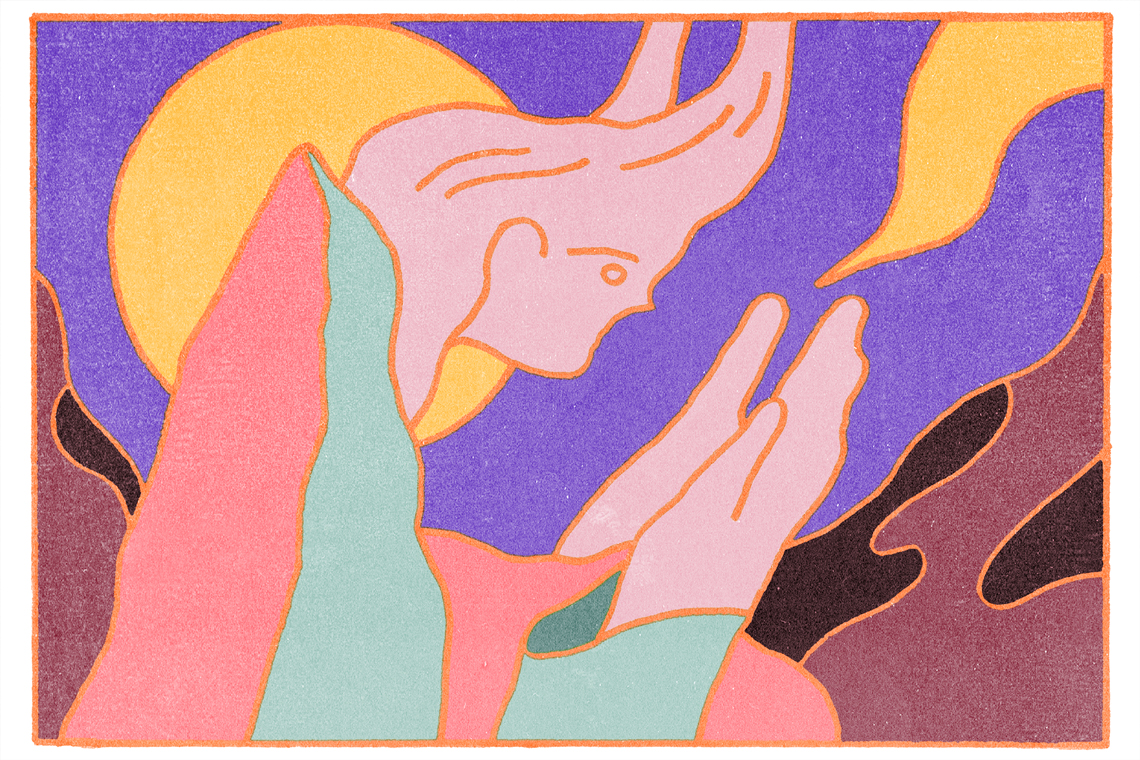
Image by Yusuke Nagaoka.
Blaže Koneski (1921–1993) played a pivotal role in the codification of the modern Macedonian literary language and in the development of modern Macedonian poetry. He was a major figure in linguistics, literature, and literary translation. He was the first president of the Macedonian Academy of Arts and served many roles in the intellectual life of Macedonia. His work is being celebrated in numerous ways this year, 2021, the centennial of his birth.
Christina E. Kramer is a professor of Slavic and Balkan languages and linguistics at the University of Toronto. Kramer is the author of the language textbook Macedonian and co-translator of the novel Bai Ganyo: Incredible Tales of a Modern Bulgarian. She translated Lidija Dimkovska’s A Spare Life (Two Lines Press).