Seven African Classics that aren’t Things Fall Apart
We highlight seven classic novels by African writers for readers of Chinua Achebe’s Things Fall Apart.
When many of us think of African literature, the first thing that comes to mind is Chinua Achebe’s novel Things Fall Apart(opens in a new tab). If you live in the United States, you might have read the novel in high school, and there’s a good chance your kids will also read it in high school. The English-language novel is known as a classic for a reason: the first publication of the Heinemann African Writers Series(opens in a new tab) in 1958, Things Fall Apart has sold over 20 million copies and been translated into over 60 languages.
Still, it’s safe to say that there’s a lot more to African literature than Things Fall Apart. That means there’s plenty more novels to read and enjoy. Below, we’ve collected seven classics of African literature, including several in translation. Read on!

After the excitement of independence, many new African nations experienced the disillusionment of neocolonialism: the leaders had changed, but the structures were the same. The Beautyful Ones Are Not Yet Born is a classic of this Afropessimist genre (both related to and distinct from its American cousin) set in newly independent Ghana. The novel’s central character, an unnamed man, wanders in a constant stench of human refuse, refusing bribes and hosting dinner parties he cannot afford until he climbs through a latrine into a (possibly hopeful) future. Fun fact: The Beautyful Ones Are Not Yet Born has also been translated into Kiswahili as Wema Hawajazaliwa by Abdilatif Abdalla(opens in a new tab).

Originally written in French, So Long a Letter (Une si longue lettre) is an intimate novel of letters between two female friends, Ramatoulaye and Aissatou. Ramatoulaye’s energetic and emotional letters remember the past, contemplate the opportunities available to women in post-independence Senegal, and question whether to leave her husband when he takes a second wife. The novel’s epistolary form is both a thematic and structural relevation, as we readers find ourselves eavesdropping, the third party, on a private conversation between friends.

Season of Migration to the North (موسم الهجرة إلى الشمال) is a nested tale of East-West encounter, an Arabian Nights in reverse. Written in Arabic, the novel begins when a student returns home to his Sudanese village on the Nile from studies abroad. There he meets another returnee, Mustafa Saeed, and records his story over the course of drunken and smoky nights. Educated in the West, Mustafa has a complex relationship with the identity and desires produced in him by colonialism. He works out this conflict through tragically violent encounters that sweep everyone, including the narrator, into their wake.

Ngũgĩ wa Thiong’o wrote in English until 1970, when he changed his name and committed to writing in Gikuyu, his mother tongue. Imprisoned without trial for crimes against the state, he wrote the first Gikuyu novel on prison-provided toilet paper in 1982. Devil on the Cross (Caitaani mũtharaba-Inĩ) begins with a journey of diverse people in a matatu taxi travelling from Nairobi to the rural outskirts for a “Devil’s Feast” of thieves and robbers, an allegory for the postcolonial nation’s journey toward a grim neocolonial future that spirals in unexpected directions.

The 1962 Makerere Conference was the first international conference of African writers on the continent. In addition to Achebe and Ngũgĩ, the Kenyan writer Grace Ogot was one of only two women in attendance. A prolific writer in English and Luo, she read a short story at the conference and four years later published her first novel, The Promised Land. The novel tells the story of a Luo couple from Kenya who emigrate to northern Tanzania. Beneath the flow of its lush description and easy movement rests a deep psychological conflict about land, belonging, and one’s place in the world.

Shaka Zulu? This is his backstory. A mythic fictional retelling of pre-Christian life in Natal, Chaka narrates the rise and fall of the emperor-king Chaka, a heroic leader and empire-builder haunted by ambition. The oldest novel on this list, Chaka was written between 1907 and 1910 in the Sesotho language. Instantly popular in Sesotho as a psychological and supernatural tragedy, the novel was translated into English as early as 1931.

The winner of the 2021 Nobel Prize in Literature, Abdulrazak Gurnah is now on everyone’s reading list. But his 1994 novel Paradise has long been a classic. Often described as “writing back” to Joseph Conrad’s Heart of Darkness, Paradise is the story of an African journey into Africa. Yusuf, a young boy in a coastal town in Tanzania, is sold to a merchant in payment for a debt. He journeys with the merchant into the heart of the continent, as far as the Congo Basin. Yusuf navigates unfamiliar landscapes, people, and animals, only to return to an East Africa made unfamiliar by the arrival of German troops conscripting African soldiers.
Looking for more African literature?
- 2021 was a great year for African writers, who were recognized by a number of top literary prizes.
- Brittle Paper previews 63 works of African literature to look forward to in 2022.(opens in a new tab)
- Curious about all those Things Fall Apart translations? Check out this list of 61 translations(opens in a new tab).
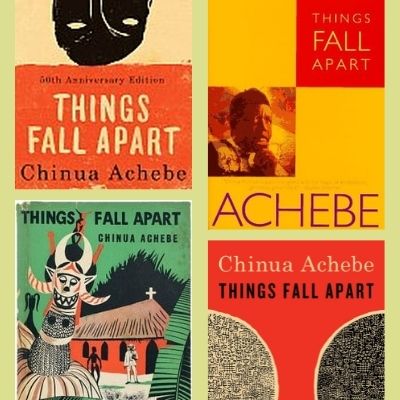
- Things Fall Apart has almost many covers as translations. Bookshy Books gives a historical tour of Things Fall Apart covers here(opens in a new tab) and a deep dive into the covers designed by Cuban-American illustrator and artist Edel Rodriguez here(opens in a new tab).
Kelsey McFaul was part of the editorial staff at Two Lines Press. She has a PhD in literature from UC Santa Cruz with a focus in African language literatures. She first joined Two Lines as a Public Fellow in 2020–21, supporting the creation of No Edges: Swahili Stories.