Blizzard
Mama hadn’t slept for three years.
Śnieżyca
Mama nie spała od trzech lat. Gorzej – w ostatnim roku, w którym udało jej się zasnąć, spała zaledwie dwa tygodnie.
Była ostatnią z wielkich meteopatek i klimatyczek.
Śnieżyca
Mama nie spała od trzech lat. Gorzej – w ostatnim roku, w którym udało jej się zasnąć, spała zaledwie dwa tygodnie.
Była ostatnią z wielkich meteopatek i klimatyczek.
Z tego powodu ciało mamy przenikały ciągłe spazmy i obezwładniające bóle – bolały ją plecy, kark, dłonie, które trzęsły się, tak że wszystko leciało wtedy mamie z rąk. Często dokuczały jej też skurcze stóp, zwłaszcza na deszcz. Musiała przez to chodzić na palcach, jakby się skradała, co nie przysporzyło jej sympatii – w okolicy zaczęła nawet krążyć plotka, że mama coś knuje.
Najczęściej jednak ogarniała ją senność, albo, jak sama to nazywała, czuła „ogólne rozbicie”. Niekiedy „niezdrowe podniecenie”. Zdarzały się też mdłości, migreny i zawroty głowy, te ostatnie najczęściej przed wichurami.
Mama co roku zapadała w sen zimowy. Zasypiała w dniu, kiedy spadł pierwszy śnieg, a budziła się na początku odwilży. Działo się tak, odkąd pamiętałam. Nie wolno było o tym nikomu mówić, zwłaszcza kobietom z urzędu, które czasem przyjeżdżały z miasta.
Miałyśmy też inne, mniejsze sekrety, ale o nich, jeśli naprawdę bardzo chciałam, mogłam opowiadać.
Chociaż nie odziedziczyłam jej przypadłości, mama zawsze starała mi się opowiedzieć o niej, ile tylko mogła.
– Lepiej, że ty tego nie masz – mówiła, jakby wiedziała o czymś, o czym ja jeszcze nie miałam pojęcia.
Wiosną i wczesnym latem, zanim zaczęła przygotowania do zimy, wyruszałyśmy wspólnie na długie wyprawy. Potem pisała mi usprawiedliwienia do szkoły, w których tłumaczyła, że choruję albo że byłam w sanatorium.
Pakowała zapasy do mojego tornistra, zarzucała go sobie na plecy i szłyśmy przed siebie. Nigdy nie znajdowałyśmy tego, czego szukałyśmy, mówiła wtedy, że o to właśnie chodzi: że najlepsza wyprawa to taka, na której człowiek się gubi, a nie odnajduje.
Później, kiedy trochę podrosłam, chodziłyśmy jeszcze dalej. Znikałyśmy na kilka dni i spałyśmy pod namiotem, który ona taszczyła.
Przedzierałyśmy się przez chaszcze, skakałyśmy przez zarośnięte rowy, łaziłyśmy po łąkach, wspinałyśmy się na wzgórza. Czasem wydawało mi się, że mama nie ma tak naprawdę pojęcia, dokąd idzie, że krążymy po prostu bezładnie tam i z powrotem, a nawet być może przed czymś uciekamy, ale kiedy już, już byłam pewna, że się zgubiłyśmy, że ją wreszcie przyłapałam, mama wyciągała palec w górę w geście triumfu, jakby wskazywała na coś na niebie, i rozkładała koc. Potem zjadałyśmy kanapki, które zapijałyśmy zimną słodką herbatą z butelek. Czasem rozpalałyśmy ognisko. Mama opiekała dla mnie kromki chleba, aż robiły się złote i chrupiące.
Krajobrazy, które zwiedzałyśmy, były obłe, miękkie, usiane trawiastymi wzgórkami, przypominały mi z jakiegoś powodu omszałe kamienie wyciągnięte z rzeki i wydawało się, że rozmywają się na brzegach.…
Blizzard
Mama hadn’t slept for three years. And even in the final year she’d managed to sleep, she barely got in two weeks.
She was the last of the great climatic and meteopathic women.
As a result, Mama’s body was wracked with spasms and debilitating pain. Her back and neck hurt, as did her hands, trembling so badly that everything flew out of them. She often suffered from foot cramps, too, especially when it rained. That’s why she had to walk on tiptoe like a thief, which didn’t exactly make her popular—a rumor even started to circulate that she was up to something.
Most often, though, she was overcome by drowsiness, or as she called it, “a generalized feeling of breaking down,” or sometimes, “unhealthy agitation.” There’d be dizzy spells, nausea, and migraines too, the latter usually coming before gales.
Until recently, Mama hibernated every year. She’d fall asleep on the first day of snow and wake up with the thaw. It had been that way for as long as I could remember. I wasn’t allowed to tell anyone, especially not the women from city hall who sometimes came from town.
We had other, smaller secrets, but I could talk about those ones if I really wanted to.
And although Mama didn’t pass her malady on to me, she did try to explain it as best she could. “It’s better you don’t have it,” she said, as if she knew something I couldn’t possibly understand.
In spring and early summer, before she started preparing for winter, we’d go on a long expedition together. She’d write to my school, explaining that I was sick or recuperating at a sanatorium.
Then she’d fill my school bag with supplies, throw it on her back, and we’d hit the road. We never found what we were looking for, but that was the point: the best expeditions, she always said, are about losing, not finding.
Later, once I’d grown up a bit, we began venturing farther. We’d disappear for a few days and sleep under a pitched tent.
We’d forge through the brush, jump across overgrown ditches, wander through meadows, and climb up hills. Sometimes it seemed like Mama had absolutely no idea where we were going, that we were wandering aimlessly, to and fro, that we might even be running away from something. But then, when I was pretty much sure that we were lost, that I’d finally caught her mistake, Mama would make a triumphant gesture, pointing upward at something in the sky, and roll out a blanket. We’d eat sandwiches and drink sweetened iced tea from bottles. Sometimes we’d build a bonfire and Mama would toast slices of bread for me till they were golden and crispy.
The landscapes we visited were rounded, soft, and dotted with grassy knolls; they reminded me somehow of moss-covered stones plucked from a river, blurry at the edges.
*
The preparations for hibernation began in July and lasted several months.
We’d take a local minibus to the town’s new pizzeria. Mama would order three XXL pizzas with extra cheese to go and we’d have ourselves a picnic in the park behind the grocery store.
We still took walks together, but the later it got (Mama spoke about the passing of months as if they were times of day: “it’s getting late, it’s already August”), the more often she went on these expeditions alone.
“We need to be apart,” she’d explain. “Mothers and daughters have to learn to be independent.”
Sometimes I’d see her from afar, climbing high up a tree. She was nimble; as a kid, she must’ve done gymnastics. She’d sit on a branch like a plump starling gorging herself, eating everything she could find: cherries, morellos, gooseberries, and raspberries; then, when fall began: apples, pears, plums, and nuts. She adored pumpkins.
The more she ate, the faster she grew. She got taller and taller, like a shadow lengthening over the course of the day.
Once, I remember, the police escorted her home. They had pulled her out of some bushes; apparently the neighbors had complained. Her stockings were torn and her face and hands were stained with black currant juice.
In the evenings we watched the weather report. Mama never got upset with the weather forecasters, she just didn’t respect them.
“They don’t lie on purpose. They just don’t have any idea what they’re talking about, the poor things.” She’d sigh sympathetically and shake her head at the sight of the map with patches of color marking fronts.
Around September, she’d start to stock up for me, too. She’d go to the store with a wheeled tote and fill it to the brim with groceries. She’d pull her cart along the roadside (the busy stretch of road between our house and the store didn’t have sidewalks), its contents banging and clanging on the uneven asphalt. As she passed by the school, I’d hear her through the window of our classroom on the ground floor. I didn’t like that.
Suddenly, I began to see Mama not as Mama but as a person.
I looked at her like she was a stranger who’d come to my school from afar, and I saw lots of things that upset me: her greasy hair (busy preparing for winter, she didn’t have time to wash it), her worn-out shoes caked with mud, and her very short skirt, which I’d liked at home, but now, seeing it through the school window, I felt an incomprehensible anger well up inside me, immediately giving way to shame.
So I stared, and Mama went on her way, totally unaware that I’d been watching her from behind the drapes. The glass items in her bag jangled to the rhythm of her steps.
But maybe she suspected something, all the same…?
Long periods of bad weather completely drained her. I liked those days the least.
She became mean then; everything irritated her and she looked like she might start to shout at any moment. I sat tight and tried not to get in her way because, if I did, she’d hiss at me angrily, as if it were all my fault. She slammed doors and cupboard drawers and banged the fridge shut. Each of these sounds made me shudder inside, as if an electric shock were running through the house. Not that I didn’t expect it; I always knew it was coming. Anticipation proved much scarier than surprise.
I’d figure out in advance what might upset Mama. I’d foresee her movements and grievances. Even the smallest, most trivial thing could become a threat, a possible trigger—so I’d remove obstacles from her path—fill the kettle, chill drinks in the fridge, open a window so it wouldn’t get stuffy—then disappear from her line of sight. I’d sit still and feel, somewhere at my very core, between my belly button and my chest, something tying itself into a tight knot, as if I was going to fall to pieces and only this pain could hold things together, like a tether. I’d hold my breath and listen closely, catch each individual word among the angry mutterings from the next room, awaiting a single word which might, like a barometer, indicate the direction of the coming storm.
Then, all of a sudden, it would pass, and Mama would be loving Mama again.
Sometimes she’d apologize.
“It’s because of the pressure,” she’d explain, clearly embarrassed.
*
Luckily, by the first frost, Mama was fully sated. She became calm and relaxed. She’d sit on her easy chair, smiling, and from under drooping eyelids she’d watch the leaves outside the window as they became coated in the white gleam of the cold. Her legs, grown long in the summer, reached out far under the coffee table. But I knew that by the time she got out of bed in the spring, they wouldn’t even reach from the chair to the floor.
And then, finally, the day of bed making would arrive.
It had to be nice and cozy—we’d lay down blankets and quilts, fluff the pillows, smooth the sheets, and pick out her best pajamas and sleeping cap. Together we’d use the duvet to make a giant cave and, when the time came, Mama would crawl in like a mother bear.
Even though it was barely October, we’d hang Christmas lights all over the house, wrapping two strings of them around Mama’s cave. As soon as the first snow fell, everything was ready. Mama would tie her sleeping cap under her chin, which made her look like an enormous cupcake with a dollop of whipped cream on top. She’d give me a big hug and kiss me on both my cheeks, just like people do before setting off on a journey, already thinking of where they’re going, not where they still are, and she’d say merrily:
“Well then, till spring.”
And she’d fall asleep.
*
Mama snored; I assumed that the louder she snored, the more snow would fall, collecting into higher and higher heaps. Only later was I able to convince myself that it was the other way around; it was the snow that controlled Mama, not Mama the snow. I used to believe that she was able to change the weather, and although she denied it repeatedly, I was sure she was bluffing. When the snores became mere purrs, the snow grew sparse.
In the meantime, I went sledding. Built snowmen. Threw snowballs. I had lunch at school. Sometimes, on Saturdays, I visited my school friends and ate whatever they offered me. “Your mom works a lot, doesn’t she?” I’d hear them ask, as if they wanted to catch Mama in the act, and I’d nod with my mouth full.
On Sundays, I cooked for myself. I ate whatever I wanted and my meals—chocolates and crisp wafers, cereal with frozen strawberries, thin pretzel sticks with slices of canned ham, and crackers topped with mayonnaise and peas—tasted much better than the school lunches.
When adults came to our house, I just didn’t open the door. If they knocked a little too insistently, I’d throw snowballs at them from the attic window; I kept a special stockpile in the freezer. It always worked. They’d shake their fists at me and leave.
If I didn’t feel like going to school, I didn’t. Mama always left me a pile of absence notes, just in case. She’d start writing them during summer break. We’d think up excuses together and laugh till our bellies ached.
We saved a lot on coal because the house didn’t need heating. While Mama slept, she was like a big radiator. Sometimes even the bed got hot. On the coldest nights of the year, I’d lie down next to her and, hugging her close, I’d feel as warm as if I’d been lying next to one of our summer campfires.
We didn’t celebrate the holidays. It wasn’t our thing, as Mama would say. Sometimes I’d ask her for presents, but she usually forgot—she had too much on her mind just before winter. So, on Christmas Eve, I’d just turn on the Christmas lights we’d strung around the house and look up at the sky to see if the first star was out yet. More often than not, the sky was overcast, and besides, I thought it was dumb: Sticking my nose to the window made me cold and my breath caused the glass to fog up. I’d draw people, animals, and plants in the condensation, but my sketch always disappeared before I could finish.
When I got really bored, I pressed my ear to Mama. At first I couldn’t hear anything at all, but then I’d calm down and listen very carefully because there’d be a distant noise inside—at first, it seemed as if there was a seashell embedded in Mama, but after a little while, my ear became attuned to the murmuring sound, and I could catch the tap-tap, bup-bup of her slow, infrequent heartbeat.
Three per minute. Four per minute. Sometimes only one.
I’d follow the movements of her eyes, unpredictable and abrupt, as if there was a pinball in there, bouncing in all directions. Sometimes I’d gently touch them through her veiny eyelids.
What was Mama dreaming about? In the spring she’d say she couldn’t remember, but I think she just didn’t want to tell me.
The longer Mama slept, the darker it became. The days got shorter, the snow deeper. Snowdrifts reached the windows, filling the room with silver light. There were days when I’d have to dig a tunnel to cross the garden because the snow reached up to my neck. It coated the walls and piled up along the fence, a bit like the heaps of bedding where Mama was nesting.
Sometimes it occurred to me that Mama never got to see winter and that made me sad. In those moments I’d run through the fresh snow, treading it down, leaving behind a deep, clear trail. I don’t know why marking the untouched snow was so enjoyable—maybe that’s just the way it is with things that leave us feeling sad.
I liked days off best of all. I didn’t have to worry about absence notes, no one knocked on the door, even the postman rarely came. I’d sit in Mama’s chair and look out the window, like she did in the fall. Mama would snore and purr and, lighting a lamp, I’d wrap myself in a blanket and eat peaches in syrup straight from the can. Outside, the wind would howl and beat against the window. It was cold enough for the world to shatter, but I was safe at home. I’d watch tv or leaf through picture books.
Then, every winter, a blizzard would come. Snow filled the air. You could choke on it if you went outside and took a deep breath. The early afternoon looked like night. I watched, entranced, as the world disappeared, changed shape, swelled into a round, soft landscape that reminded me a bit of the places I’d visited with Mama over the summer.
Birds huddled together during these storms. And the morning after the storm’s arrival, there’d be a few dead ones lying under a branch. The rest hopped around them, loudly chirping.
In that world swollen with white, it seemed I could see whatever I wanted, even the things I hadn’t yet imagined. It became harder and harder to tell the light and the snow apart, and I realized that, with each new day, the line between the two was blurring more and more.
Soon the windowpane frosted over and to me it seemed it was the other way around, as if the windowpane were melting like the surface of a frozen lake, gradually becoming more transparent, more glass-like, transforming into a thin membrane that would finally crack at the touch of my hand.
Suddenly, Mama would go quiet. These were the only times when Mama didn’t snore, when she seemed to be holding her breath, and I could hear, really hear, the snowflakes as they fell to the ground.
In these moments, something happened in that house, suspended like a glass ornament in winter’s depths, something that made me who I was.
*
Maybe Mama was mistaken and I did carry a trace of the meteopathic women of old because the morning before she woke up—even before I opened my eyes—I would know it was time.
Water would be dripping from the rooftops, the sun would be shining, the birds would be singing, and the smell on the wind would make you want to cry, even though you weren’t at all sad.
Mama would stretch and yawn, then call out:
“Oyoy! I’m all numb!”
Then, in a single motion, she’d throw off the duvet and jump out of bed, immediately proving her words false. Wearing only pajamas and socks, her sleeping cap still on her head, she’d run outside and jump across the icy puddles, as if they were waves flooding a beach.
I liked that day even more than my birthday.
I’d go to school late and on my way home, I’d take off my hat and persuade the other children to do the same. Bareheaded, we’d run around in the cold. A cake was always waiting for me when I got home. Mama and I would blow out the candles and then eat the cake straight from the pan. It was always covered in a thick layer of whipped cream that we’d eat with big spoons, as if we were shoveling piles of snow.
The first really bad sign appeared after an exceptionally early thaw one year, sometime in late January. I came home to a horrible stench filling the house. Whipped cream concealed the damage, but here and there blackened cake still showed through like mud.
The older I got, the worse it became for Mama.
The snow came later and later and melted too early. Mama tried to sleep, but she couldn’t. She began to suffer from insomnia. She got chills and was painfully constipated; her skin turned yellow; her nails turned blue. A fine mesh of broken blood vessels flooded her cheeks. She began screaming, wracked by waves of dry nausea.
It was hard for me to watch the poor thing suffer.
I tried giving her warm milk with honey and rubbing her feet with ointment. I tried stroking her hair and wrapping her in blankets. Brewing lemon balm tea. Nothing helped. Mama grew thin and pale; her eyes were like two puddles. We opened the freezer door wide as a window and Mama yawned, but this only made her feel worse, like a starving person smelling food.
Increasingly desperate, one December I stole artificial snow from school. While Mama was in the bathroom, I sprinkled it on all the window panes. She shrieked in delight and ran off to bed, but she couldn’t understand why sleep wouldn’t come. It broke my heart to tell her the truth. She hugged me, kissed the top of my head, and muttered something under her breath. I couldn’t understand much.
It struck me that Mama’s insomnia was causing her to become more and more transparent. I was afraid that any day now her organs would show through her skin, like those frogs in the video they’d shown us in biology class.
Luckily, the desired winter weather always arrived eventually. A bit of long-awaited snowfall. In January, sometimes February. The frost and snow would last for a week or two, if we were lucky. Exhausted, Mama would finally fall asleep, but it wasn’t good sleep at all. She’d toss and turn on the bed, wheezing so loudly that it wasn’t clear if she was snoring or suffocating.
And then, one winter there wasn’t any frost at all.
*
From then on, each year Mama would wake up shorter than before, and one summer vacation I simply outgrew her.
“You’re looking younger and younger, Ma’am,” they’d say in the store, and only I knew we were getting older and older.
She didn’t cease her expeditions when she stopped sleeping. She was exhausted, but she set out regardless, stubbornly, as if determined to reach some destination.
She was so tired that she started to confuse everything. She couldn’t accept that it was summer or that summer was ending. Hours didn’t last as long as she thought they should, days and nights would merge together. Around midnight, I’d find her in the kitchen preparing lunch in the dark. She’d eat breakfast in the evening and dinner at midday. She tried in vain to keep up with the order of hours and the weekly cycle. I could see the horror in her eyes as she furtively flipped through a calendar.
I was mad at her. She had to start sleeping like normal people. She said she’d tried but it hadn’t worked. I was afraid of what might happen to us. Over and over, she promised she’d try harder, but nothing came of it.
People from city hall started to disturb us. Someone must’ve informed them that Mama was wandering around at night; lacking sleep, she’d become careless. I knew she wouldn’t survive another sleepless winter.
I had to take matters into my own hands.
*
“The weather is just a symptom,” Mama whispered when we were almost at the top.
As dusk fell, the slopes of the mountains looked like pale, pleated quilts. Mama was half-conscious, almost asleep.
I made a nest with her comforter and adjusted her sleeping cap, carefully tying it under her chin. It didn’t look like whipped cream anymore; it was more like an octopus losing its color. In the frog video, we’d seen an old octopus fading to white and falling apart, her remnants floating in the water like fat snowflakes. It occurred to me that an octopus like that one was sitting on Mama’s head and that was why it was nodding so heavily from side to side. This time, I was the one who kissed her on both cheeks.
She crawled into the comforter and curled up into a ball.
I wanted to lie down next to her.
“What are you doing?!”
She pushed me off into the snow.
“You have to go back down,” she said, and fell asleep.
Louder and louder, her purrs resounded over the mountains, louder and louder, echoing like an oncoming storm.
The snow wouldn’t stop falling.
At first, I walked. Then I ran. I fell over a few times and rolled for a couple of yards. I could feel Mama’s snores vibrating in my bones.
That night there was an avalanche in the mountains.
I made it to the train and got home before midnight. The lights in the carriage were turned off. I felt scared. The conductor looked at me suspiciously when I showed her a note from Mama:
“My daughter can travel alone.”
“Śnieżyca” is from Samosiejki. Kraków: Wydawnictwo Literackie, 2021.
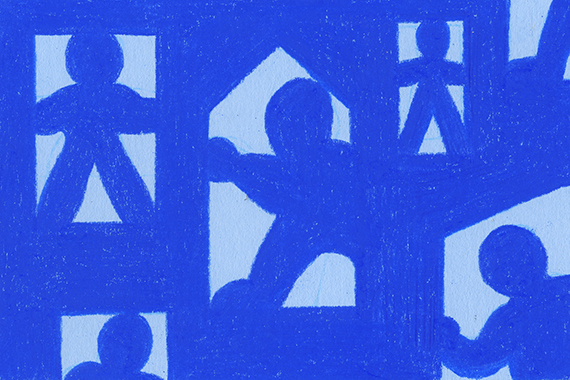
Image by Thomas Colligan.
Dominika Słowik was born in 1988 in Jaworzno, Poland. She published her debut novel, Atlas:Doppelganger, in 2015 and she received the prestigious Polityka Passport for Zimowla in 2019. She studied Spanish literature at university and volunteered in Guatemala. In 2021, she was a resident at the International Writing Program at the University of Iowa. Her first short story collection, Samosiejki (2021), provides surprising insights on the climate crisis.
Jess Jensen Mitchell was born in Wisconsin. In an effort to learn about her past and escape the monotony of her present, she took an interest in Polish culture at an early age. When she watched Kieślowski’s Blind Chance, her fate was sealed. In 2021, she was chosen for the NCW’s Emerging Translator Mentorship with Antonia Lloyd-Jones. She loves slice-of-life stories, especially funny ones. She is currently a PhD candidate at Harvard University.