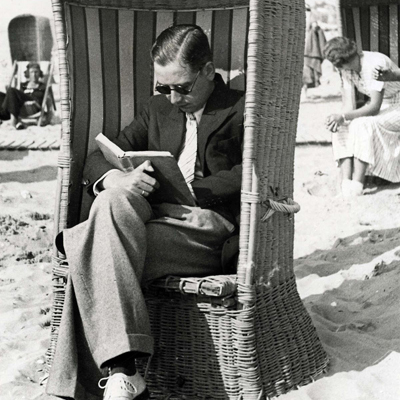
charles VI, called the insane, puts himself to bed | next door the barbarians | north
thoughts sift through me like an hourglass.
karl VI, genannt der wahnsinnige, begibt sich zu bett
“… that they are all glass, and therefore will not suffer no man to come near them …”
Robert Burton, The Anatomy of Melancholy
einmal im garten flog
ein stieglitz gegen mich,
fiel tot zu boden. niemand sah,
karl VI, genannt der wahnsinnige, begibt sich zu bett
“… that they are all glass, and therefore will not suffer no man to come near them …”
Robert Burton, The Anatomy of Melancholy
einmal im garten flog
ein stieglitz gegen mich,
fiel tot zu boden. niemand sah,
wie ich den kleinen körper mit dem fuß
zum rhododendron schob,
ich aber wußte.
nicht ballspiele noch hunde
in meiner nähe. dafür decken, viele,
und eisenringe, eingenäht
in meine kleidung. niemals wutausbrüche,
ich klirre nur ein bißchen. und ich wünschte
vor langen reisen mit der kutsche, selber
in eine jener kisten voller butter
sinken zu dürfen, sicher anzukommen
mit dem geschirr, dem porzellan.
zerbrechlich, sagen sie, zu sprunghaft
und leicht durchschaubar, aber wie denn nicht?
gedanken durchrieseln mich wie eine sanduhr.
morgens werde ich umgedreht,
und alles beginnt von neuem.
am tag, der kommen wird,
vom höchsten giebel des hôtel-saint-pol
hinab zum volk zu stürzen – splitter
für jede sohle frankreichs, eine spur
von blut und jammer
bis in die letzten winkel meines landes…
ein hauch nur, isabelle,
von deinen lippen, schon beschlage ich.
nebenan die barbaren
am anfang ein zerbeultes wohnmobil,
nicht mehr, das in der nacht durchs brachland schien
wie radium. die abgerissenen
gestalten, stets flankiert von moppeli-
gen terriern mit alte-männer-mienen.
wir zogen salbei, schnitten unsere rosen.
dann zelte, hütten, das gewittergrollen
von losen wellblechdächern: beide eiben
gefällt, dazu der stolze walnußbaum,
an manchen abenden gequältes bellen,
ein jaulen, johlen, und der qualm von reifen,
der steil in ihren himmel aufstieg. kaum
war es routine, ihre halben haxen
und abgenagten rippchen
vom rasen aufzusammeln, vom rhabarber,
begann die opferung geschmückter ochsen.
und immer öfter standen sie in grüppchen,
sahen mit leerem blick zu uns herüber.
früh morgens was sich anhört wie makaken
oder maori-
gesänge; dann erneut die komatö-
se stille, unheilvoll. wir denken: mögen
die zäune halten und die alte mauer
nicht bröckeln. und vergebt uns, wenn ihr kommt.
norden
für Asbjørn Stenmark
aufs postschiff zu warten an einem fjord,
der tief ins land greift, weit hinab bis walhalla,
unter den bergen, wo die rentierfährte
im schnee zu schnapsgläsern erstarrt; wo alle
welt nur zeit ist, der tag das verirrte
talglicht in einer riesenhaften höhle
oder ein tag nie endet. weil das schiff
alles erwachen läßt, sobald die mole
geküßt ist, nicht bloß den salzigen stockfisch
der zeitung bringt, vielmehr als metropole
das rote holzhaus löscht, den gin bringt, den jive,
die bunten lampen und die tanzkapelle.
aufs postschiff zu warten, schon wenn es im milchi-
gen dunst die taue löst, um abzulegen.
und wieder nichts als diese orgelkelche
von eiszapfen, unterm schuh die krachenden algen,
die dunkelheit. so still – du hörst die elche
das salz von den vereisten steigen lecken.
charles VI, called the insane, puts himself to bed
“…that they are all glass, and therefore will not suffer no man to come near them…”
Robert Burton, The Anatomy of Melancholy
once, in the garden,
a goldfinch flew against me,
fell dead to the ground. no one saw
how with my foot i pushed
the little pulp into the rhododendron.
i however knew.
no ballgames or dogs
come near me. instead blankets, many,
and iron rings, sewn
into my clothing. never temper tantrums.
i clink only a little. and i wished,
before long journeys in the carriage,
to be allowed to sink myself into one of those chests
full of butter, to arrive safe and sound
with the tableware, the porcelain.
fragile, they say, too volatile
and easy to see through, but how could it be otherwise?
thoughts sift through me like an hourglass.
in the mornings i am turned the other way
and everything starts anew.
on the day which will come
when i fall from the highest gable of the hôtel saint-pol
down to my people—shattering
for every bare heel of france, a trace
of blood and sorrow
tossed to the hindmost quarters of my country…
one breath, isabelle,
from your lips. already i fog over.
next door the barbarians
in the beginning a battered camping van,
no more, that gleamed at night through the boondocks
like radium. the hangdog faces,
figures always flanked by fat-
tened terriers with old-men-looks.
we grew sage, pruned our roses.
then tents, huts, the thunderstorm-rumble
of corrugated tin roofs: both yews
cut down, and also the proud walnut,
on some evenings a tormented grumble,
a yelping, yelling, and the smoke of tires
that steeply rose into their sky. but
scarcely had it become routine
to gather up their half-knuckles and gnawed
spareribs from the lawn, from the rhubarb,
when the sacrifice of decorated oxen began.
and more and more often they stood in small
cliques and gazed into our yard.
early in the morning what sounds like macaques
or gutteral
chants; then yet again the coma-
tose silence, portentous. we think:
may the fences hold and the old wall
not crumble. and forgive us when you come.
north
for Asbjørn Stenmark
to wait for the mail ship at a fjord
that reaches down into the land, down into valhalla,
beneath the mountains, where the reindeer stood
and froze four shot glasses in snow; where all
the world is only time, and the day the stolid
tallow candle in some cave, some giant hole
or a day never ends. because the boat
lets everything awaken as soon as the jetty
is kissed by it. not just the salted cod
of the newspaper, but also like a great city
that overthrows the red hut, it seems to tote
the gin and colored lamps, the jazz melody.
to wait for the mail ship, as early as the milk-
y haze when it loosens its ropes, to put out to sea.
and once more nothing but these icicles’
organ-pipes, the crackling algae under the shoe,
the darkness. so quiet—you can hear the elks
lick the salt from off the frozen stairway.
Image by Thomas Colligan.
Jan Wagner is the author of several poetry collections including Australien (Berlin Verlag,2010) and Die Eulenhasser in den Hallenhäusern (Berlin Verlag, 2012). In his nativeGermany he was recently honored with the Kranichsteiner Award for Literature and theFriedrich-Hölderlin-Preis literary prize.
David Keplinger is the author of eight collections of poetry, including Ice (Milkweed Editions, 2023) and is the recipient of the 2020 Emily Dickinson Award from the Academy of American Poets, the 2019 Rilke Prize, two fellowships from the National Endowment for the Arts, and other honors. His four books of translations include Jan Wager’s The Art of Topiary (Milkweed Editions, 2017) and Carsten René Nielsen’s Forty-one Objects (BOP, 2019), which was a finalist for the 2020 National Translation Award.