Journey to San Francisco
An essay by Fadhy Mtanga
Translated from the Swahili by Jay Boss Rubin
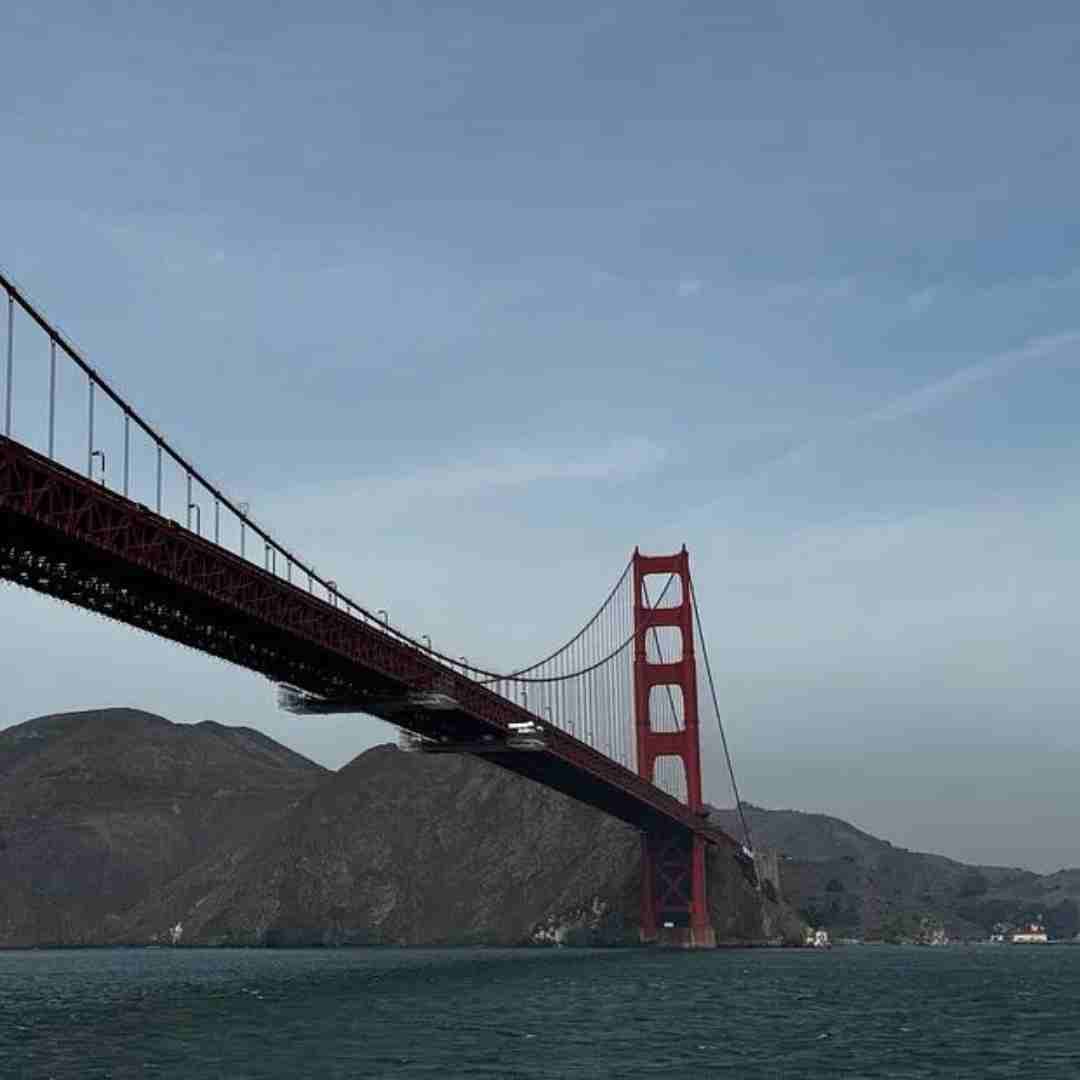
In 1999, I was a third-year secondary-school student in Njombe, Tanzania, with exercise books full of lyrics from my favorite reggae, hip-hop and R&B songs. In one notebook, my friends and I also jotted down what we referred to as our autobiographies. In mine, under the subheading Best City (for the metropolis we most wanted to visit), I wrote down Kingston, Jamaica (because I loved, and still love, Bob Marley), and the name of one other city: San Francisco. I knew about it from films and photographs of its famous bridge.
Let me fast-forward.
Twenty-four years have passed since I wrote “San Francisco” in my exercise book, and now I’m writing these words from the fifth floor of the Kimpton Alton Hotel in Fisherman’s Wharf. As local time approaches 10:30am, I’m aware it’s already 9:30pm back in Tanzania. I thought I’d write to you just briefly before you go to sleep. But I’ll have to hurry because as soon as it reaches 11am, I’ll be off to my next adventure—traveling the underwater rail tunnel that connects San Francisco to Oakland, or some other excursion.
As I draft this post, I’ve already crossed over and sailed under the Golden Gate Bridge. I’ve climbed two hundred thirty-four steps, up thirteen stories, to the top of Coit Tower. I’ve circumnavigated Alcatraz, the infamous prison island in San Francisco Bay known as “The Rock.” I’ve seen the city from the front seat of a specially outfitted double-decker bus; traversed glorious hills; eaten tacos filled with fish, beef, and chicken; sipped some of the world’s tastiest cappuccinos; and strolled the grounds of the Ghirardelli Chocolate Factory. Most impressive of all, I’ve visited the legendary bookstore and publishing house of the same name: City Lights.
But I mustn’t exhaust you. Each of these adventures is a full cargo load, and I’ll write more about them all in due time. Since this is only an overview, let me explain why I’m in San Francisco.
In November 2021, I wrote a short story called “Haiba.” If I share what inspired me to write it, you’ll laugh. The Waswahili have a saying: happiness is born in the belly of adversity. But that’s a story for another time.
A few days after publishing “Haiba” on my Medium page(opens in a new tab), someone DM’d me on Twitter (I hear it’s known as X these days) and asked my permission to translate it. I didn’t see any problem, so I told them to go ahead.
One month later, I received an email requesting my bank account number so I could be paid for writing a story whose English translation had been commissioned by a literary press. All this took place as Christmas and New Year’s were approaching so I found myself saying, “Aaah! This can’t really be happening!”
A few months after that, I was asked for my permission to include the translation of “Haiba” in a first-of-its kind collection of Swahili fiction. (Titled “Attitudes” in English, the story is one of eight pieces included in Two Lines Press’s No Edges.) Filled with delight, I agreed. Having my work made available to an international audience through the art of translation was an incredible milestone in my journey as a writer. At the time this was being negotiated, I was having grave doubts about even continuing in my writing career—but that’s a story for another occasion as well.
Allow me to accelerate.
One day toward the end of last May, I received an email with a subject line that began, “Invitation to…” My first thought was to ignore it; it was one of those promotional emails one gets all the time. But something told me to open it. When I saw it was an invitation to travel to the United States to attend the ten-year anniversary celebration of Two Lines Press, I said to myself, “Eeh b’ana eeh!”
I replied that I was available and was given instructions for applying for a visa. Once the application and procedures were all completed, I was granted one. My invitation letter stated that I was to come and perform a reading from my short story “Haiba” at the anniversary party. Not only that: my translator, Jay Boss Rubin, was invited to read at the celebration alongside me.
I told you I would write just briefly, so I wouldn’t be late for more sightseeing. And I know you’re eager to go to bed after another day’s hustle and bustle.
Last night, the anniversary celebration took place here in San Francisco. What an enormous honor it was to read an excerpt from “Haiba” in front of an assembled audience of esteemed writers, translators, publishers, editors and other essential staff. Just imagine: you’re standing before celebrated Mexican author Jazmina Barrera; heroic translator of over twenty titles from the Chinese, Jeremy Tiang; and champion editor Kelsey McFaul, who oversaw the creation of No Edges. After the reading I sang the most famous song in all of Swahili, “Malaika” (which means “angel”), at the afterparty.
The stories are too many, deserving of their own volume.
While I must wrap up for today, let me close by saying this: my experience working with Two Lines Press on No Edges (a project that included my friend Lilian Mbaga and her translator Dr. Uta Reuster-Jahn) has been an absolutely splendid one. I believe this journey of mine to visit Two Lines Press here in America will help shine a light on narratives from Tanzania and help carve a path for my fellow Swahili-language writers. Tanzania is so rich in Swahili literature—which, as I told those gathered for last night’s celebration, is unique in the way it draws from all walks of life.
It has been a great pleasure to visit the city of San Francisco. It is an even greater pleasure to share the story of my journey here with you.
Until next time.
Fadhy Mtanga
Kimpton Alton Hotel
2700 Jones Street
San Francisco, California
December 15, 2023
Fadhy Mtanga, from Tanzania, has published five novels, a poetry collection, and various uncollected short stories. His narratives, featuring people from various walks of life and socioeconomic classes, reflect on and weave together relationship issues, family issues, and matters related to work, power, and authority. Through his use of staccato sentences, introduction of new vocabulary, and subtle incorporation of English words and phrases, Fadhy Mtanga’s writing has contributed significantly to the development of modern Swahili.