A Conversation With Turkish Translator Maureen Freely
On Cold War-era literature by Turkish women, body politics, and the rewards of abandoning self-righteousness as a translator.
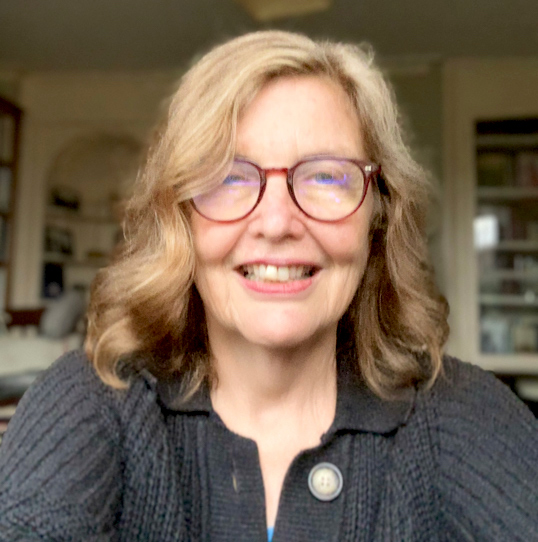
When I set out to read more Turkish literature in translation several years ago, it wasn’t long before I began to cherish the work of Maureen Freely. While she is perhaps known most widely as a translator, she is also a novelist (her book My Blue Peninsula(opens in a new tab) comes out next month from Linen Press), a professor at Warwick University, and a former president of English PEN. Having translated five of Orhan Pamuk’s novels throughout the aughts, Freely has since turned toward translating the work of activists and journalists like Fethiye Çetin and Tuba Çandar, as well as novels by twentieth-century authors like Suat Derviş, Sabahattin Ali and Ahmet Hamdi Tanpınar.
Most recently, Freely has released two spellbinding translations of novels written by women during the last decades of the Cold War, both of which were published in the US by independent presses. Sevgi Soysal’s novel Dawn(opens in a new tab), originally written in 1975 and published in English by Archipelago Books in 2022, traces a web of leftist prison inmates and corrupt policemen to create a sharply observant, wry novel of political resistance and suppression. Earlier this year, fellow Bay Area-based press Transit Books published Freely’s translation of Tezer Özlu’s gorgeously heartbreaking 1980 novel Cold Nights of Childhood(opens in a new tab), which I described in our staff list of reading recommendations earlier this summer.
In honor of Women In Translation Month, I approached Freely to learn more about her decision to take on these projects, the risks and rewards she weighs as a translator working with politically sensitive texts, and why she resonates with the ways Sevgi Soysal and Tezer Özlu explored institutional and gendered relationships in their work. She graciously accepted, and we met to speak over Zoom. Our conversation has been edited for length and clarity.
Sophie Levy: There’s such a wealth of interconnected information to dig into between all the books you’ve translated, but especially between the last two to have come out: Dawn (Şafak) by Sevgi Soysal and Cold Nights of Childhood (Çocukluğun Soğuk Geceleri) by Tezer Özlu. Each time I return to your translations of those novels, I feel like they’re echoed in each other really beautifully. I also can’t read them without thinking about the work of other women who were writing in Turkey contemporaneously, like Leylâ Erbil, whose novel A Strange Woman(opens in a new tab) (Tuhaf Bir Kadın) was published by Deep Vellum in recent years, in Nermin Menemencioğlu and Amy Marie Spangler’s translation.
Even though the stylistic approaches of these writers diverge (sometimes greatly), it’s clear to me that there’s a larger web of questions that’s being explored in their work, almost as a canon. How would you contextualize this recent uptick in the translation of Turkish literature written by women during the Cold War?
Maureen Freely: I think that what we’re seeing now has been in development for a really long time. Those of us who are interested in this generation of writers, and also in their contemporary descendants, are really surprised and happy that they’ve come above the surface. I want to thank and give tribute to several groups who are also interconnected— first and foremost to Turkish feminist literary scholars, many of whom have been educated at least in part in the US or in Europe. They have been working very hard together to bring writers who have fallen into the shadows to greater attention, both for Turkish and Anglophone audiences. I’m very grateful to the scholars who are my age, like Sibel Erol and Şima İmşir, but I’m also really interested in the ones who are coming up, like İpek Şahinler, who is at UT Austin.
Within Turkey, I think a big reason why these books are coming back into conversation and being reconsidered in the work of contemporary authors is because not as much has changed in the patriarchy as we had thought. And outside of Turkey, in the Anglophone world, there is this sort of miracle we’re seeing now, where literary translation is becoming more important across the board. I’ve been a translation activist, or advocate, for 20 years, and I think none of us expected anything like this, but things are coming along. I think it’s because of the zeitgeist, particularly amongst younger readers, who are politically sophisticated and have a lot of questions about how we got to this point, not just in our own country, but elsewhere.
SL: Speaking about Sevgi Soysal and Tezer Özlu in particular, I think their novels really speak to and share that sensibility. Coming from Turkey places them in a complex position to begin with, because they’re in a country that has existed both as an imperial power and as a theater for influence wars between modern imperialists. Within that setting, both of these writers had complicated relationships with Western institutions throughout their lives, which they continue to revisit and renegotiate throughout their work. So their biographical involvement with and critique of American and European schools, hospitals, and cultural organizations is doubled on a literary level and mirrored in their protagonists. Then, translating their work for Anglophone audiences brings yet another layer of negotiation into the picture.
Having considered all that, the process of understanding these novels responsibly while also working to make them accessible to a wider Western public becomes this very tiered thing. I’m curious how that’s felt for you as someone who’s straddled nearly the same cultural and political landscape that these writers did.
MF: Well, speaking very personally, I suppose, I lived through the whole Cold War. I was born about the time it began, I grew up in it. As a physicist, my father worked in the Signal Corps lab where Julius Rosenberg had worked during the war, and that’s where the McCarthy witch hunts began. My family moved to Turkey because there was a great desire on my father’s part to leave the whole mess of America behind and make a different sort of life somewhere else.
My view is that the the most of the action in the Cold War was on the margins, not always in the centers like Washington, DC. I saw all the ships go to Cuba and all the ships come back from Cuba in 1962. I witnessed anybody who pretty much uttered the word “Marx” get sent to prison; I also witnessed the one decade in Turkey when there was some modicum of freedom of expression, which was from 1960 to 1971. I was on one of the campuses where this great flowering of independent thought was happening, and we were surrounded by Cold Warriors. If my classmates weren’t spooks, they were in the office next door to the spooks.
By the time I was in my last year of high school, I got branded the enemy. There was a lot of bullying by the more powerful girl gangs, if you will. They were very political. And I didn’t understand, since I had just moved to Turkey because my parents fell in love with the place— they weren’t representatives of the US government. And, you know, that hurt; that made me angry, it didn’t seem fair. But they were right. I’ve learned over lifetime that if I was subject to any hostility that felt unmerited, or if I was ever a target (which I was), it’s because my friends had more going on than I could have imagined. It was very, very difficult, and often their parents had their own blood on their hands; their own parents were collaborators with the political forces that were responsible for their arrests. So I can understand that. And I can understand that, whether I like it or not, I’m part of this. I’m part of this thing that’s bigger than me that I don’t understand. Or at least I hadn’t understood then.
The truth is that even if you find yourself at an academic institution only because you believe in the importance of education and you want your students to be good at physics, you are representing a different sphere of influence, and you’re trying to bring people into that sphere of influence. And of course, if you do study at those schools, as these authors did, there’s no getting around it: you change. I always think of education as being at best a conversation, where you’re not imposing ideas on somebody else. I think my father learned far more from his students than they learned from him. But even if it’s a liberal, particularly progressive education, you become some kind of hybrid— and in extreme political moments, there is no room for hybrids. In a time of party line fights, being a female is in and of itself being a hybrid.
The only place for me to go as a student was to literature, and in the case of Latin American literature, which was my great passion, I could explore it without even knowing I was exploring my own situation. Literature from the margins of the Cold War was full of paradoxes, full of complexities, the desire to be good, the tragedies, the secrets in our lives. It treasured imagination. And it always was a free space for me to read. So as a novelist, but really most of all, as a translator, it meant the world to be able to negotiate those highly politically charged spaces, to travel back and forth between them and just kind of be comfortable enough to accept that this is who I am, this is who we are.
Of course, you can’t go into translation or writing looking to be let off the hook. I’ve accepted that virtually anything I’ll do as a translator is, by definition, going to be muddled with acts of cultural imperialism. But, you know, it can still be interesting work. It can still be a real contribution. And when I’m translating, it’s great, because I am free to wander around and be present in situations where I would otherwise never be welcomed.
What I love about Sevgi and Tezer is that they speak and write and construct their books so very beautifully from that space. In everything she wrote, Sevgi was basically trying to understand from the point of view of a very fallible woman what is possible, what is good, what is beauty, what is ugly. And Tezer— who, for reasons of her mental distress, the horrors of the treatments she went through, and her extraordinarily oppressive education both at home and at school— she had to break the rules of grammar and narrative in order to create that space. For very different autobiographical reasons, that speaks to me really, really powerfully. And then, it’s a huge thrill to be allowed in. Or just to walk in and be there.
SL: Something that feels very vivid and consistent throughout many novels written by women in Turkey is this incredibly moving attention to sensuality, to its relationship to power and the subversion of authority, and the control a person has to have over their own sensuality in an authoritarian, patriarchal context. And how, no matter how much you try to eliminate it when you’re being leered at in a violent setting— in a prison, or in a psychiatric ward, for example— it’s always going to be seen through you, which is something I found just so real and so sinister, especially in Dawn. But at the same time, I find many of these books end on a note of returning to or reclaiming sensuality and the body; both Cold Nights and A Strange Woman (Leylâ Erbil’s novel) conclude with these triumphant, ambiguously dreamlike sex scenes.
MF: There’s also a great sense of play in their work, which brings a lot of life back into it. I am hoping that I’ll be able to translate an earlier book by Sevgi Soysal called Yürümek [“Walking”]. It’s such an interesting book; it goes back and forth between the lives of a boy and a girl who grow into a man and a woman, and it presents these vignettes of their indoctrination. They’re being pushed into this gendered mold and become completely fascinated by sex, even while not knowing what it was. And then it includes these really weird and fascinating interludes about animals, monsters, nature, and cities.
I just wanted to add a more contemporary writer: her name is Sema Kaygusuz. I translated a collection of her short stories a number of years earlier, and I count her as a friend. She also has another very, very good translator named Nicholas Glastonbury, so I hope we’ll see more from her in English. She draws a lot from her family’s traditions as part of the Alevi sect, which has to do with Sufism and following Ali, but she’s also writing from a feminist perspective about the oppression of mothers over daughters, about their imprisonment and containment at home. And she’s so similar to Tezer; she’s writing about women in surreal, terrible depressions just lost inside their own bodies. But her stories go to very unusual places, and things always turn out in a way that you wouldn’t quite expect. They’re so rebellious.
SL: In the context of modern Turkey, my impression is that it’s already fairly charged to be writing about this tension between subjectivity and collective indebtedness, and it’s risky to speak so explicitly about feeling alienated from a dominant culture of nationalism, especially if you’re writing from the standpoint of an ethnoreligious minority. But I think this added layer of gendered body politics and this discussion of women’s relational paranoia on the ground catapults this writing to an even more radical level. What made you want to translate more of this work in recent years, despite the potentially very serious risks of public or political backlash?
MF: The first book I ever translated was Sevgi Soysal’s political memoir, which hasn’t been published in English. After that, I didn’t translate for decades, and then I took on a lot of work by men. The ones who were most interesting— to me, at least— had a softness to them that enabled them to understand these things, but they had a lot of trouble because of what they understood. Still, in the case of most male writers who I translated, they were always just… feeling melancholy, and then going out in the middle of the night for a long walk. That’s something I had never even been able to do! I kept thinking: “Don’t you realize how lucky you are?” Nobody takes longer walks than these writers and their heroes. So I got tired of it. And so when I started translating women again, which was not accidental, what I really understood and felt and found important was how much control there was over the bodies of women, especially when they went outside. It was just constant.
I was interested in what women were going through in Turkey; women on the left, in particular, because they had that extra problem of being women amid a very male ethos in their movement. The mood was, “We’ll talk about women’s rights after the revolution.” And now, running concurrently with feminist scholarship— especially in Istanbul, where academics, activists, and writers are all in conversation with one another, but also in southeastern refugee communities— there are sociologists, anthropologists, and journalists who are doing really interesting work, but they’re coming up against the same problems with the old male left. Whenever they present the old guard with this wonderful new research on the sociology of emotions among Syrian refugees, for instance, they say that we can’t afford to be doing that kind of work.
SL: Because it’s not materialist enough?
MF: Yeah, but it’s also that they’re afraid of it. In general, the defenders of male writers are far fiercer; let me tell you something. And the stakes are different, especially as far as language politics are concerned. Because of Turkey’s language revolution and the way it affected education, the feeling is that there’s one word, there’s one way, and that’s reflected in a lot of the angry debates around translation, too. One of the byproducts of all this is that translators are hounded for their “mistakes.” I get that all the time. Of course, real mistakes do exist. If I’ve made a genuine mistake, it’s easy to apologize and fix it. But the problem is that a lot of the things they’re calling “mistakes” are actually just interpretations— because I haven’t put the commas in the same place, or because I’m interested in the music of the sentence rather than the perfect yet impossible replication of Turkish grammar, which is an inverse of English grammar in almost every single way. And I’ve been held to account in, I can’t tell you how many dissertations, especially because my translations have been political. It’s something I just feel like it comes with the job.
But also, I say, “if you don’t like how I’ve done it, good translations are ephemeral. The student can do it themselves again.” Because anybody has a right to criticize anything I do, and that’s fine. Recently, in fact, as a contribution to an essay collection that isn’t out yet, I ended up writing about how my deepest education has been through translation. I’ve learned a lot from other people’s translations, but I learned much more from my own. Through these different acts of translation, I learned a lot of things I feel I should have known all along. In other words, if I’ve gone into a project not knowing everything I wish I’d known, or if I fail to resist cultural imperalism or colonization or whatever it is that I’m supposed to resist, it still matters to try. It still matters to learn. And a text can present you with a lot of possibilities, so long as you’re not going into translation trying or expecting to be seen as good.
SL: I actually went to Istanbul for the first time this past June, and I thought about your work a lot while I was there. I kind of made a point of trying to go to as many bookstores as I could to see what was being shelved there, to see what I’d recognize. And sure enough, I saw these seemingly very new, beautiful editions of Sevgi Soysal’s work that were taking up a good chunk of a shelf in every bookstore that I went to, and Tezer was everywhere, too, and that felt really encouraging.
It was interesting to speak with some of the people that worked at these bookstores and learn about all the other kinds of incredible work represented on their shelves. I saw that among certain circles, the silos really do collapse the way you described earlier, and there is this cross-pollination between social sciences, political activism, and literature that you can feel while you’re there. Of course, that interconnectedness is the product of some really unfortunate and extreme political, cultural, and economic pressures, which were also very palpable there; sometimes overwhelming. But the resulting writing, the resulting conscience of the opposition in Turkey is really something to admire.
MF: I’m really glad that you got to go there. I haven’t been back for six years, and there are reasons why I’ve decided not to go. But even then, it’s wonderful to reconnect every time I do go back; all of my negative thoughts kind of just disappear. And the problems are there. They’re there, but something else, something that’s more important is there. Namely the people. The liveliness of the what they, without embarrassment, call the intelligentsia. And the warm fierceness of their arguments. All the tensions around gender that we’ve been talking about— those disputes are alive because literary culture has almost always been in the opposition. Because, most of the time, these writers looked after each other, they looked out for each other. My dream is for that to spread to so many other countries where something similar is happening on the left, and with gender and so on. And I would really like to know if, between all that, there are women who couldn’t speak to each other before who are speaking to each other now.
You Might Also Like