Gestation
Then she washed out our eyes. Have to be able to see, she said. You’ll need clean eyes.
Matriz
Mi madre decía que había que tener mucho cuidado. Decía: la gente se enferma, hay que cuidarse. La enfermedad entra por la boca, por los ojos, por el estómago. Pero a ustedes no les va a pasar nada, porque yo les voy a cuidar la boca, los ojos y el estómago. Nos cuidaba mucho, para que fuéramos sanitos. Así decía: para que sean sanitos, los voy a cuidar. Nos cepillaba los dientes. Los cepillaba ella. Con ese cepillo duro, porque decía que era el único que limpiaba bien. Nos miraba adentro de la boca y decía: mucho bicho acá. Y cepillaba. Mucho bicho acá. Hasta que salía sangre. Hay que matarlos. Si los bichos entran, se jode el estómago. Después nos lavaba los ojos: Hay que mirar bien, decía. Con ojos limpios. Los ojos sucios no sirven para mirar. Y nos lavaba los ojos con ese trapo lleno de jabón, todas las noches. Y nos cuidaba el estómago, con agua. Mucha agua, decía. Nos sentaba a la mesa. Cinco jarras de agua. Vayan tomando, decía. El agua lava el estómago. Lo mantiene limpio. Tienen suerte de tener una madra como yo. Van a crecer sanitos. Nos les va a pasar como a mí, que mi madre no me lavaba los dientes. A mí los bichos me entraron por ahí, por la boca. Y los doctores no saben nada. Se levantaba la blusa y nos mostraba la cicatriz. Una cicatriz gorda, horizontal, que le cruzaba el abdomen de costilla a costilla. Los doctores no saben nada. Yo sí. Yo los voy a cuidar. Todo esto nos decía mientras nos miraba tomar las cinco jarras de agua. Después nos manda a la cama y se ponía a cantar. Una baguala. La letra la inventaba ella. Nada les va a pasar, cantaba, sanitos van a crecer. La baguala nos alejaba del cepillo, y del trapo, y del agua, y a ella se le notaba un alivio en los ojos, mientras cantaba.
Matriz
Mi madre decía que había que tener mucho cuidado. Decía: la gente se enferma, hay que cuidarse. La enfermedad entra por la boca, por los ojos, por el estómago. Pero a ustedes no les va a pasar nada, porque yo les voy a cuidar la boca, los ojos y el estómago. Nos cuidaba mucho, para que fuéramos sanitos. Así decía: para que sean sanitos, los voy a cuidar. Nos cepillaba los dientes. Los cepillaba ella. Con ese cepillo duro, porque decía que era el único que limpiaba bien. Nos miraba adentro de la boca y decía: mucho bicho acá. Y cepillaba. Mucho bicho acá. Hasta que salía sangre. Hay que matarlos. Si los bichos entran, se jode el estómago. Después nos lavaba los ojos: Hay que mirar bien, decía. Con ojos limpios. Los ojos sucios no sirven para mirar. Y nos lavaba los ojos con ese trapo lleno de jabón, todas las noches. Y nos cuidaba el estómago, con agua. Mucha agua, decía. Nos sentaba a la mesa. Cinco jarras de agua. Vayan tomando, decía. El agua lava el estómago. Lo mantiene limpio. Tienen suerte de tener una madra como yo. Van a crecer sanitos. Nos les va a pasar como a mí, que mi madre no me lavaba los dientes. A mí los bichos me entraron por ahí, por la boca. Y los doctores no saben nada. Se levantaba la blusa y nos mostraba la cicatriz. Una cicatriz gorda, horizontal, que le cruzaba el abdomen de costilla a costilla. Los doctores no saben nada. Yo sí. Yo los voy a cuidar. Todo esto nos decía mientras nos miraba tomar las cinco jarras de agua. Después nos manda a la cama y se ponía a cantar. Una baguala. La letra la inventaba ella. Nada les va a pasar, cantaba, sanitos van a crecer. La baguala nos alejaba del cepillo, y del trapo, y del agua, y a ella se le notaba un alivio en los ojos, mientras cantaba.
También nos enseñó a leer. Y a escribir. Decía: Mucho bicho en la escuela, yo les enseño. Leíamos la enciclopedia Vox. Tres tomos de tapa dura, color carmín, letras doradas. Los únicos libros de la casa. Nos sentaba a la mesa y nos daba un tomo a cada uno. Decía que hojeáramos el libro y que eligiéramos diez palabras. Mirábamos las ilustraciones. Casi todas en blanco y negro…
Gestation
My mother said you had to be careful. She said: People get sick. Have to be careful. The sickness gets in through your mouth, your eyes, your stomach. But nothing will happen to you, sweet ones. I’m going to take care of your mouths, your eyes, your stomachs. She took care of us so we would be nice and healthy. That was what she said: I’m going to take care of you so you’ll be nice and healthy. She brushed our teeth, did the brushing herself. With the hard brush. Only one that cleans well enough, she said. She peered inside our mouths. Germy germy in there, she said. So she brushed. Germy germy in there. Until we bled. Have to kill them. If the germs get in through your mouth, your stomach won’t stand a chance. Then she washed out our eyes. Have to be able to see, she said. You’ll need clean eyes. Dirty eyes, no good for seeing with. And she washed our eyes with the soapy dish towel, every night.
And she took care of our stomachs. With water. Lots of water, she said. She would sit us down at the table. Five glasses of water. Go on, she said. Drink up. Water washes out the stomach. Keeps it clean. You’re lucky to have a mother like me. You’re going to grow up nice and healthy. Not like I did. My mother never cleaned my teeth. That’s how the germs got in, through my mouth. Doctors don’t know anything, she said. Then she would lift her blouse and show us the scar. A wide, horizontal scar, crossing her abdomen from one side to the other. Doctors don’t know anything. But I do. I’m going to take such good care of you. She would say all this while watching us drink our five glasses of water. Then she would sing as she sent us to bed. A folk song, from the north. She made up the words. Nothing bad will happen to you, she sang. You’ll grow up so nice and healthy. The song transported us away from the toothbrush, the dish towel, the water. We could even see something that looked like relief in her eyes, when she sang.
She also taught us to read and write. She said: Germy germy in those schools. I’ll teach you. We read the encyclopedia. Three volumes, ruby-colored hardcovers with gilded letters. The only books in the house. She would sit us down at the table and give us each a volume. She told us to flip through and pick out ten words. We looked at the illustrations, almost all in black and white. Then we picked our words. We had to copy their definitions into our notebooks. When we finished copying them, Mauro read me his words and I read him mine. A few times each, until we could read them without messing up. Worm: a type of metazoan coelomate animal characterized by a soft, elongated body, without skeleton or articulated legs, kingdom Animalia. See figure 1. Larva: incipient form of a metamorphosing animal following its emergence from the egg. Then she would make us pick the word we liked most. We had to make up ten sentences with our word and write them all in our notebooks. The larva hatches from the egg. The larva produces a silk thread. The larva spins a cocoon. The larva winds the silk into a ball. The larva becomes a chrysalis. The larva goes into its nest. The larva gets sleepy. Like that. Every day. Morning was over when we had finished ten sentences. Then it was time for lunch.
Eat healthy, she said. Have to eat healthy. So she would cook. No animals. They’re dangerous. We ate only vegetables, but not every vegetable. No leafy greens. Germy germy. Impossible to clean.
After lunch came the bleeding of gums, to keep the germs from reaching our stomachs. We would sit on the bed, upset and not looking at each other while our mouths throbbed, swallowing blood. After a while we could go to the bathroom and rinse the taste out of our mouths. That was when Mom would start working. She had a lot of jobs. Dressmaking. Sometimes she would work at her sewing machine until late. For us, it was the best part of the day: the tick-ticking of the sewing machine. As long as she was sewing, we could play. We had to make sure to stay clean, of course. Don’t go running around all over the place, she said. Germy germy out there in the dirt.
Our house had three beds and a table by the kitchen. There were three doors. One leading to the street, one to the bathroom, and one to the patio out back. The patio was made of dirt. Mom always said that she wanted to put tiles down, but she never got the money together. She often grumbled about it: Look at all this dirt. See all these worms. We were allowed to go outside as long as there was no mud. If it rained, we would have to wait a few days until the sun had baked the earth dry. Rain makes the worms come. No time to be going out. No going out if there’s mud. Mud makes you sick. You’re going to grow up nice and healthy. Mud: a mixture of dirt and water; anathema (figurative). Healthy: experiencing sound physical and mental state; whole, unbroken, unspoiled (figurative).
She dressed us all in white. Made our clothes herself. Pants and shirts. All white. The better to see any filth, she said. That way the germs won’t get in. With clean eyes, you can see filth. Must be watchful. Not like my mother, she said, who was never watchful. She would lift her blouse and show us the scar. Eyes peeled, always. So this never happens to you.
What happened to Mom was really bad. We didn’t want the same thing to happen to us. She said the snakes started growing inside her, in her stomach, because her mother had failed to take care of her. Left her teeth dirty and the germs got in, from all the filth. She told them, the doctors, that she was full of snakes. And one happy day, they operated on her. She was so insistent that they finally opened up her belly. She was right, they told her. But they said she was lucky; they had been able to get the snakes out. All of them. Not one remained. She was so happy, so relieved, after the operation. But it was all for naught. That’s what she told us: All for naught. Doctors don’t know anything. They took out the snakes, but they left the eggs. Forgot them inside. She showed us the scar. Eggs hatch into snakes, she said. They’ll be back soon.
Mom left the house sometimes, when she went to deliver her dresses. She had a lot of customers. I stayed alone, with Mauro, whenever Mom went out. I’ll be back in an hour, she told us one afternoon, as she was leaving with all her packages. Don’t get too crazy. We played out back for a while but soon it started to rain. Let’s go inside, I said to Mauro. It’s going to get muddy. Mom had not come back yet. Mauro said we should go and look for her, but I remembered Mom had told us not to leave the house. Germy germy out there. Then he suggested going back out to the patio. I told him no: It’s raining. We could get sick. I’m bored, he said. I suggested playing hangman. We got our notebooks and amused ourselves for a while, but Mom still had not come home. Maybe she won’t come home because it’s raining, said Mauro. She wouldn’t want her clothes to get muddy either. We looked out at the patio. Rainy rainy. Yes, I told him. Maybe she’s just running late. I went to get the encyclopedia. Look, I’ll read to you. Rain: water that falls in drops from the sky. Let’s play with the encyclopedia for a while. Find Mom, Mauro asked me. Mom: mother. Find Mother. Yes, I’m looking. Here: female organism that has given birth to one or more offspring after undergoing a period of gestation.
Night fell. Mom still had not come back. Mauro was getting anxious. Mom isn’t coming back. We could get sick. Don’t worry, I said. She’ll come back when the rain stops. I’m sure she’ll come back. But it’s nighttime now. Don’t you see how late it is? Yes, Mauro, I see. Don’t worry, I’ll take care of you. Sit down. I’ll get the water glasses.
Mom came back later that night. She did not look well. She said: They’re coming. They’ll hatch any minute now. And then it happened. We awoke to her screams. She refused to eat after that night. She said eating would feed the snakes and they would grow even bigger and longer, make her hurt again. Big snakes hurt, she said. I know what it’s like. So we gave her nothing to eat. Just glasses of water. We did not want her to suffer.
It was raining when we buried her. Mauro was scared, but I told him we had to dig the pit. The patio is disgusting, he said. Look, it’s covered in worms. But there was nothing else to do. Mauro, I said. We have to bury Mom. So we put on our boots, grabbed the shovel, and went outside.
“Matriz” from Cenizas de carnaval. Buenos Aires: Tusquets Editores, 2018.
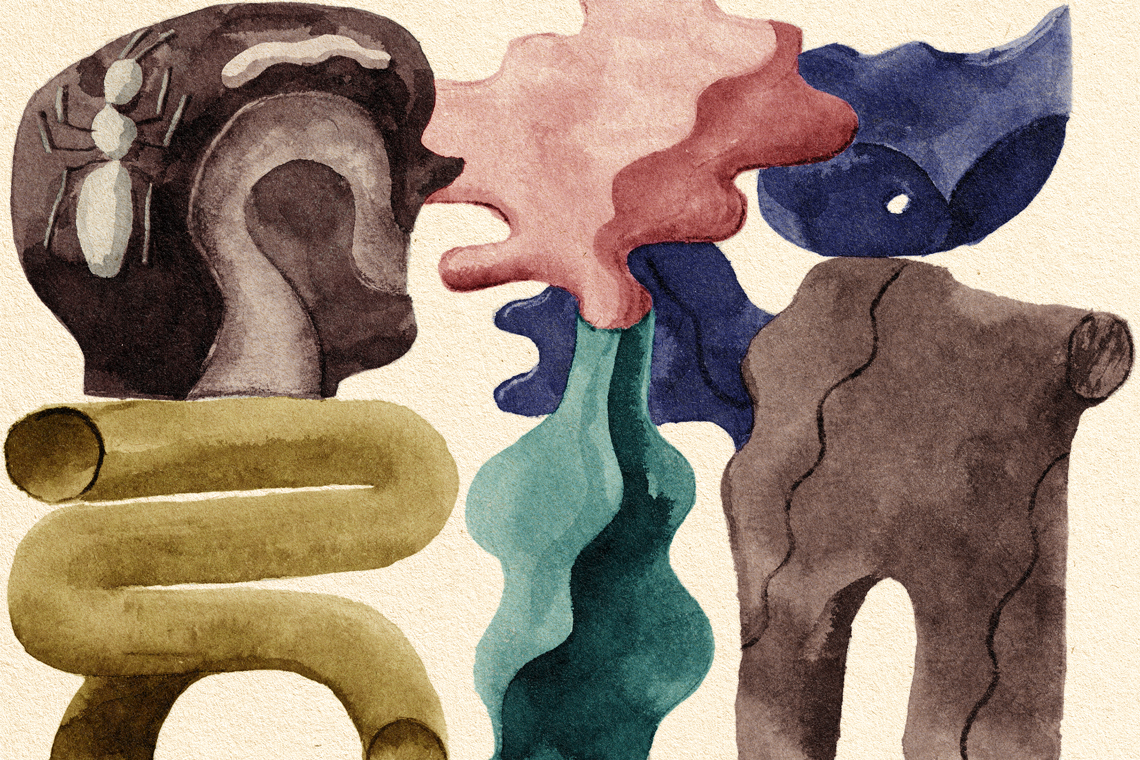
Image by Yusuke Nagaoka.
Mariana Travacio was born in Rosario, Argentina, in 1967 and grew up in Brazil. She now lives in Buenos Aires. Her stories have received numerous national and international prizes and have been published in magazines and anthologies in Argentina, Uruguay, Brazil, Cuba, Spain, and the US. She is the author of the story collections Cotidiano (2015) and Cenizas de carnaval (2018), and the novels Como si existiese el perdón (2016) and Quebrada (2022).
Will Morningstar is a freelance editor and translator from Boston. His translation work is published in Latin American Literature Today, Strange Horizons, and the Massachusetts Review.