Pearls
You’re suddenly aware of how warm your hand is, and this warmth, the warmth of your body, disconcerts you.
Perles
Vous ouvrez les yeux, ou vous croyez ouvrir les yeux. Autour de vous, l’obscurité est totale. Vous avez beau plisser les yeux pour essayer de distinguer quelque chose, vous n’y arrivez pas. C’est une obscurité épaisse, impénétrable. Vos autres sens commencent à s’éveiller. Vous ressentez un tressaillement au bout de vos doigts et vous entendez une voiture passer dehors, puis deux, puis trois, puis quatre… Votre regard continue à errer dans l’espace indéterminé. L’obscurité semble faite de grains qui pèsent sur vos paupières. Ils vous assaillent, vous dévorent, au point que vous refermez les yeux dans un mouvement de réflexe. Vous les rouvrez et les clignez encore et encore, mais ça ne change rien, l’obscurité reste totale. Vous ne comprenez pas où vous êtes. Vous ne savez plus à quoi ressemble le lieu où vous êtes censée habiter. Les plafonds des endroits où vous avez vécu défilent comme dans une visionneuse. Vous revoyez la chambre de votre enfance, ou plus précisément les chambres, car vous avez déménagé plusieurs fois quand vous étiez petite; puis celle de votre résidence universitaire, la chambre de bonne où vous avez fait l’amour pour la première fois, votre premier studio, les chambres des auberges de jeunesse où vous avez dormi, celles des maisons de campagne où vous avez passé l’été, plusieurs chambres d’hôtel, et ce lit d’hôpital placé juste sous un néon à la lumière froide. Vous vous souvenez de cette nuit échouée sur un matelas de gymnastique dans une salle de sport, et de cette autre sur le sol des toilettes après avoir vomi interminablement… Et vous pensez aussi aux rêves que vous avez faits dans toutes ces chambres, à ces milliers de rêves dont il ne reste presque rien. Vous vous demandez si vous rêvez en ce moment même, ou bien si vous êtes déjà morte. Vous vous dites que la mort doit ressembler à ça : on est bien là, conscient, mais il n’y a rien, rien qu’une obscurité totale. Vous avez l’impression de vous fondre tout entière dans cet air pesant. Vous vous touchez le visage mais ne reconnaissez pas vos traits. Votre peau ne vous semble ni douce, ni rêche. Puis vous ouvrez la bouche et vous dites « Ah ». Votre voix résonne autour de vous de manière artificielle. Vous vous levez péniblement, et une fois debout, vous êtes prise de vertige. Ce noir impénétrable vous prive de votre équilibre…
Perles
Vous ouvrez les yeux, ou vous croyez ouvrir les yeux. Autour de vous, l’obscurité est totale. Vous avez beau plisser les yeux pour essayer de distinguer quelque chose, vous n’y arrivez pas. C’est une obscurité épaisse, impénétrable. Vos autres sens commencent à s’éveiller. Vous ressentez un tressaillement au bout de vos doigts et vous entendez une voiture passer dehors, puis deux, puis trois, puis quatre… Votre regard continue à errer dans l’espace indéterminé. L’obscurité semble faite de grains qui pèsent sur vos paupières. Ils vous assaillent, vous dévorent, au point que vous refermez les yeux dans un mouvement de réflexe. Vous les rouvrez et les clignez encore et encore, mais ça ne change rien, l’obscurité reste totale. Vous ne comprenez pas où vous êtes. Vous ne savez plus à quoi ressemble le lieu où vous êtes censée habiter. Les plafonds des endroits où vous avez vécu défilent comme dans une visionneuse. Vous revoyez la chambre de votre enfance, ou plus précisément les chambres, car vous avez déménagé plusieurs fois quand vous étiez petite; puis celle de votre résidence universitaire, la chambre de bonne où vous avez fait l’amour pour la première fois, votre premier studio, les chambres des auberges de jeunesse où vous avez dormi, celles des maisons de campagne où vous avez passé l’été, plusieurs chambres d’hôtel, et ce lit d’hôpital placé juste sous un néon à la lumière froide. Vous vous souvenez de cette nuit échouée sur un matelas de gymnastique dans une salle de sport, et de cette autre sur le sol des toilettes après avoir vomi interminablement… Et vous pensez aussi aux rêves que vous avez faits dans toutes ces chambres, à ces milliers de rêves dont il ne reste presque rien. Vous vous demandez si vous rêvez en ce moment même, ou bien si vous êtes déjà morte. Vous vous dites que la mort doit ressembler à ça : on est bien là, conscient, mais il n’y a rien, rien qu’une obscurité totale. Vous avez l’impression de vous fondre tout entière dans cet air pesant. Vous vous touchez le visage mais ne reconnaissez pas vos traits. Votre peau ne vous semble ni douce, ni rêche. Puis vous ouvrez la bouche et vous dites « Ah ». Votre voix résonne autour de vous de manière artificielle. Vous vous levez péniblement, et une fois debout, vous êtes prise de vertige. Ce noir impénétrable vous prive de votre équilibre…
Pearls
You open your eyes, or you think you open your eyes. Around you, total darkness. You squint hard, but you can’t see a thing. The darkness is dense, impenetrable. Your other senses start to awaken. You feel a tremor in your fingertips and hear a car pass by outside, then two, three, four. Your gaze continues to wander in the indeterminate space. The darkness seems made of grains that weigh on your eyelids: they assault you, engulf you, until instinctively you close your eyes again. You open and close them many times, but it makes no difference, the darkness is still total. You’re confused about where you are, you no longer recognize the place where you supposedly live. The ceilings of other rooms you’ve known pass before your eyes as in a slide viewer. You can see your childhood room, or rather, rooms, since you moved several times when you were small; then your university dorm room, the attic room where you made love for the first time, your first studio apartment, the rooms in the youth hostels where you once slept, the ones in the country houses where you spent the summers, a number of hotel rooms, and that one hospital bed placed directly beneath a cold, neon light. You remember the night you ended up sleeping on a mat in a gym, and that other one on the bathroom floor after vomiting endlessly. And you think about all the dreams you had in these rooms, the thousands of dreams of which you remember almost nothing. You wonder if you’re dreaming now, or if you’re already dead. You tell yourself that death must be a lot like this: you’re there, conscious, but nothing surrounds you except total darkness. You feel as if your entire self is disintegrating into this heavy atmosphere. You touch your face, but your features don’t feel familiar. Your skin feels neither soft, nor rough. Now you open your mouth and say “ah.” The way your voice echoes around you sounds strange, artificial. You stand up with difficulty and a wave of vertigo hits you; the darkness has robbed you of your balance. Even the air feels stifling and murky. You stretch out your arms and step forward as carefully as possible, groping the space in front of you. The floor is damp and sticky, and you hear a viscous sound each time you lift your leg. Something sharp cuts into the sole of your foot. The pain makes you wince, but you keep walking until you encounter the surface of a wall. You move alongside it and your fingers graze what feels like a light switch. As soon as you flip it on, a low groaning sound fills the room. A metal shutter slowly rises, letting a ray of light in. Your pupils retract and dilate several times before they manage to adjust. You can make out pieces of broken glass, bottles of liquor scattered on the floor, a few dried-out potted plants and, here and there, traces of blood left by your wounded foot.
*
It was in this room that you slept last night. Maybe the night before, too, and still others before that. You can’t remember the moment you fell asleep or when you lay down on the bed. Last night, you drank until you had diluted yourself into the clear liquid. You drank until you’d become a plant saturated with moisture, a plant whose stems had gone all limp, before collapsing in exhaustion.
Only a few drops of liquid are left in the bottles lying on the floor. You drain them, but it doesn’t quench your thirst. You go into the next room and take a glass from the sink piled with dirty dishes. You rinse it quickly and fill it with water. When you take a sip, you’re startled by its putrid taste. You realize that the water is yellowish and full of particles. You put the glass back in the sink, turn on the tap again, and let the water run. The sink fills up slowly. You watch it overflow. You feel the water tickling your toes and then soaking your heels. You hold your breath as if the water were continuing to rise, as if it were submerging you, but you finally breathe out noisily. You turn off the faucet.
You open the fridge door wide, and a rancid smell emanates from within. There are swollen cartons of milk and a few pieces of softened fruit, all more or less deformed. You close the door again without touching anything.
Picking through the garbage, you find a used teabag. It’s dried out but still slightly scented. You drop it in a cup that you fill with hot water from the tap, removing the teabag after a few seconds, and take a long sip. Something lumpy and sour-tasting spreads over your tongue. You can make out bits of mold floating in the water. You pour the rest of the tea down the drain and rinse out your mouth.
You go back into the room where you’d slept, sit down on the sofa, and wonder how much time has passed. The time it took for the spores to grow on the teabag, for the fruit and vegetables to start decomposing in the fridge, for the floor to become sticky with the spilled liquor. But all this time means nothing to you.
You turn to face the door of the room—her room—then stand and begin to move toward it. When you touch the door handle, you’re surprised by the coldness of the metal. You’re suddenly aware of how warm your hand is, and this warmth, the warmth of your body, disconcerts you. You stand motionless in front of the door. The clock hands have stopped moving, the radio and the TV are unplugged, and your cellphone hasn’t been charged for a long time. The weight of this silence grows more and more oppressive. You take a quick breath in and turn the door handle.
A cool draft of air escapes from the room. Unlike the rest of the apartment, it is clean and filled with light. It is as if it were the only room that was lived in. Tiny specks of dust float in the air. The door handle grows warm and moist in your hand. You stare into the still-intact space for a long moment before stepping inside.
A book sits open on her desk. You sit down in the chair and turn the pages, but you don’t read it. You only look at the drawings sketched in the margins and notice how she’d underlined certain sentences and folded down the corners of pages. It seems she spent a great deal of time studying these lines. You touch the book carefully, as if it might crumble beneath your fingers.
You stand up and walk over to the bed. The smell that rises from it is one you know very well. You crawl under the covers, wondering what dreams have been dreamed here, and then you close your eyes and fall asleep.
You’re standing on a sidewalk. It’s raining, but you don’t try to find shelter. On the other side of the street is a group of teenagers; the rain doesn’t seem to bother them. More teenagers come to join them, and the group gradually expands: from ten to twenty, then fifty, a hundred, two hundred. When its ranks are complete, you estimate—instinctively, without counting—three hundred and four teenagers. You find them beautiful, but you tell yourself that it’s dreadful to be their age. The rain is pouring down, the water comes up to your ankles. Across the street, the teenagers are as drenched as you are, but they still don’t seem to care. Suddenly, all at once, they turn to face you. Six hundred and eight eyes looking straight into yours. Then each of the three hundred and four teenagers throws what appears to be a black pearl in your direction. The pearls come pelting down, bouncing off the ground like rubber balls. You clumsily try to dodge them. Seeing you wave your arms around in this way, the teenagers burst out laughing. It’s a laughter without restraint, clear as water. You give up trying to dodge the pearls. The teenagers’ laughter finally makes you laugh, too, and this amuses them even more. After a while, the pearls bounce back toward the teenagers and disappear.
It’s still pouring down rain. The cold makes your teeth chatter and turns your lips blue. Your clothes cling to your skin. You want to take refuge somewhere with the teenagers. You want to put your wet clothes up to dry, warm yourself with a cup of tea. You wonder where you and the three hundred and four teenagers could go. To a hospital, a museum, a supermarket, a school? In a school everyone could sit down, and the teenagers could draw on the chalkboard while they waited for their clothes to dry. You call to the group to follow you, but the teenagers pay you no mind. You tell yourself that the rain or the distance must be keeping them from hearing you and so you yell louder, but not even you can hear your voice. Just then, a face looms out at you from the crowd. Among the three hundred and four teenagers, there is one that you recognize. She looks back at you and waves, as if to reassure you. You shake your head and use gestures to try to make her understand that she has to come over and leave with you, but you’re unable to speak a word. You want to cross the street, but your body remains immobile. You can’t even move your arms now. The rain is coming down harder, but the teenagers are still just as indifferent. You understand then that they have no reason to react, that they’re all dead.
You wake with a start. Your throat hurts and the pillow is soaking wet. You can still hear the hubbub that surrounds the teenagers and the deafening sound of rain. In the room, everything is calm. The girl will never come back here again. You pinch your cheek, hoping to wake yourself up for good, but you feel only a slight, sharp pain. There is no other reality for you to take refuge in.
Once, a friend told you that to keep your eyes from getting red and swollen, you should cry with your face immersed in a basin full of water. You thought at the time that your friend must have cried a lot in her life to be giving advice like that. You remember her face and her fragile smile. It was the smile of someone who no longer had the energy to get angry or fight, or even to feel sad. For the moment, you aren’t crying; you can’t test the method of the basin full of water. You feel all dried out and shriveled up, like a boat lost on a sea of sand, a boat that’s slowly sinking as the sand buries it grain by grain.
A sudden noise comes from the living room, interrupting your thoughts. You climb out of bed and follow the noise to find a cat perched on the sofa. You don’t remember having seen it before. It starts to meow, staring at you. You come closer and try to read the signs it’s making, but in vain. You think you remember hearing that when a cat wags its tail to the left, it means it’s sad, while a wag to the right means it’s happy. But the cat perched on the sofa wags its tail from side to side, as if it were both happy and sad. It also moves its tail up and down and down and up, which you find very disturbing. You try to imagine what other emotions the cat might feel: anger, melancholy, jealousy, nostalgia?
You’ve never had a cat or a dog; you don’t like animals much in general. In their presence, you have the strange sense that they can see right through you. With animals, you can’t hide behind words and gestures. Even if you don’t think you’re a bad person deep down, you’ve always been unsettled by the looks they give you.
You finally make up your mind that the cat is neither happy nor sad, but hungry. You go into the kitchen and look through the cupboards, but you find hardly anything, let alone any cat food. You decide to go out and buy some. You put on a coat and leave the apartment. In the elevator, you wonder where on earth this cat could have come from. You press the button for the ground floor and look into the mirror in front of you. You don’t recognize the person that you see. This washed-out complexion reminds you of someone, but you have a hard time believing it’s yours. You open your mouth and stick out your tongue. You make a funny face, but you don’t laugh. The elevator comes to a stop and the doors open. You walk out.
The weather is beautiful outside. The late morning light shimmers all along the street, but it doesn’t manage to reach you, to pierce through the layer of darkness that envelops you. You try to blink away the shadows that cling to your eyelids.
On a street corner, a homeless man is dozing with his dog. The sunlight doesn’t seem to bother them. You wish you were able to sleep that peacefully. An old lady stops in front of them and sets a few apples and cans of beer down on the sidewalk, without making a sound. You watch her hunched shoulders as she shuffles away, and when you turn back toward the homeless man, you realize he’s looking right at you. His wet, black eyes seem to have been drawn up from the bottom of the sea.
In the nearly empty supermarket, the air-conditioning is on full blast. You realize only now that the winter coat you’re wearing isn’t suited to the season. After wandering down several aisles, you spot an employee and ask where you can find the cat food. He walks with you until you’re standing in front of the bags of kibble, then asks you in a timid voice if you are all right. His question takes you by surprise. You don’t understand what this employee is trying to say. You shake your head vaguely, grab the first bag of kibble you see, and hurry toward the checkout. The cashier asks you the same question as the other employee. Her worried look unnerves you. You don’t answer. You walk quickly out of the supermarket. Your breath is ragged, your head spinning, you feel the questions closing in on you, growing more and more insistent. You wonder when your life became so chaotic, why these employees spoke to you the way they did, why you put on such a heavy coat in the middle of summer. You feel as if you’re at the bottom of a hole. You don’t even know what your normal state would look like anymore. The things you did every day in your life before, all your old habits, are nothing but distant memories. All these thoughts exasperate you as you stand on the sidewalk, your heart beating furiously.
Back at the apartment, you notice that the cat has changed its spot; now it lies sprawled in a corner of the living room. This time, the look it gives you doesn’t make you feel uneasy. Your breath gradually returns to its normal rhythm.
You shake some kibble into a bowl that you set in front of the cat, but it doesn’t react at first. It starts to eat only once you’ve taken a few steps away. You go to sit on the sofa and listen to it reducing the kibble to crumbs. After finishing them off, the cat loudly smacks its lips. You shake some more kibble into the bowl, then you pull a piece out from the package and pop it into your mouth. You’ve only just bitten down when the cat turns quickly to look at you before plunging its face back into the bowl. You take a handful of kibble and grind each piece methodically between your molars. The sound of chewing fills the apartment.
“Perles” from Le Jour où le désert est entré dans la ville. Paris, France: Editions Verdier, 2020.
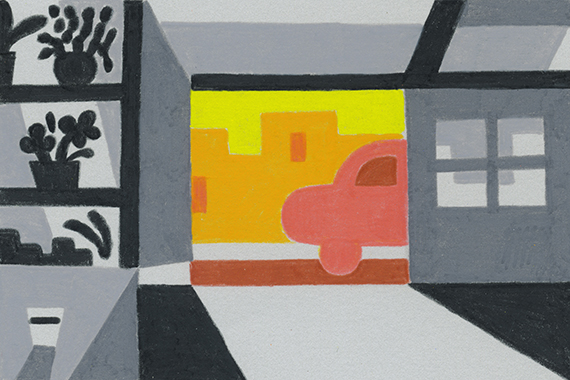
Image by Thomas Colligan.
Born in South Korea in 1987, Guka Han studied fine arts in Seoul before moving to Paris in 2014. Her debut collection, Le Jour où le désert est entré dans la ville, has been translated into Japanese and Korean. A graduate of the Master de Création Littéraire at Université Paris 8, she is also a translator of French into Korean (most recently of books by Olivia Rosenthal, Monique Wittig, and Édouard Levé) and her co-translation with Samy Langeraert of Hwang Jungeun’s novel 百의 그림자 (One hundred shadows) is forthcoming in French. (Photo credit: Samy Langeraert)
Katie Shireen Assef is a translator of French and a sometimes bookseller living in Marseille, France. Her translation of Valérie Mréjen’s novel Black Forest was published by Deep Vellum in 2019 and named a Publishers Weekly Book of the Year. (Photo credit: Kaori Mitsushima)