PIO Teaching Fellow Spotlight: Lisa Yau
Meet one of the 2022-2023 Poetry Inside Out Teaching Fellows and learn more about her work in curriculum building this year!
This school year marked the launch of the inaugural Poetry Inside Out Teaching Fellowship, a year-long program designed to support teachers as they pursue curricular research, build skills in creative language instruction, and learn how to foster collaborative discussions of poetry in translation in the classroom. Teaching Fellows join a vibrant network of students, teachers, poets, translators, and academics committed to open-ended dialogue about language and literature, working together to develop culturally responsive, integrated curricula based on PIO’s key practices.
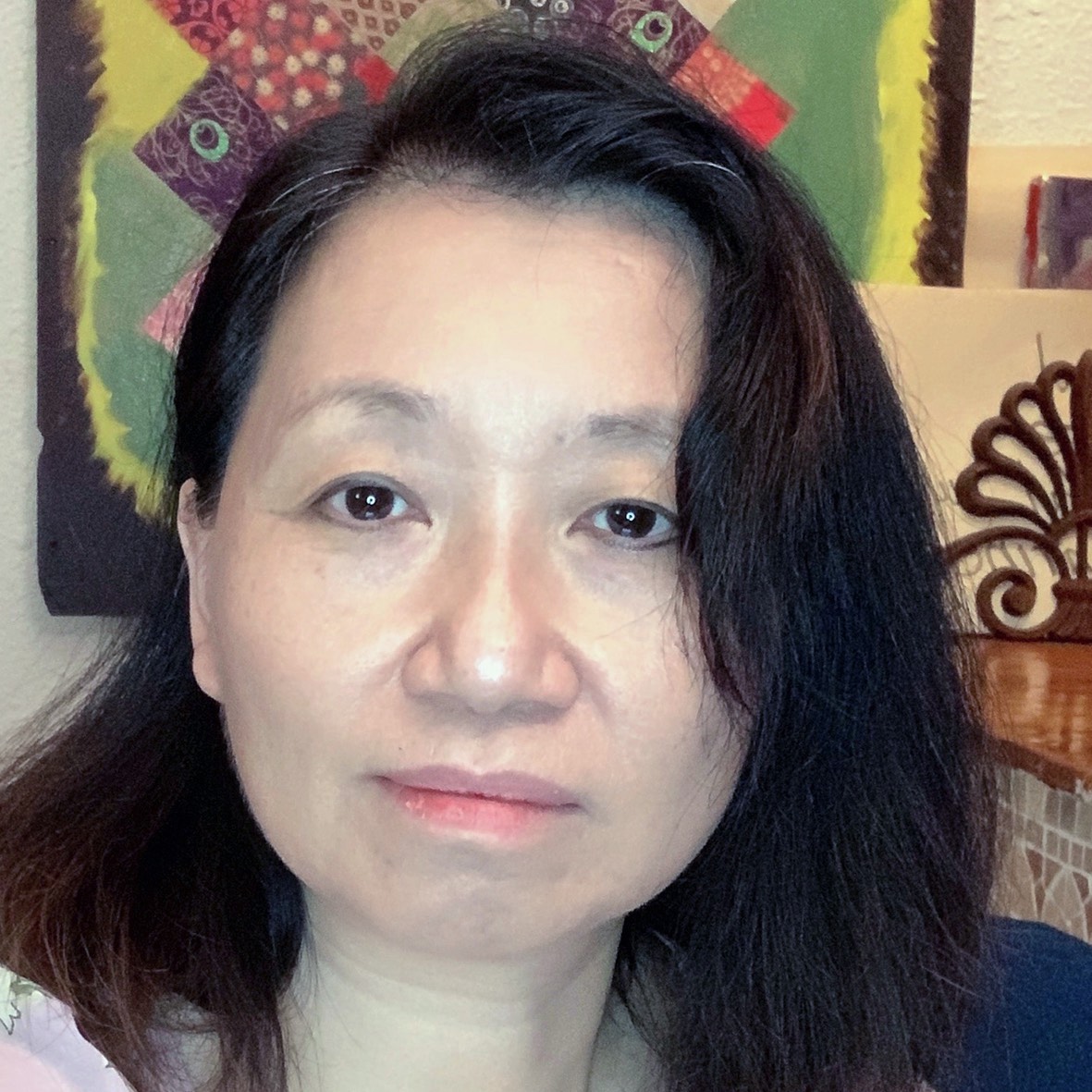
Having introduced the fellows as a group earlier this year, we’re excited to spotlight them individually and learn more about their work as the program progresses. Lisa Yuk Kuen Yau has been teaching in the School District of Philadelphia for 21 years, and currently teaches 5th grade at the Francis Scott Key School. Yau is a Teacher Consultant of the Philadelphia Writing Project since 2016, a Teacher Representative for the Teachers Institute of Philadelphia since 2018, and a National Fellow of the Yale National Initiative since 2019, with ample experience creating dynamic, new curricula. As a Teaching Fellow at PIO, she looks forward to conducting the research necessary to create a comprehensive curriculum unit based on poetry written by Indigenous peoples of Northern America.
What have you gained from the Teaching Fellowship so far? Anything that surprised you or you didn’t necessarily expect?
Through my PIO Teaching Fellowship, I’m able to investigate multiple tracks of personal and professional interests: 1) reflect on my own teaching pedology using the format of accordion books; 2) teach students how to use accordion books to record their creative thinking; 3) further my research to discover Indigenous poetry that channels ancient roots and contemporary reflections.
More specifically, I’ve gained a new appreciation and better understanding of the Mayan languages dating back 5,000 years. I’m truly enlightened by how incredibly complex and rich the Mayan language-family has evolved into over thirty (30) different spoken languages and (sad to say) at least two (2) that are now considered dead languages. The surge of contemporary Indigenous poetry with its current political-social movement is crucial in revitalizing Indigenous languages, literature, culture, and memory.
Tell us more about your research / curriculum-building project. How is it going? Anything you’re particularly excited about?
I really appreciate the freedom to direct my own research of interest and design original projects with a group of educators who are passionate about poetry from around the world. My initial research was focused on poetry written by Indigenous Peoples in the United States, but my journey had led me beyond the borders to discover languages of the Mayan peoples. The pivot was influenced by a student and his family who speak both Spanish and Cho’orti, the first language of approximately 15,000 Indigenous Maya Peoples of southeastern Guatemala and western Honduras.
Through these explorations, I’ve decided to study six short poems written by the Mayan glyph poet Aj Xol Héctor Rolando and plan to turn one of the poems into a PIO poem page for student translation. In many Indigenous languages, there is no direct translation of the English word for “poetry.” Rolando calls his (writing/drawing) texts “b’ich” after the songs his mother sang when he was younger. Dr. Paul M. Worley, a Professor of Spanish and World Literature at the Appalachian State University has translated these b’ich (in glyphs and Latin letters) from Spanish into English in consultation with the poet.
One of these Mayan glyphs is shown here.

Rolando’s text in Q’eqchi’: Kanab’in chi b’ehek sa’ laakik’el
Rolando’s translation in Spanish: “!Dejame caminar en tu sangre!”
Worley’s translation in English: “Let me move through your veins.”
What do you hope to make of the rest of your time as a fellow?
I hope to continue building strong relationships with other PIO Fellows to develop future projects for my classroom. The teacher support from other Fellows from my hometown Philadelphia as well as Chicago and Tulsa have been invaluable and beyond encouraging.
How do you see the skills you’ve gained during the fellowship benefiting your classroom / your students in the future?
I’ve embarked on the practice of utilizing (indefinite) pages of an accordion book to reflect on my teaching. My students have also benefitted from this practice, so much so that my students now have coined the term “thinking books.” My students and I have gained new ways of looking, feeling, and thinking about ideas through the process of making images speak to each other. For instance, we were able to figure out different ways to extend our accordion books with secret pockets inside my accordion book to store mini-books. Some of my students love inserting origami that can be unfolded into 3D shapes. For Mother’s Day, my students made accordion cards with their own handprints as the bookends.
In addition, I’m currently writing a curriculum unit based on a seminar about W.E.B. Du Bois and the 7th Ward of Old Philadelphia; the seminar is sponsored by the Teachers Institute of Philadelphia and led by Professor Amy Hillier of the University of Pennsylvania. The unit on W.E.B. Du Bois will include the making of an accordion book about him, his writing and research. Students will also use data portraits (data visualization), interviews, surveys, and housing designs to investigate their own beliefs, identities, and neighborhood in relation to W.E.B. Du Bois.
We will begin accepting applications for the 2023-2024 class of PIO Teaching Fellows very soon this spring! For more information please contact Poetry Inside Out Program Director Mark Hauber: mark@catranslation.org(opens in a new tab)