Room I
He waited another day and a half. And when still no one came, when at last the mold on all the rotten food blossomed and the spores flew into the air, he installed the lock.
Silid I
Silid I
Pagkayaring basahin ang instruksiyon, tinitigan niyang mabuti ang papel, habang sa isang kamay, hawak-hawak ang kontrapsiyon. Sinipat niya ang tagiliran ng pinto. Limas ang kanyang silid ngunit naisipan namang itira ang ilang mga bagay, kasama na ro’n ang koleksiyon niya ng mga lumang plaka. Aanhin nga naman ng magnanakaw ang kanyang mga inaalikabok na vinyl? Dumikit ang tungki ng gramafono sa latag ng itim at kumaskas ‘to kasunod nang malamig at umuunday na boses ni Sarah Vaughan. “(1) Ikabit sa gilid ng pinto. (2) Pihitin ang hawakan, saka iangat. (3) Iikot ang dial ng apat na beses. (4) Ulitin ang ikalawa’t ikatlong hakbang nang dalawang beses habang nagbibilang pabaligtad, mula lima hanggang isa.” Sumalampak siya sa sahig. Malinaw ang pangalawa’t pangatlo, ngunit ang panghuli? Nagkaintindihan kaya sila no’ng tinderong Intsik, taga-gawa’t taga-kumpuni, taga-benta ng mga seradura’t kandado nang idiin niyang: “Bigyan ‘nyo po ako ng pinaka-effective, ‘yong kahit ako, hindi makakalabas, ‘pag nawala ko susi ko hindi na ‘ko makakapasok.” Ngumiti ang matandang Intsik; ngumiti o umismid, hindi niya sigurado; tumango lamang ‘to’t tinungo ang isang kurtina, hinawi, at pumasok sa likod. Puno ang estante’t mga dingding ng samu’t saring mga seradura’t kandado; mayroong pamilyar, isang pindot mo lang, sarado na, habang mayro’n din namang hindi niya mawari, hindi lamang mukhang komplikado ang ritwales sa pagsasara’t pagbubukas kun’di gayundin ang hitsura’t hugis; may hugis kamay na may limang daliri’t may hugis din naman ng kamelyo at salagubang; bakal at kahoy na nangangailangang maisapakat ang mga piyesa sa tamang pagkakasunod bago maalis sa pagkakakabit; at mayro’n din namang isang bilog lang, na nang muling lumabas ang Intsik, dahil nahuli siya nitong nakatitig rito’y kinuha mula sa ilalim ng estante’t ‘pinahawak sa kanya. Malamig ang bola sa kanyang palad, parang holen ngunit mas malaki nang kaunti’t mas mabigat. “Baka ‘yan ang hinahanap mo,” pakli nito. Pa’no magiging kandado ang isang bola? Inikut-ikot niya ‘to, pinadaan sa kanyang mga daliri, muntik pa ngang ituktok sa ibabaw ng counter, at dali-dali iyong inagaw ng negosyante. Ipinatong nito ang puwitan ng bilog sa salamin; wala itong pinindot o pinihit ngunit alam niyang mayro’n ‘tong ‘ginalaw, hindi lamang niya nahagilap, at sa isang iglap, bumuka ang bola’t nahati, may maliliit na kadenang nagdurugtong sa dalawang bahagi ng isfero, siyang kapwa susi na ri’t pampakaw. P’wede raw sa mga bisikleta at sa mga motor, pero mahal.…
Room I
After reading the instructions, he looked carefully at the paper, while holding the contraption in his other hand. He eyed the edge of the door. His room had been left empty except for a few things, including his collection of vintage vinyl. But really, what would a thief even do with all his dusty vinyl? The gramophone’s needle skipped, followed by Sarah Vaughan’s cool, undulating voice. (1) Attach to the edge of the door. (2) Turn the knob, then pull up the lever. (3) Turn the dial four times. (4) Repeat the second and third steps twice while counting down backward, from five to one. He threw himself on the floor. Repeating the second and third steps was clear, but the last bit? When he had told the Chinese shopkeeper, maker and repairman, seller of locks and chains, “I need your most effective lock, so that even I couldn’t get out, and if I lost my keys there would be no way to get back in,” was he making any sense? The old shopkeeper had only smiled—or smirked, he wasn’t sure—and nodded, then walked toward a curtain in the back of the shop, parted it, and disappeared behind it. The shelves filling the walls of the shop were crammed with all sorts of locks and chains, some of them familiar: one click and it’s locked. And yet there were others that he couldn’t figure out as easily; not only did their rituals of locking and unlocking look complicated, but their shapes and figures as well. There was one shaped like a hand complete with all five fingers and there was one shaped like a camel and another like a beetle—a steel-and-wood contraption whose pieces needed to be positioned in the right places in the right order before it would pop open—and then there was one that was just a ball, which the shopkeeper took from the glass display counter when he saw him eyeing it and gave him to hold. The sphere felt cold in his palms, like a marble but a bit bigger and heavier. “Maybe that’s what you’re looking for?” the shopkeeper quipped. How could a ball be a lock? He turned it around and around in his hands, let it dance between his fingers, and was about to knock it against the counter when the shopkeeper, seeing what was about to happen to his precious merchandise, speedily snatched it away. Then with exaggerated care, he placed it on the glass counter, and though he didn’t press any buttons or hit a switch, he must have done something out of sight, because in one instant the ball split in two, to reveal the two halves of the sphere connected by a small delicate chain that was itself both the key and locking mechanism. Probably useful for bicycles or motorcycles, but too expensive. “No, this isn’t what you want, but I know,” said the shopkeeper, “this is what you want,” and from inside a box, he produced a singular lock; it was about five to six inches long, with a handle and a dial, and it looked light enough and pretty easy to use. “Just follow the instructions.” He liked it, and without asking anymore questions, he haggled with the shopkeeper and finally got the lock for the price of five hundred pesos (which was actually still quite expensive). He was now looking at the window, measuring it, realizing it was smaller than him and he wouldn’t be able to fit through. The lock still sat at the foot of the door, uninstalled, while Ms. Vaughan began her last song, crooning desire and strong summer heat. He didn’t believe what the shopkeeper had said about the effectiveness of the lock; he wanted to return it, thinking he might want the spherical one instead, but what would be the use since he knew and would have to accept that he just wasn’t good with anything complicated. He liked his stuff easily solvable, no manuals needed, user-friendly, one-touch, but here he now was, bereft of everything, except for the gramophone he had brought home the night he’d found his home ransacked. He’d immediately called his father to tell him, even prepared his story, but how to get to the end, he hadn’t been and still wasn’t sure, or he lacked the courage to give this circuitous explanation: the fridge had been taken but its contents had been left behind, the DVD player was gone but not the DVDs, and the computer, what a surprise, it was also stolen except for the motherboard, as if the thief were saying, your memories are no use to me. He ended up just telling his father he’d be home in a few days. He asked the neighbors, did you see anyone sneak in or anyone go out, but none of them had seen anything, and in his rage he found himself screaming, “I hope you all go blind, then!” He didn’t even try calling the police, and he stopped thinking about it because he already knew that solving the mystery was beyond his mental acumen. He spent several hours standing in front of his open door, expecting his belongings to just walk back in, his thirty-six-inch flatscreen, swaying on its feet, drunk, his sound system rolling toward him, and his CPU, frazzled and out of it, asking for its stolen brain back. Whoever had done this to him was clearly heartless, had a crooked soul, an impure conscience, and most of all, was in possession of some kind of mystical power. Come to think of it, it’s said that in the event of a fire, you’d find yourself able to lift anything, even things that weigh a ton. And after twenty-four hours, he’d decided to forgive the thief—or thieves—and quickly went out to buy a new lock. When he came back home, he saw footprints. The criminal had come back to the scene of the crime. He didn’t feel nervous, just shouted into the emptiness, “Are you here?” No one answered. He repeated himself, reddening with rage, “You son of a whore, are you here? Show yourself!” He tore his house apart—and then paused, laughing at himself—where was anyone going to hide, behind the wall? The rafters? Underneath the floor? He tore his house apart. He fell asleep on the floor. When he woke up, he saw the tiny feet of an ant. It was headed toward the lake of his drool and he quickly squashed it between his fingers. He wanted coffee, but only the water container was left and the dispenser was no more; his coffee packet was still there, what would have been his morning cup had the coffeemaker not been taken. He played Sarah Vaughan—read the instruction manual—stood next to the window—And the livin’ is easy / Fish are jumpin’—and he again read how to install the lock with the handle and the dial. The taho vendor shouted his wares in the morning and the balut vendor shouted his wares at night. The town fiesta came and went, and summer came hot on its heels, followed by rain and a flood that finally receded, and the family next door started a new family, and he was still there, waiting. Waiting for what, for whom? The footprints disappeared, replaced by his own. The world forgot about him, even his friends and co-workers, former lovers and loves. He waited another day and a half. And when still no one came, when at last the mold on all the rotten food blossomed and the spores flew into the air, he installed the lock. He attached it to the edge of the door. He turned the handle, then pulled up the lever. He turned the dial four times. He repeated the second and third steps twice while counting backward, from five, four, three, two, one. No one could come in, no one could leave. The needle scratched and scratched at the vinyl. Now he was safe. Now he would never lose anything again. He was about to replace the vinyl—when someone knocked on the door. He let the knocking go on a few more times, before asking, “Who is it?” “It’s me, I’m returning your stuff.” He went to the door. He didn’t peer into the peephole, but he knew, felt, that there was another body on the other side, breathing. They were both breathing, out of rhythm, unable to find the beat. There was nothing in the instruction manual that said anything about how to unlock it. “Open the door,” the voice from the other side pleaded. But I can’t open it, I can’t.
“Silid I” from Ang Kompedio ng mga Imposibleng Bagay. Manila: Everything’s Fine, 2022.
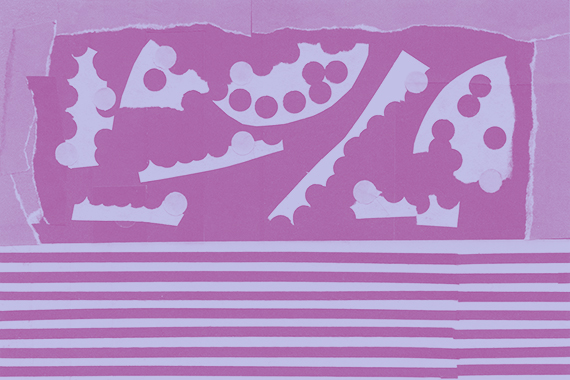
Image by Antonio Carrau.
Carlo Paulo Pacolor is a non-binary author and director of stories and stage dramas. Their self-published works include Sabjek/Objek: monograph ng ilang lumang kwento, Handbook ng mga Bakla sa Napipintong Pagtatapos ng Daigdig, 100 Aporismo o kung anupaman sa mga unang araw ng quarantine, and Ang ‘di kompletong Vocábulario ng Casaláulaan.
Soleil Davíd is a poet, writer, editor, and translator who moved from the Philippines to the United States at age 17. Her work has appeared in the Los Angeles Review of Books, Arkansas International, Cream City Review, and The Margins, among others. She received a BA from UC Berkeley and an MFA from Indiana University. Davíd has received support from PEN America, VONA, and Bread Loaf Translators’ Conference.