“They were singing a folk song…” | “And had you asked me how it feels—” | “Not long is left until a kiss and the spring…” | “When they dragged him out of the school yard…”

What new things can we tell you about borders and divisions
when you ask?
Там співали народної.
Мова ламалась на згинах
І на зламах іскрила вугільно. У горлі дерло,
Там співали народної.
Мова ламалась на згинах
І на зламах іскрила вугільно. У горлі дерло,
наче люди кликали того, хто уже прийде,
хто не приходив ніколи досі.
І хотілося плакати й доєднатися,
щоб легені рвалися із грудей: двоє човнів – скажімо,
Ніжність і Туга – зсудомлені біля причалу,
а відпливти не можуть, припнуті до цього повітря колючого
за гортань і трахею.
Хотілося плакати і забратися геть,
поїхати, часу не гаючи, світ за очі, не вертатися,
і коли на кордоні спитають: «Що ви там везете?»
розгорнути торбу з горою дзвінких уламків,
а що ж це робилося – не змогти пояснити.
Витекли всі слова
у протяжну зимову пісню.
І якби запитав мене – як воно –
повертатися з мирного дня у воєнний стан, –
я б хотіла розповісти про свою безкінечну дорогу.
Як сім пар свинцевих чобіт стоптала, три палиці стерла до цурки,
а побіля річки, там, де велика проталина, бачила,
як, зігнувши довгу кільчасту шию, жадібно п’є війна,
І тепер я точно знаю, як її вбити,
рубонувши між п’ятим хребцем і шостим,
лиш важливо, що має бути єдиний впевнений рух.
А насправді:
три години дороги, авто пролітає
повз мобільний блокпост, над ранок хлопці з нацгвардії
змерзло курять серед снігів, утомлюються жартувати.
І неначе я вся – відкрита долоня, яку різонули папером,
Що нового сказати тобі про кордони й розділення,
коли ти запитаєш? Та ти уже запитав,
беручи мою руку своєю, язиком торкаючись
розрізаної долоні. Просто
сильно саднить.
Ще трохи лишається до цілунку і до весни.
Лоскітно проповзає по горлу тривожна линва любові.
Всю ніч до ранку сиплеться дощ на дах, стукотить,
як сухий горох.
Із відстані краще видно, то розкажи, якими
бачили одне одного, коли дивилися майже впритул
і хтось один завжди не витримував, опускаючи очі?
Червоні мітки зимових подразнень, губи сухі,
очі сльозяться, голос неконтрольовано
зривається на фальцет. Ще не цілунок, але
в коротких обіймах уже затісно дихати — серце,
бойовий цепелін, гарячим повітрям напнутий,
роздирає елінг тіла і вивільняється.
І не знаю, як задалеко
долетить у цей дощ, я не встигла навіть
імені йому дати.
Назви, якщо долетить.
Як його виводили зі шкільного подвір’я,
волокли попід руки, четверо, – всі жінки голосили,
плакали діти, завивали собаки в околиці.
І коли, натиснувши на потилицю, пробували запхати
у міліцейський фургон, він видирався
і казав дивовижно погідно:
не плачте, діти,
світ і світло — дивні слова-відлуння,
а в шкільний котельні, де чорно й пахне вугіллям,
ніби теж частинка світу, але краще отак.
Я хотів говорити при світі й світлі своєю мовою,
я хотів читати при світлі Священну Книгу,
і якщо у світі, чиї кордони — тільки сіль і залізо,
успадковані від батьків, для цього не знайдеться місця,
то й ховатись немає сенсу.
А жінкам сказав,
щоби стишились, щоби запам’ятали,
люди-бо, яких за власний прапор патрали,
мали б його зрозуміти, почути.
І ще до того,
як рука з нечистими нігтями натиснула на потилицю,
встиг подивитися вгору.
Від‘їздила машина, стояла висока курява.
Мінарет, зачепивши тонкою верхівкою сонце,
не пускав його закотитися і довго, довго
обпливав, як свічка.
They were singing a folk song.
The language broke at the folds
and the shards sparkled like coal. The throat prickled,
as if people were calling the one who would not come,
who had never come.
And I wanted to cry and to join them
so that my lungs would break from my chest: two boats—we’ll say,
Tenderness and Longing froze near the wharf.
They could not sail off, moored to this chilly air
by the larynx and trachea.
I wanted to cry and to escape,
to leave, not wasting time, far away, never to return
and when at the border they ask, “What is in your luggage?”
I open the bag with ringing fragments
and I cannot explain what broke.
All the words have flown out
into an enduring winter song.
And had you asked me how it feels—
to return from a peaceful day into a state of war—
I would have liked to tell you about my endless journey.
How I wore out seven pairs of steel-toed boots, how I used three metal canes
and near the river, where there is a small glade, I saw
how, having lowered its long round neck, the war greedily drinks
and now I know definitively how to kill it,
hacking between the fifth and sixth vertebra,
only it’s crucial for it to be one confident movement.
In reality:
three hours on the road, the car flies
past mobile checkpoints, and as morning breaks the guys from the National Guard
are smoking in the freezing cold, in the snow, too tired to joke around.
And I’m like an open palm cut by paper.
What new things can we tell you about borders and divisions
when you ask? But you already have asked,
taking my hand in yours, touching my wounded palm
with your tongue. It’s just that it
feels so raw.
Not long is left until a kiss and the spring.
The anxious rope of love tugged, tickling the throat.
All night the rain falls onto the roof, patters, like dried peas.
From a distance one has sharper vision, so tell me, how
did you see each other when you looked almost point-blank
and the other could not stand it and lowered her eyes?
The red marks of winter, itchy skin, dry lips,
eyes tearing, voice uncontrollably
reaching a higher pitch. Not a kiss yet, but
in the short-lasting embrace it already feels too tight to breathe—the heart,
this combat Zeppelin, held up by hot air,
breaks through the sling of the body and frees itself.
And I don’t know how far it will flow into the rain, I haven’t had a chance
to name it.
If it finds its way,
then name it.
When they dragged him out of the school yard,
four of them yanked him by the hands, all the women lamented,
children cried, neighborhood dogs howled.
And when, pressing on the nape of his neck, they tried to push him
into a police car, he tried to break free
and spoke surprisingly calmly:
Don’t cry, children,
the world and the light are strange words and their echoes
and in the school boiler room where it’s dark and smells of coal,
as if it is another part of the world, it’s better this way.
I wanted to speak to the world and the light in my own language,
I wanted to read by the light of The Holy Book
and if the world whose borders are but salt and iron,
inherited from one’s parents, has no room for that,
then there’s no point in hiding either.
And he told the women
to quiet down, to remember
because people who were disemboweled for being loyal to their own flag
should be able to understand him, to hear him.
And right before the hand with unclean nails pressed on his head,
he had time to look up.
The car was setting off, the dust kicked up high.
The minaret, having gathered the sun onto its skinny top,
was not letting it set and for a long, long time
melted like a candle.
Калитко, Катерина, “Там співали народної,” “І якби запитав мене, як воно,” “Ще трохи лишається до цілунку і до весни ” and “Як його виводили зі шкільного подвір’я,” from Ніхто Нас Тут Не Знає, І Ми Нікого. Чернівці: Мередіан Черновіц 2019.
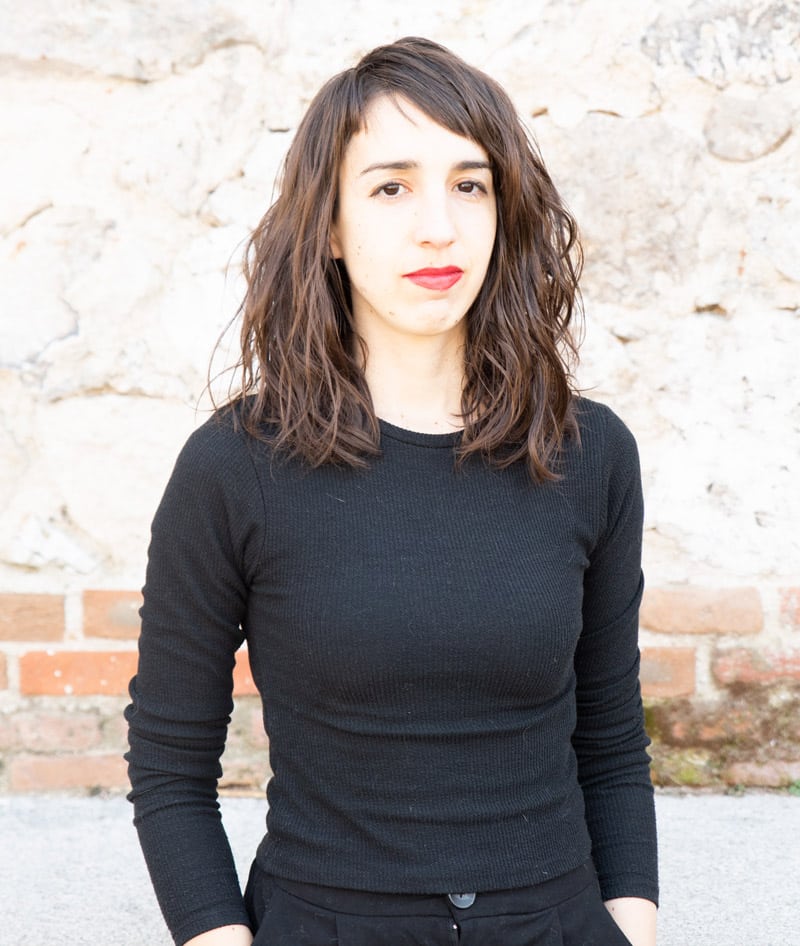
Kateryna Kalytko was born in Vinnytsia in 1982. She is an acclaimed poet, writer, and translator who has published multiple collections of poetry and prose. Her work has been translated into English, Polish, German, Hebrew, Russian, Armenian, Italian, and Serbian. She has been the recipient of many literary awards and fellowships, among them the Central European Initiative Fellowship for Writers in Residence (2015) and the Ukraine BBC Award for fiction (2017).