The Politics of Translation, Part 2
Translation Troubles
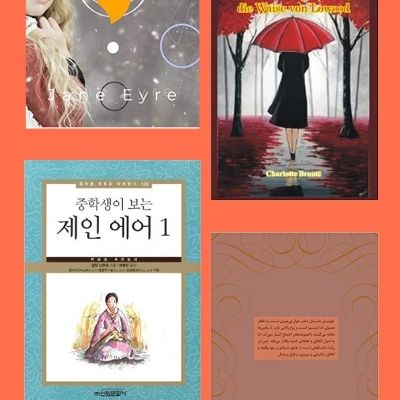
Translation troubles our too-simple ideals of authority, authorship, agency, and originality, and the relationship of these ideals to their abject opposites: counterfeits, passivity, mimicry, corruption. Translation creates an excess: too many texts, by too many people, from too many cultures. In order to make translations acceptable to our literary culture, our gatekeepers must constantly try to erase them or cleanse them of the stench of this excess. They sometimes do this intentionally, but it’s mostly unconscious: they won’t review a book in translation because they don’t feel like they have the necessary level of mastery; they may be in favor of translation but only works in translation that comply with what they already think poetry in translation should read like. The result is the same: making foreign literature invisible, making foreign literature secondary, making foreign literature fake.
The trouble with translation is that it invites us not just to read foreign writers with different aesthetics than those promoted by our official verse culture (whether that is the verse culture of Poetry magazine and MFA programs or the “experimental verse culture” enforced by PhD programs); translation also opens up the text, invites us to read poems as “deformation zones,” continually moving in new and curious directions, continually involving new (and often “unintended”) readers. In other words, translation challenges the very notion of mastery—not just of foreign texts but also of texts written in English. The deformation zones opened up by translation show that reading for the mastery of a text is a means of domesticating not just foreign texts but U.S. texts as well. Reading for mastery is fundamentally a means of reducing the impact of a work of literature.
This need for mastery has a troubling connection to a larger political situation: the hegemony of U.S. culture and the English language. In much of the world, people are exposed to U.S. culture from a very early age; they need to learn English to make sense of what would otherwise be a pervasive noise. The cultural hegemony of U.S. culture is sometimes created intentionally—as when the CIA promoted Jackson Pollock and abstract expressionism as the latest “avant-garde” as Cold War propaganda, or when the CIA and various right-wing organizations promoted “accessible” poetry aggressively to somehow fend off communism—and other times less directly, as when laws deter the translation of international literature into American English but encourage the translation of U.S. authors into other languages. Or when the fierce tenure rules of U.S. academia generate a plethora of books and conference papers about U.S. experimental poets, which in turn leads to a U.S.-centric idea of contemporary poetry: to become a “master” of the contemporary, scholars need to learn more about U.S. poetry than about the writing from their own countries. Most importantly, U.S. literature benefits globally from the sense of U.S. centrality derived from military and economic might. There is a sense that it’s important to know what is going on in U.S. literature.
In the context of U.S. hegemony, it becomes vital—and deeply political—that we reject “mastery”: mastery over the text, mastery over our own country, but also the sense of mastery that leads us to reject or render “invisible” foreign writers and texts. The discomfort we feel when engaging with a foreign text is an important one, since it is the discomfort of challenging our international mastery. And just as importantly, this act challenges a mode of reading that subsumes and homogenizes both international and U.S. literature into one literature, ruled by certified “masters” and gatekeepers.
The sound that challenge makes—a rumbling, a crinkling—is the sounds of a path toward a volatile engagement with foreign as well as U.S. literature. It’s the sound of foreign literatures infecting and corrupting the Anglo-American Tradition, not only crossing national boundaries but opening up zones of conflict within that supposedly complete tradition, supposedly singular language.
Welcome to the deformation zone.
Johannes Göransson is the author of several books, including most recently Haute Surveillance and the forthcoming The Sugar Book (both from Tarpaulin Sky Press). He has translated several books, including four books by Aase Berg. He teaches at the University of Notre Dame, blogs at Montevidayo.com, and edits for Action Books and Action, Yes with Joyelle McSweeney.