Hurricane | “Leaving the subway…” | Landscape with Polyphemus
The sky purifies, and God’s hands crumple the star-map.
Ciklonas
Kol kas tik žalsvas mirgesys ekranuose.
Spiralė sukasi ir krūpčioja. „Dabar tai virto norma“.
Ciklonas
Kol kas tik žalsvas mirgesys ekranuose.
Spiralė sukasi ir krūpčioja. „Dabar tai virto norma“.
Ji mus pasieks gal po dienos kitos.
Dangoraižis linguos, nelyginant lėktuvas, kertantis žemyno ribą,
viršum užtvindytų metro platformų plūduriuos negyvos žiurkės,
mašinoj įsijungs aliarmo sistema, paskui nurims, kaip rimsta sužeistasis,
aeroportuose pristigs sudedamųjų lovų.
Kai kurie praras gyvybę – jų vardų dar nežinom.
Šeimyna už miesto, kol parduotuvės neuždarytos,
perka javainius. Vyras norėjo
išvykti toliau nuo pajūrio, žmona nesutiko.
Neaišku, saugiau rūsyje ar antrajam aukšte
(ąžuolo šaknys dar trumpos, jis gali užvirsti ant stogo).
Vaikai neturėtų girdėti tų ginčų.
Beje, ir negirdi: glamžuoja šunėką,
skaito vienas kitam „Žmogų vorą“,
patenkinti, kad mokykla nebeveikia,
o tamsuma patogiausia slėpynėms,
ir lengva pagąsdinti vyresniuosius,
su šviestuvu iššokus iš koridoriaus
prieš jaukią naktį miegamajame maiše.
Nes vaikai nesielgia kitoniškai
netgi ten, kur šeimyna svarsto: brautis pro keletą sienų ar likti –
juk niekas nelaukia svetur, o sumaištis tėvynėj,
galimas daiktas, baigsis. Dažniausiai tie ginčai
pavėluoti, kadangi duris jau klabena
liekni vaikinai su žaibo ženklais ant mundierių,
vorele išsiskleidę kareiviai žalsvomis palaidinėmis
siaučia sodybą, laisvės kovotojai skuba
naikinti kolaborantų, artėja minia su mačetėm.
Žmogus, kaip žinia, vienintelis žemėj
turi tiek išminties, jog yra galingesnis
už stichiją. Kadangi tik jis
moka vertinti tartį ir kaukolės formą,
atskirti tuos, kas priklauso netinkamai tautai
ar luomui, pražaidusiam savo žaidimą.
Už lango šviesu (ulba volungė, žydi bijūnas),
nes orai visada palankūs tiems, kurie laimi.
Pagaliau jie palankūs ir mums. Mirgesys ekrane
nuslinko į šiaurę. Šaligatvy dunkso
nuo pamatų nuversta telefono būdelė,
prie lentinio tako beliko vienas žibintas,
bet žemė garuoja ir šyla. Šunėkas
eina lenkčių su vaikais. Atsilaikė medžiai. Pasaulis
lieka lygiai toks, koks ir buvo.
***
E. K.
Su kuprine išsprūdęs iš metro,
Pagaunu atmatų ir dumblių kvapą.
Už kolonados plakasi vanduo.
Anksčiau krantinėje nebuvo sfinkso,
Ir ačiū Dievui. Tąsyk, jaunumėj,
Tom ūkanom alsuodavau kas rytą.
Čionai gyveno fizikas. Vėliau
Jis išsikėlė priemiestin, į šiaurę
(Daugiau nei valanda trankiu tramvajum).
Pas jį dažnai užeidavo poetas.
Eilėraščiai, kalėjimo naujienos,
Priskrudę indai, stiklo žvangesys.
Senajam būste, po dulkėta lempa,
Aš kartais laukdavau vienos gražuolės.
Pažvelk į fotografiją. Kalva
Viržyne, sąsmaukoj, kur upių slenksčiai
Skalauja bunkerius. Prie jūros glaudžias
Beglobio suomiško granito šcheros.
Anapus horizonto plyti miestas,
Kadaise nubaustas mirties bausme.
Povandeninis laiptas į Neptūno
Valdas. Už bokštų brėžiasi valstybė,
Kurios nemokame įsivaizduoti.
Jau žinome, kad laiko nebedaug.
Sugrįžtame, juokaudami per jėgą,
Ir aukštalangio kiemo šuliny
Be garso renkasi gegužio naktys.
Ko trokštame? Iš kokio atminties
Giliausiojo lygmens lukštenas aidas,
Prisodrinantis tuštumą? Kame
Susipina išsiskyrimų siūlai?
Kur mirsime? Koks angelas atves
Šiuo grindiniu nematomą gyvybę?
Kodėl tamsoj atplaukia iš dangaus
Violončelės, arfos ir obojai?
Penkių gatvelių mazgas. Čia praleidau
Anuos metus. Atrodo, atpažįstu
Pavartę, kur užklydusi katė
Priglaudžia standžią keterą prie mūro.
Lietaus vanduo lašnoja lataku.
Anapus kryžkelės nukaršo tuopa.
Naktis jau sklaidos. Drėgnas atspindys
Paliečia aprūdijusį, bet gaudų
Skardinį stogą. Orlaidė bilsnoja
Per šimtą žingsnių nuo žvarbaus kanalo.
Nesudėtingas miesto derinys –
Šakų baltumas, akmenio juodumas.
Mes ne vieni. Pasaulis virsta dūmais.
Virš kolonados blykčioja ugnis.
***
Peizažas su Polifemu
Rusvo kalno ertmėj – gilūs urvai, gaudžiančios tuštumos.
Kelią stingdo šalna. Giedras ruduo virpina vandenį.
Nei budrus neregys, mūsų balsus gaudo kraštovaizdis –
Jo į diržus ausis, nervų mazgai, milžino smegenys.
Nesislėpk nuo lemties, džiaukis diena, druskos prisodrinta
Putų juosta, kuri smėlio grūduos žymi atoslūgį.
Vėjai skabo lapus, šiaušia žoles, ardo laužavietę –
Ji juoduoja toli, gūbrio viršuj, tartum akiduobė.
Daug skaistesnis dangus. Dievo delnai taršo žvaigžd ė lap į .
Visą naktį šviesu: baltu variu blykčioja lapkritis.
Leonidų griūtis miesto slenksčius daužo skeveldromis,
Jų dvilypėj liepsnoj rieda mirtin skardžiai ir sąsiauriai.
Hurricane
For now, just this greenish flashing on the screen.
Its spiral turns and twitches. “This has become the norm.”
It will reach us, perhaps, the day after next.
The skyscraper will sway like an airplane crossing the continent’s edge,
dead rats will float above flooded subway platforms,
the car alarm will sound then subside, like a wounded man,
airports will not have enough cots for sleeping.
Some will lose their lives—we don’t yet know their names.
The suburban family, while grocery stores still work,
purchases cereal. The husband
wanted to evacuate farther from shore, but not the wife.
It’s not clear if it’s safer in the basement or on the second floor
(the oak’s roots are still shallow, so it could crash through the roof).
The children shouldn’t hear this argument.
And, for that matter, they don’t: they’re petting the dog,
reading Spiderman to each other,
content that school is out, and
darkness is quite good for hide-and-seek
for it’s easy to scare the adults
by jumping out of the hallway
before a cozy night spent in a sleeping bag.
Children, despite all, don’t behave differently
even when the family must weigh whether to cross borders or stay—
nobody waits for them elsewhere, and the chaos at home
might well come to an end. Usually, those arguments
are too late, for the door is already being rattled
by thin young men with lightning bolts on their uniforms,
or a threshing line of soldiers with green tunics sweeps
through the farmstead, or freedom fighters hurry
to off the collaborators, or a mob with machetes approaches.
The human being, as we know, is the only creature
on Earth with the wisdom to be mightier
than the elements. For only he knows how
to distinguish dialects and the shapes of skulls,
to determine who belongs to the wrong clan, class,
or nation—who’s game is up.
It’s light outside the window (the peony blooms, the oriole sings)
because the weather is always good for those who win.
At long last, it is good for us. The flash on the screen
slides off to the north. A telephone booth, uprooted
from its foundation, lies on the sidewalk,
and the boardwalk has but one lamp left,
yet the ground steams with warmth. The dog
races with the children. The trees stand firm. The world
remains the same as it ever was.
***
for E. K.
Leaving the subway with a pack on my back,
I catch the mixed scent of refuse and seaweed.
Water laps on the other side of the colonnade.
Before—there was no sphinx on the quay,
Thank God for that. Back then, in my youth,
I imbibed those mists every morning.
A physicist lived here. Later,
He moved to the suburbs up north
(More than an hour’s bumpy ride on a tramway).
A poet often visited him:
Poems, the news from prison,
Dirty dishes, the tinkle of glassware.
In the old flat, under a dusty lamp,
I sometimes waited for beauty to arrive.
Look at the photograph. A heath-covered
Hill on the isthmus where swift river rapids
Rinse bunkers. Homeless skerries
Of Finnish granite huddle near shore.
A city spreads over the horizon—
Once condemned to death, as Akhmatova said.
An underwater staircase slides into Neptune’s
Realm. A country we don’t know how to imagine
Sketches itself beyond the tower.
We already sense there is not much time.
We return, forcing ourselves to laugh,
And May nights silently gather
In the well of the high-windowed courtyard.
What do we want? From what deep layer
Of memory does the echo, steeped in emptiness,
Hatch? Out of what substance
Are the threads of our parting wound?
Where will we die? What angel will bring
Unseen life along this ground?
Why do cellos, harps, and oboes
Swim down to us through dark skies?
Five streets in a knot. I spent those years
Right here. It seems I recognize the spot
Along the fence where a lost cat
Shelters under the crest of a wall.
Rainwater drips from the gutters.
The poplar at the crossroads has grown old.
Night spreads itself out. A damp reflection
Touches the rusty but still resonant
Tin roof. The apartment air vent rattles
A hundred paces from the cold canal.
This is a simple city composition—
The whiteness of branches, the blackness of rocks.
We are not alone. The word turns to smoke.
Great fires rise above the colonnade.
***
Landscape with Polyphemus
In ruddy mountain depths—deep caves drone in emptiness.
Cold frosts the path. Water trembles in clear autumn’s reign.
Like an attentive blind man, the landscape snags our voices—
With his calloused ears, his knots of nerves, his giant’s brain.
Don’t hide from fate, relish the day and—thick with salt—
The line of spume that marks the sand at low tide.
Wind plucks the trees, ruffles the grass, wrecks the fireside—
The pit blackens far away, on the heights, like an eye-socket.
The sky purifies, and God’s hands crumple the star-map.
Bright lights all night: November flashes white copper.
The Leonids pound city thresholds with interstellar flak,
While channels and cliffs fall to death in a twofold fire.
“Ciklonas” is from Eumenedžių giraitė. Vilnius: Versus aureus, 2010. Others unpublished.
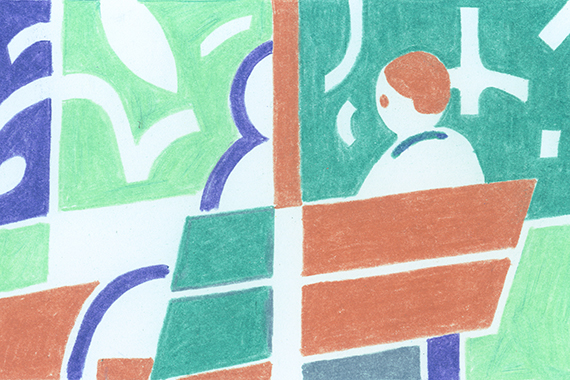
Image by Thomas Colligan.
Tomas Venclova was born in Klaipeda, Lithuania, in 1937, and graduated from Vilnius University. He is a scholar, poet, and translator of literature. Venclova was a founding member of the Lithuanian Helsinki Group, which monitored Soviet violations of human rights. He is professor emeritus at Yale University, and now lives full time in Vilnius.
Rimas Uzgiris is a poet and translator, author of North of Paradise, Tarp (poems translated into Lithuanian), and translator of Caravan Lullabies by Ilzė Butkutė, Then What by Gintaras Grajauskas, Now I Understand by Marius Burokas, The Moon is a Pill by Aušra Kaziliūnaitė, and Vagabond Sun by Judita Vaičiūnaitė. He holds a PhD in philosophy and MFA in creative writing. Recipient of a Fulbright Grant and an NEA Translation Fellowship, he teaches at Vilnius University.