from Owlish
In this little neighborhood of theirs, with its impeccably clean streets, swept punctually at the same time every day, it was rare for anything unexpected to occur. Or, at least, for signs of the unexpected to linger for very long.
鷹頭貓與音樂箱女孩
在這個混亂的空間裡,如果披荊帶棘,來到靠牆的書架前,你會看見它們都高而且深,每一層前後都密密麻麻地排列了兩行的書。如果,拿一把梯子,把書櫃高處第一排的書取出──你可以想像,教授Q或者曾經也那麼做過──他很可能便會在這些書的背後,發現自己年輕時發表過的一些詩作、曾經寫過的現在他會形容為賀爾蒙過盛的火熱文字,一些筆記本裡,夾著他所寫的專欄文章和接受訪問的剪報。教授Q站在梯子上,仰望著立在書櫃最上層的這些舊物,並沒有伸手去觸碰它們,彷彿這是整副骨牌的一個機括,一觸動它,整個世界便會隨之崩塌。相反,教授Q很快便把原來放在第一排的書,重新排好在書架上,動作那麼俐落,就像一個砌磚工人,一下子便把書牆重新砌好,以此完成新一次的遺忘。
謝曉虹《鷹頭貓與音樂箱女孩》(臺北:寶瓶文化),2020。
鷹頭貓與音樂箱女孩
在這個混亂的空間裡,如果披荊帶棘,來到靠牆的書架前,你會看見它們都高而且深,每一層前後都密密麻麻地排列了兩行的書。如果,拿一把梯子,把書櫃高處第一排的書取出──你可以想像,教授Q或者曾經也那麼做過──他很可能便會在這些書的背後,發現自己年輕時發表過的一些詩作、曾經寫過的現在他會形容為賀爾蒙過盛的火熱文字,一些筆記本裡,夾著他所寫的專欄文章和接受訪問的剪報。教授Q站在梯子上,仰望著立在書櫃最上層的這些舊物,並沒有伸手去觸碰它們,彷彿這是整副骨牌的一個機括,一觸動它,整個世界便會隨之崩塌。相反,教授Q很快便把原來放在第一排的書,重新排好在書架上,動作那麼俐落,就像一個砌磚工人,一下子便把書牆重新砌好,以此完成新一次的遺忘。
謝曉虹《鷹頭貓與音樂箱女孩》(臺北:寶瓶文化),2020。
from Owlish
Professor Q lived in a residential complex in Lion Slope, still on the Nevers peninsula but quite some distance from the university. Like the majority of areas developed during the city’s economic boom, pragmatism had been the guiding principle for the neighborhood’s design: the tower blocks were orderly and narrow, every inch meticulously calculated to ensure that each part served a purpose, leaving no ambiguous blank space to spark unnecessary flights of imagination. Maria had chosen their apartment and made the down payment on it, and the apartment itself was objectively dull and uninspiring. Even so, the first time the professor had seen the title deeds, with his name written in beside his wife’s, he had been unspeakably moved.
He turned one of the two bedrooms into a study, a kind of private collecting room exclusively for him. Every week without fail he would go to the bookshop to buy new books, and every year on his trips to international conferences and on his holidays abroad he seized the chance to go shopping, gathering exotic paintings, statues, photograph albums, and rare books, all of which he would pack into the room on his return.
He had so many books that it was impossible to stick to any kind of system for looking after them properly. Before long, new purchases were covered in dust and the humidity would swoop in to attack, leaving them soft and spotted with mildew. Perhaps he did it on purpose, willing them to turn dark and disorderly, because when the pages warped into messy waves, or gaped open like perpetually parted lips, they formed beautiful little hidey-holes for booklice, cockroaches, and all sorts of other tiny dark things. In this way, he accumulated nooks and crannies that Maria would never notice, in which he could bury all those treasures she would almost certainly have dismissed as creepy, or depraved.
If you were to enter the chaos and forge ahead to the bookcases that lined the walls, you would notice that they were tall but also deep, each shelf crammed with double rows of books. And if you pulled over a ladder and climbed up to reach for the highest shelf—well, you’d be able to imagine Professor Q doing the same thing himself. Up there, having removed the first layer of books, he would discover poems he had published as a young man, impassioned screeds he would now characterize as ‘hormone-addled.’ Alongside, tucked away in a few old notebooks, were clippings of columns he had written and interviews he had once given. He would stand at the top of the ladder and observe these relics without ever reaching for them, as if they were domino tiles—one touch and the whole world would come tumbling down. Instead, with the precision of a master bricklayer, he would replace the front row of books, rebuilding the outer wall and thereby accomplishing the task of forgetting everything behind it all over again.
Maria could have been standing at the door to the study at exactly that moment and still she would have felt no desire to enter. She was not interested in poking through her husband’s books or inspecting his collected diversions. In her opinion, he was a hoarder, plain and simple. He made sow’s ears of silk purses, bringing all those shiny, expensive objects into his squalid world only for them to decay and be forgotten. She had made a single, futile attempt to return order to the study. Since then, she had given up, resorting to squirting in jasmine perfume every so often, like a priest sprinkling holy water to drive out demons.
Very few friends were invited into Professor Q’s home. During his everyday comings and goings he would slam the front door closed if he so much as caught sight of the little boy from the apartment opposite. But, occasionally, the boy would manage to glimpse the enormous woodblock print of Mephistopheles hanging on the wall outside the study, or the copper wire sculpture of Don Quixote holding a tiny spear on the living room coffee table. At first these unfamiliar foreign faces had been frightening, but the more often he saw them the more ridiculous they seemed. The same was true of Professor Q, drifting along the hallway in his old-fashioned suits, that other-worldly look in his eyes. He seemed unaware of how his comfortable life had come to manifest itself in his body, for example in the excess flesh dangling from his neck, flapping from side to side as he walked.
Professor Q and his wife regularly accompanied each other downstairs to stretch their legs and cast an appreciative eye over the neighborhood’s neatly pruned hedges. They would pause together in front of the tiny pond to watch the koi carp swimming around in circles, each on its own invisible orbit. Occasionally they would spy an enormous freshwater turtle, sometimes just its head creeping out from among the slippery rocks and other times the whole creature, still as a fossil. In this little neighborhood of theirs, with its impeccably clean streets, swept punctually at the same time every day, it was rare for anything unexpected to occur. Or, at least, for signs of the unexpected to linger for very long.
Maria and Professor Q strolled shoulder to shoulder in a rhythm established and honed over the course of many years: they rounded the corner, walked to the end of the street, turned around, came back again. Unless they happened to run into a neighbor, when of course this rhythm was disrupted. Maria would smile warmly then, while the professor pursed his lips; he would involuntarily recoil and find his shoulders shifting forward to compensate, his neck craning like a turtle’s. Maria’s footsteps would pause as she and the neighbor exchanged pleasantries, although heaven knows what exactly was being said—Professor Q may have been standing at Maria’s side, his expression mild, maintaining a veneer of politeness, but in his imagination he was still walking, headed down a fork in the path that Maria didn’t even know existed. In these moments his brows relaxed and his dangling flesh ceased to flap about and, his soul thus freed from his physical form, he felt secretly pleased with himself.
Here or not here, he thought, it’s all a state of mind!
He would never have admitted it to anyone, but he was immensely grateful his wife’s job kept her trapped inside a government office building a minimum of five days a week. It meant that when he left his own office before sundown he didn’t need to come up with excuses for staying out late, he could simply take himself across the harbor and wander around Valeria Island to his heart’s content. He loved to amble the island’s narrow alleyways, reveling in their colonial charm and browsing the bookshops before heading to a bar and settling into a seat by the window. There was nothing untoward about it; he didn’t go to bars to flirt with barmaids. Instead, he would sip a gin or a whisky while looking out at the street, where white people walked past in groups of two or three, all of them dressed in majestic overcoats and impossibly shiny shoes. Sometimes he would spot one of the female domestic workers that the Nevers government encouraged its citizens to hire cheaply from countries farther south, her dark skin threaded with blue and her hands busy with someone else’s children, or someone else’s dog. Often, like a stab of sudden sunshine, she would flash him a smile. He always smiled back, although what he was really watching was not the scenery, or the passersby, but his own reflection in the glass. The glass had a mystical quality: it made his eyes blur and his skin color hard to determine. In his reflection, he was a free man, a bachelor, a foreigner sojourning alone in the city, idly debating where to head to next. Behind him, someone threw down dice, setting each individual die spinning in unison; when they settled, their numbers would be revealed, like answers from an oracle. But for now those answers were a secret, the dice hidden beneath a black cup.
Owlish is forthcoming from Graywolf Press. Published here with permission from the publisher.
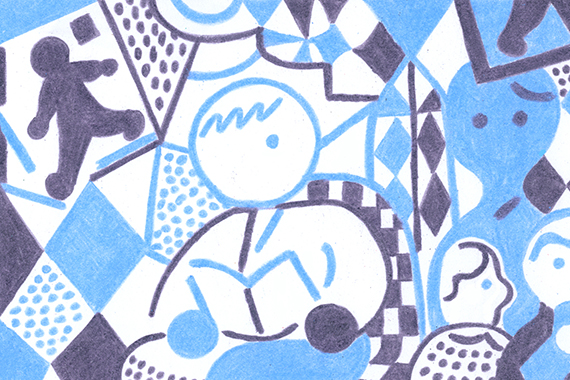
Image by Thomas Colligan.
Dorothy Tse is a writer from Hong Kong. Her debut novel, Owlish, was a finalist for the National Book Critics Circle Gregg Barrios Book in Translation Prize, and her short story collection, Snow and Shadow, was longlisted for the Best Translated Book Award. A cofounder of the literary journal Fleurs des Lettres, she has received the Hong Kong Book Prize, the Hong Kong Biennial Award for Chinese Literature, and Taiwan’s Unitas New Fiction Writers’ Award. Her novel City Like Water came out with Graywolf Press in March 2026.
Natascha Bruce translates from Chinese. Her work includes Lonely Face by Yeng Pway Ngon (shortlisted for the TA First Translation Prize), Bloodline by Patigül, Lake Like a Mirror by Ho Sok Fong (shortlisted for the Warwick Prize for Women in Translation), A Classic Tragedy by Xu Xiaobin (co-translated with Nicky Harman), and Mystery Train by Can Xue. She was awarded a 2021 PEN/Heim grant for Owlish by Dorothy Tse. She and Tse were among the winners of the 2019 Words Without Borders Poems in Translation Contest.