2024 Summer Reading Recommendations (from our staff!)
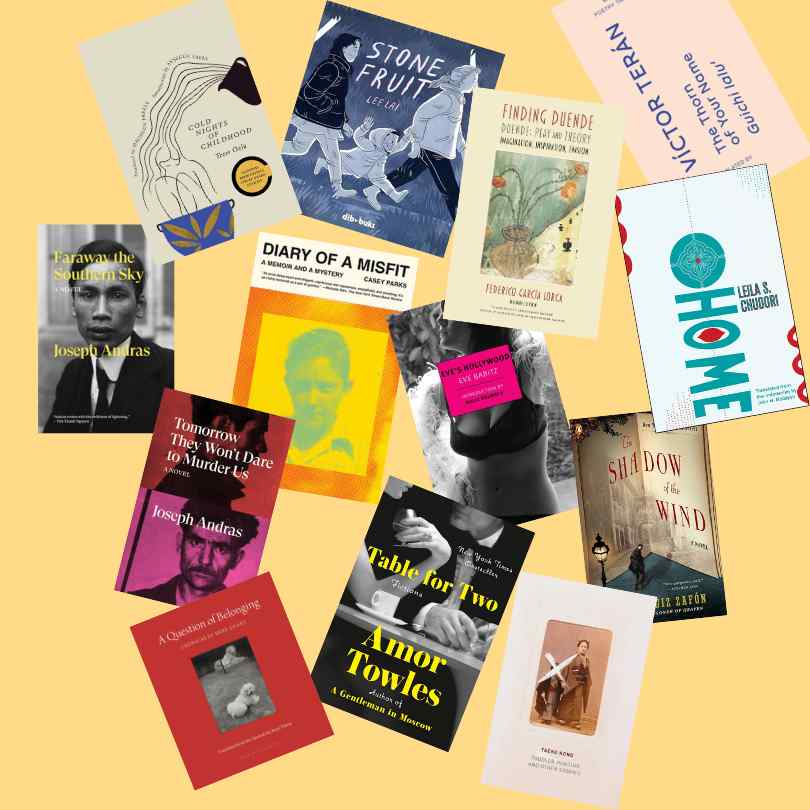
Thirteen books to add to your summer reading pile, recommended by the staff of the Center for the Art of Translation.
Erin Branagan, Communications & Development Director

The Shadow of the Wind(opens in a new tab) by Carlos Ruiz Zafón (trans. Lucia Graves)
The perfect beach read! A literary thriller set in Franco-era Barcelona from bestselling Spanish author Zafón, who died in 2020 at age 55. Inspired by 19th-century novels and featuring a bookseller father and son, a mysterious “Cemetery of Forgotten Books”, and a novel-within-a-novel of the same title, it offers a unique and dark view into post-Civil War Spain and is “an epic story of murder, madness, and doomed love.” Praised by none other than Stephen King as “one gorgeous read.”
Arielle Burgdorf, Public Fellow
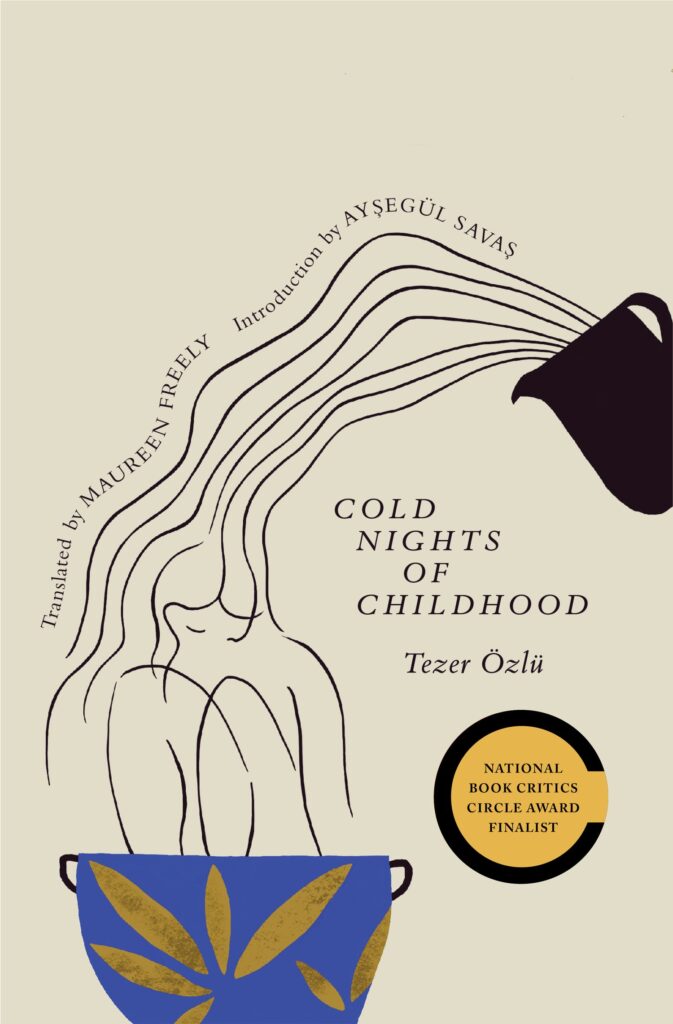
Cold Nights of Childhood(opens in a new tab) by Tezer Özlü (trans. Maureen Freely)
This novella captures many years of the narrator’s life, loosely based on Özlü’s own experiences, from the budding queerness of her childhood to her travels between Istanbul, Paris, and Berlin. Although the subject matter is often extremely dark (electroshock therapy), there is also a deep hopefulness in her writing. Through the specifity of her own lens, she tells great truths about humanity as a whole—an amazing gift from a talented writer who left too soon.

Stone Fruit(opens in a new tab) by Lee Lai (trans. Fabián Rodríguez)
This graphic novel tells the story of a queer couple, Bron and Ray, who take care of Ray’s niece Nessie. Their relationship is tested and begins to fall apart, as Ray’s relationship to her sister Amanda also becomes frayed. The quietly devastating story is paired with Lai’s gorgeous art, and will haunt you for long after.
Sarah Coolidge, Editor (Two Lines Press)

Toddler Hunting & Other Stories(opens in a new tab) by Taeko Kono (trans. Lucy North)
If you like dark stories that take you uncomfortable places, this book is for you. Despite the troubling cover of the reissued edition from New Directions, with a photo of a child brutally x’ed out, Taeko Kono took me completely by surprise. Her ability to enter the minds of unhappy, troubled, but very human women is staggering. Rarely do I encounter a writer exploring themes of BDSM, hatred of children, lust, loathing, and loneliness so brazenly. The prose is stunning and addictive in Lucy North’s translation. I’m pleased to say we’re publishing a never-before-translated story of Kono’s (in North’s translation) in March of next year in a Calico dedicated to strange Japanese fiction.

Diary of a Misfit(opens in a new tab) by Casey Parks
Growing up poor and queer in the South, Casey thinks the only way to exist is to leave the South behind, which is exactly what she does: she moves to Portland, Oregon, becomes a journalist, and dates women. But she can’t stop thinking about something her grandma once told her: that her grandma grew up across the street from Roy, a “woman living as a man.” Grappling with her own choices and identity, as well as her complicated relationship with her addict mother, Casey finds herself returning again and again to the South to try to find out more about Roy. Depending on who you ask, Roy was a man, a woman, a beloved neighbor, an outcast, a country singer, a laboror, a victim, or an inspiration. Diary of a Misfit is an incredibly engaging piece of journalism as well as a vulnerable account of being a perpetual misfit.
Chad Felix, Sales & Marketing Manager (Two Lines Press)

Faraway the Southern Sky(opens in a new tab) by Joseph Andras (trans. Simon Lesser)
This pair of historical novellas from Prix Goncourt-refusing writer Joseph Andras center on specific instances in history, moments where literature is inspiration but action is needed. Faraway the Southern Sky locates a young Ho Chi Minh living underground (by many different names) in Paris before leaving for the Soviet Union in 1923.

Tomorrow They Won’t Dare to Murder Us(opens in a new tab) by Joseph Andras (trans. Simon Lesser)
Tomorrow They Won’t Dare to Murder Us centers on the revolutionary activist Fernand Iveton’s failed bombing and subsequent torture and murder by the French state. Translated from French by Simon Lesser, this pair of political novels recalls Roberto Bolaño’s line “there’s a time for reciting poems and a time for fists” with intellect and style.
Giovanna Lomanto, Communications Assistant
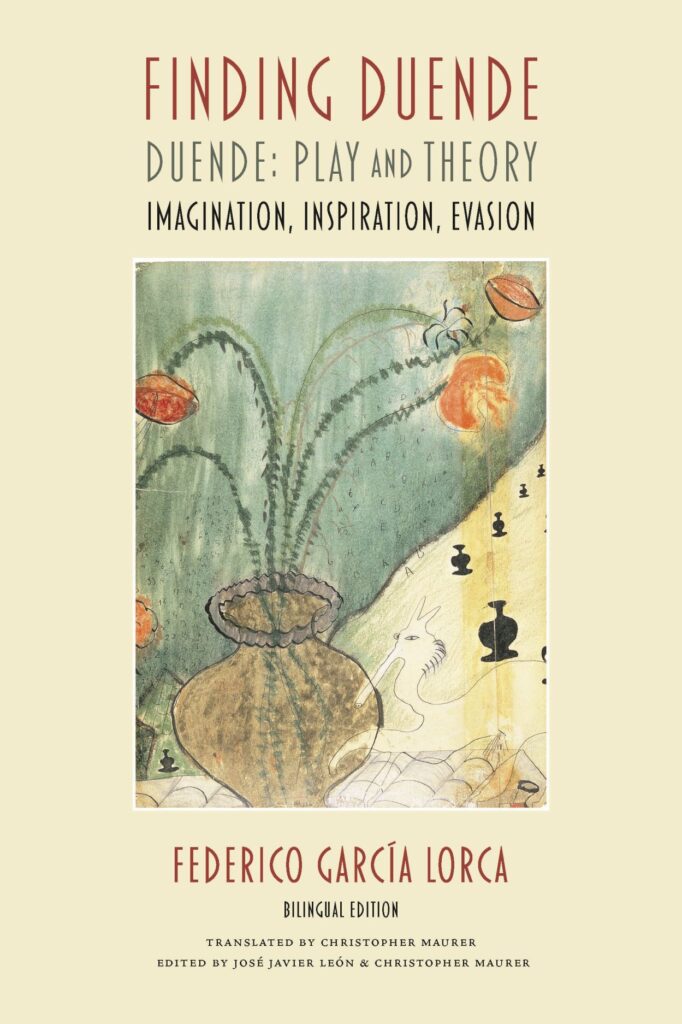
FINDING DUENDE | Duende: Play and Theory | Imagination, Inspiration, Evasion(opens in a new tab) by Federico García Lorca (trans. Christopher Maurer, edited by José Javier León & Christopher Maurer)
Ever since hearing Kevin Young speak on the unknowable dark magic that inhabits every book that moves you imperceptibly, I’ve been haunted by the concept of duende in writing. As a writer myself, this book is an excellent account of the original talks that Lorca gave (previously unrecorded!) speaking about the poetics of human nature, and how we can capture the underpinnings of mystery in art.
Home(opens in a new tab) by Leila S. Chudori (trans. John H. McGlynn)
This beautiful tale of love, belonging, and intergenerational trauma recounts the frenzy of the May 1998 Indonesian riots with the gravity fit for the forgotten genocide of Chinese-Indonesians in 1965, how the aftereffects of historical erasure only produce a generation of stubborn troublemakers determined to rewrite themselves into history.
Stephanie Nisbet, Production Manager (Two Lines Press)
Table for Two(opens in a new tab) by Amor Towles
Six short stories about New York and a novella set in old Hollywood–what more could you want in a summer read? Towles proves that short fiction is truly its own art form (and that he’s an extraordinary writer), and I wish this book had been around when I was a humble BFA student trying to figure out how to write stories about cities. I felt like this collection was curated specifically for me and devoured it in one day.

Eve’s Hollywood(opens in a new tab) by Eve Babitz
Speaking of Hollywood…this book is a gritty love letter to Los Angeles by a woman who casually namedrops people like Igor Stravinsky and Salvador Dalí. If you’ve ever wondered what it was like to grow up in mid-century LA—the good, the bad, the ugly, the artists—let Babitz tell you. I recently read a review that described this book as having “a Lana Del Rey aesthetic” and haven’t stopped thinking about it since. Part fiction, part memoir, all fascinating.
Leslie-Ann Woofter, Public Programs Director
A Question of Belonging(opens in a new tab) by Hebe Uhart, (trans. Anna Vilner)
No one wants to go to work in the summer. Rather than scrolling through your friend’s posts of summer jaunts to Paris or Santa Barbara or searching for cheap last-minute flights to Maui, try reading a few of pages of A Question of Belonging, a collection of the Argentine writer Hebe Uhart’s crónicas, or short, informal, observational writings, often published in newspapers or magazines, translated by Anna Milner. No longer are you sweating it out in a stuffy Muni car. You’re eavesdropping at an outdoor restaurant in Cartagena or attending the Guadalajara Book Fair or have just landed in Iquitos in the Peruvian jungle accompanied by your older, wiser, endlessly curious aunt who you (not so) secretly want to be. Just don’t miss your stop!

The Thorn of Your Name(opens in a new tab) by Víctor Terán, (trans. Shook)
Translated by Shook from Spanish bridge-translations made by the author from Isthmus Zapotec, the poems in this pocket-sized collection grapple with longing—for a past love, for pleasure, for a homeland, for a lost life—in their deceptively simple verses. Lyrical and imagistic, these short bursts of passion gave this reader’s Scorpio heart moments of emotional depth in the otherwise shallow joys of summer.