An exclusive interview with author Damir Karakaš
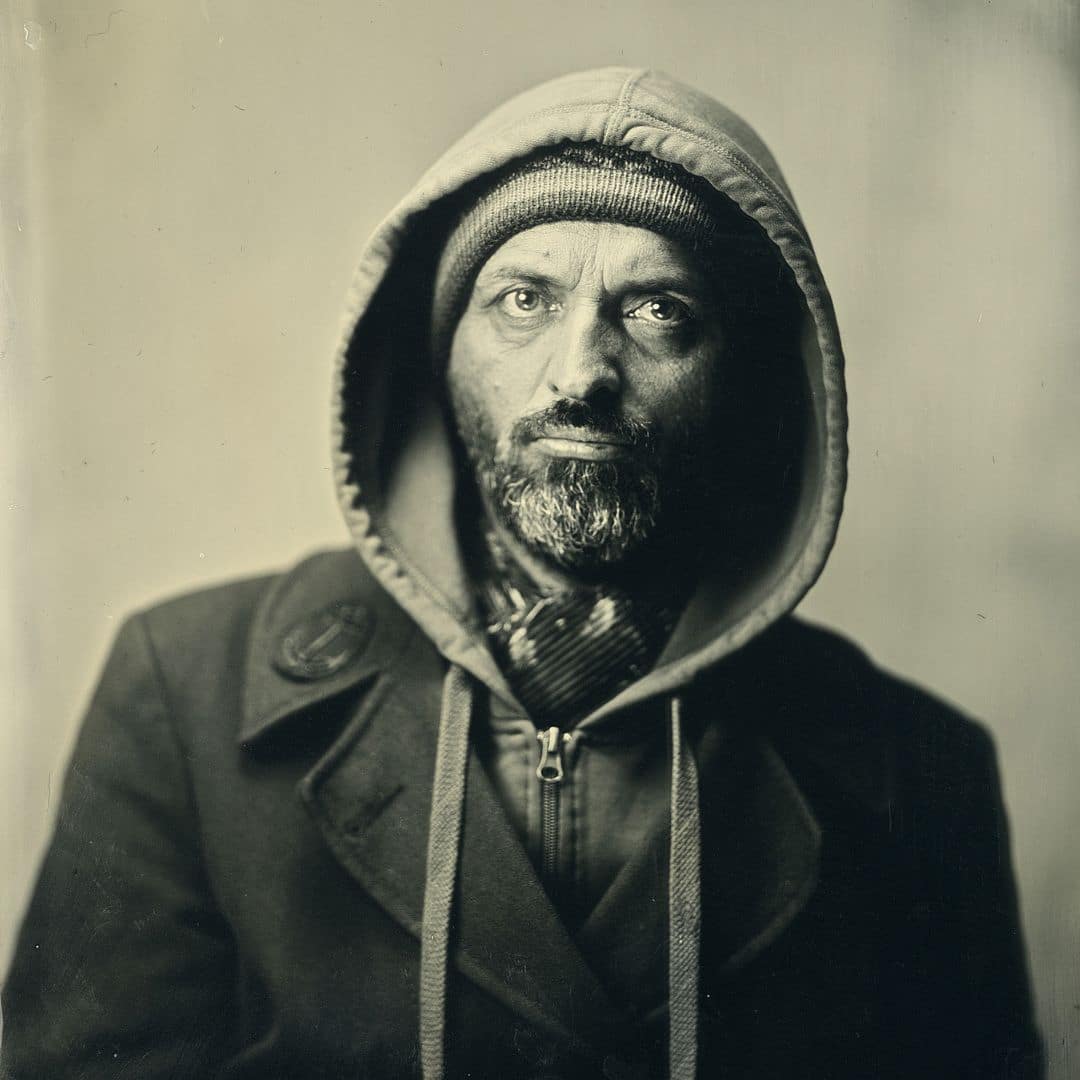
Karen Gu, Two Lines Press Publicist, interviews all of our authors ahead of their releases. The other day, she sat down with Celebration author Damir Karakaš.
Celebration is set in a rural Croatian village and moves backwards in time from the 1940s to the 1920s. Can you tell us about the social and cultural context of this place during this time period? Can you talk about your personal relationship to this region?
Damir Karakaš: The mountainous region of Lika, inhabited by both Croats and Serbs, has always been known for its poverty, its harsh winters, its wolves, but also for the world-famous inventor, Nikola Tesla. The people of Lika have mainly served as soldiers, fighting for a series of masters, protecting the West, from, among other things, the Ottoman onslaught, and all this has inevitably shaped their mindset. They were peasants, farmers, but at a moment’s notice they had to be ready to grab their weapons and go to war. My grandfather, great grandfather, father—all of them were soldiers, and I, too, fought in the most recent war as a young man, though I abhor war and am deeply saddened when I see all that is happening today around the world.
Croatia has always been governed by powers who exploited it. In the First World War, Croats from Lika fought, wearing the uniform of the Austro-Hungarian army, on the side of the Central Powers, against the forces of the Entente. Serbia, on the other hand, was part of the Entente, so when the Central Powers lost the war, the Yugoslav peoples were organized in a new country that the Croats were not pleased about. Croats referred to the new country as a “dungeon of peoples.” And I have to say that the Serbs did dominate the new country. Most of the generals in the army were Serbs, the leaders in the cities were also Serbs, and the government treated Croats very poorly, especially in Lika, with constant harassment, steep taxes, villagers were not allowed to keep dogs, there were even times when women were required to pay for the bullet that the constables used to kill their husbands.
So, there was constant defiance of the authorities; this meant fertile soil for extremism and the popularity of the Ustashas. When the Second World War began, the Independent State of Croatia was founded under Hitler’s patronage. Extremist Ustashas returned to Croatia from abroad where they had been living in exile. They began disseminating propaganda and many Croats began settling accounts with the Serbs in Lika and elsewhere in Croatia. Many crimes happened under the leadership of the Ustasha leader, Ante Pavelić, who embraced Nazi ideology, racial laws, and perpetrated gruesome atrocities in the concentration camp of Jasenovac, where a large number of Jews, Serbs, Roma, and leftist Croats were killed. A total of about eighty thousand were murdered there.
There is a scene in the third chapter of the novel when Mijo, Drenka, and Rude are on their way to the celebration and encounter Roma who are on the run. Perhaps these are the souls of Roma who have already been killed. A reader might think they are fleeing from bees, or bears, but they are running from the new regime. There are many in Croatia today, even those who are well-educated (the worst fools are educated fools) who deny these crimes, which is why I write about it for them. During the Second World War in Croatia, the Ustasha government murdered 16173 Romas, ninety percent of those who had been living there: 5608 children, 4877 women, and 5688 men.
I was born in Lika, but I haven’t been there in six years, because of serious threats leveled against me. There are too many people there who disparage me for marching in the pride parade, for espousing the rights of women, of all minorities, for my dislike of nationalism, so I’m seen as a traitor, a communist, a leftie, though I am none of these. I have been through many things in the course of my career as a writer, which has, at times been a life-or-death struggle, but the worst was when I was attacked in Zagreb, seriously injured, and lost the function of a vital organ.
Why did you choose to use reverse chronology in telling this story?
DK: I looked for a way to tell this story effectively, and reverse chronology seemed the best choice, especially because, essentially, we are always moving in a circle. And this is not just a question of the Balkans, but of the world. The war in the 1990s was not a product of the 1990s. It was a product of the Second World War, or even before, because so many issues were swept under the rug. The situation is no better now. Serious nationalism has taken root everywhere in what was Yugoslavia. Nobody has shown themselves capable of self-criticism, but if we insist on denying the crimes that we perpetrated in the past, we are paving the way for new crimes in the future. So it goes in the Balkans, in Eastern Europe, and in Russia, Ukraine, Israel, Palestine, the Near East…the pattern is always the same. While those at the poor end of society are pitted against each other, the ones at the higher end get rich. Someone makes a hefty profit from all these wars and from the suffering of others, and it seems as if today most people aren’t bothered by this. They care more about what will be tomorrow’s trend and where the sales are at the shopping centers.
The novel follows Mijo, a soldier in the Nazi-Allied Ustaša force, who at the start of the novel is returning to his village after the war. Can you introduce us to Mijo and the village that raised him?
DK: Mijo is a soldier, who, as in Dostoevsky, is both perpetrator and victim. I attempted, and I use the word deliberately—for, as I see it, literature is, in Faulkner’s words, an attempt at doing the impossible—to enter the labyrinth of the consciousness of such a person. In so doing I was guided by what Montaigne says: if we are to understand someone, we must follow them for a long time, with curiosity. A young Danish historian, Emil Kjerte, recently conducted research in Croatia about those who joined the Ustashas during those years. He concluded that most of the soldiers signed up for very simple reasons: warm meals, a bed, new boots. My novel addresses this, how a young person lacking adequate education, facing insecurity, can easily be drawn to an extremist rightwing ideology. Although this is a historical story, a love story, a story about how fascism flourishes in the soil of ignorance, the very same thing seems to be happening everywhere in the world today. A young soldier who is fighting today or tomorrow on one of the fronts experiences much the same fate, as does a soldier on the other side who also grew up in poverty, and who joined that army to also secure access to education and health insurance.
The celebrations which were held at the beginning of the war in Lika are an interesting phenomenon. After the founding of the Independent State of Croatia, celebrations were organized in rural areas and remote villages and were intended to recruit young men into the army. They’d put on a fair, roast an ox, everything would be free, the food, drink—like a public relations campaign. People like Mijo didn’t know what they were fighting for. The decisions people made to join the Partisans in the later years in ex-Yugoslavia were more deliberate once the struggle against fascism had become more clearly defined. At the very beginning people had no sense of what lay ahead.
Before we started filming the movie based on the novel, the film crew went looking for a village in Lika that could faithfully convey the architecture as it was a hundred years ago. They were concerned that they wouldn’t be able to find one and feared that much of the budget would be spent on building film sets. But then they found not just one such village, but hundreds. With the same dirt floors inside the homes, the barns, the malnourished animals. All of this fifty minutes from the capital city of a European country.
The novel includes an episode about the killing of the grandfather, the eldest family member, who is left in the forest so there will be one less mouth to feed. This was a local practice until Austro-Hungary banned it, and even then it continued on for a time in secret. It was a matter of patriarchal agreement. Mijo’s father had to make certain decisions for the family to survive, for the children to have something to eat. Hunger and poverty dictated everything. This is why education matters, books matter, people must become aware of the patterns that lead to wars, to stop the wars from happening, to stop the infantry and soldiers from dying in the service of someone’s interests. If they knew that these interests are not, in fact, their own, perhaps there would no longer be wars.
Celebration is a compressed novel that contains multiple decades and generations. Can you talk about why you chose this shorter form to tell Mijo’s story?
DK: I prefer novels which don’t pack everything into the story: the descriptions, the thinking, the discussions. I try to write a book woven only of the most essential things. But for writing I need heated emotions, passion. I tried in roughly one hundred pages to describe two wars and three generations. Not an easy task. But, if I might inject a little humor, as Kundera says, what fits on five hundred pages will fit on one hundred and fifty. I am all for editing, I tighten my writing a lot, and maintain Chekhov’s principle that a writer should be frugal with words and generous in thoughts. I also wanted to conjure the characters with sparing use of classic description—to sketch their contours with gestures, blinks, jerks, silence, gazes. The reader can reconstruct them and continue developing them in the spatial and historical context, both general and sufficiently precise. Here I rely on my readers, and I ask them to work with me, both on the imaginative and ethical interpretations.
Your work has been translated into many languages, and Celebration will be your first translation into English. How has your work been received in Croatia?
DK: When I began writing, I knew that if literature is what it should be, it should show no mercy for anyone, least of all the author. Of course that kind of writing creates enemies. But I am satisfied at how I’ve been accepted in Croatia. I have a small but faithful following of readers, and, of course, many who don’t like me. That’s normal, and besides, when I started writing I knew that if I let myself be upset by every dog that barked at me, I wouldn’t get anywhere. I am glad to say that one of my novels has been included in the 8th grade Croatian language curriculum, as has one in the curriculum for the junior year in Croatian secondary schools, and my most recent novel is being used at the Zagreb University School for Humanities and Social Sciences to acquaint students with various stylistic models of the contemporary Croatian novel. I am especially glad that younger readers from all over ex-Yugoslavia enjoy reading my books, and understand that the book itself is the foundation. Everything begins and ends with the book. We live in a time when maintaining our mental hygiene—through reading books, listening to music, attending theater performances, watching good movies—is of paramount importance. Because if there were no more books, there would be no more world. That is why I like to say: Don’t let each book you haven’t read be what people see in your eyes.
Before joining Two Lines Press, Karen Gu worked in publicity at Graywolf Press. While in graduate school, she worked for The Believer and the National Book Foundation. She is a fiction writer and Kundiman fellow.