Lit&Lunch: Rediscovering a Forgotten Genius
111 Minna Gallery | 111 Minna Street | San Francisco, CA
Although Kafka revered him and he is widely celebrated in Europe, Robert Walser only recently began attracting readers in the United States. After being featured in publications like The New Yorker over the past few years, this literary master has developed a devoted following among American readers. Translator Susan Bernofsky talks about what it was like to be a leader of our Walser renaissance, as well as the ins and outs of translating Walser’s singular prose.
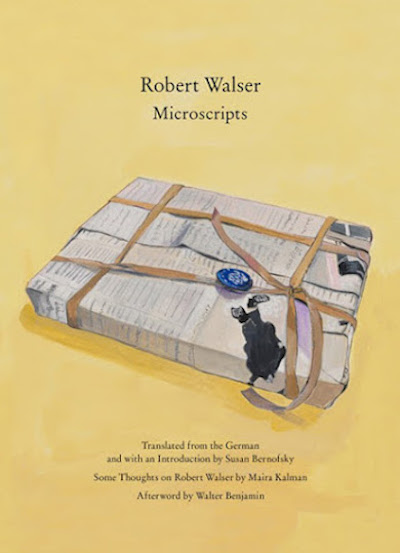
Find out what it’s like to rediscover a lost genius. A noted translator of internationally acclaimed authors like Yoko Tawada and Hermann Hesse, Bernofsky is an ideal guide to the unique writing and stirring thoughts of an author now being hailed as a literary master. Hear her talk about Walser’s incredible first novel, The Tanners, which has just been published in her English translation. And find out about Walser’s renowned “microscripts,” which were written in such tiny handwriting that only a handful of specialists can read them today!
Susan Bernofsky, one of the preeminent translators of German-language literature, directs the program Literary Translation at Columbia in the MFA Writing Progam at the Columbia University School of the Arts. Among her many published translations are Yoko Tawada’s Memoirs of a Polar Bear, Jenny Erpenbeck’s The End of Days, which won the 2015 Independent Foreign Fiction Prize, and the small masterpieces of Robert Walser.
Robert Walser was a German-speaking Swiss author whose works are regarded as among the most important writings of literary modernism. He is often compared to Franz Kafka and Walter Benjamin, and although in his lifetime he was better known than either author, his writing was largely forgotten until in the 1970s. Walser was never able to support himself as a writer and held various jobs throughout his career. He spent the last several decades of his life in a sanatorium, where he developed a microscopically tiny coded handwriting in order to write his “Microscripts”, translated and published in 2010. Several contemporary German writers, including Peter Handke, W. G. Sebald, and others, cite Walser’s influence.