Translating Words, Creating Worlds: An interview with Mark Hauber and Jie Park
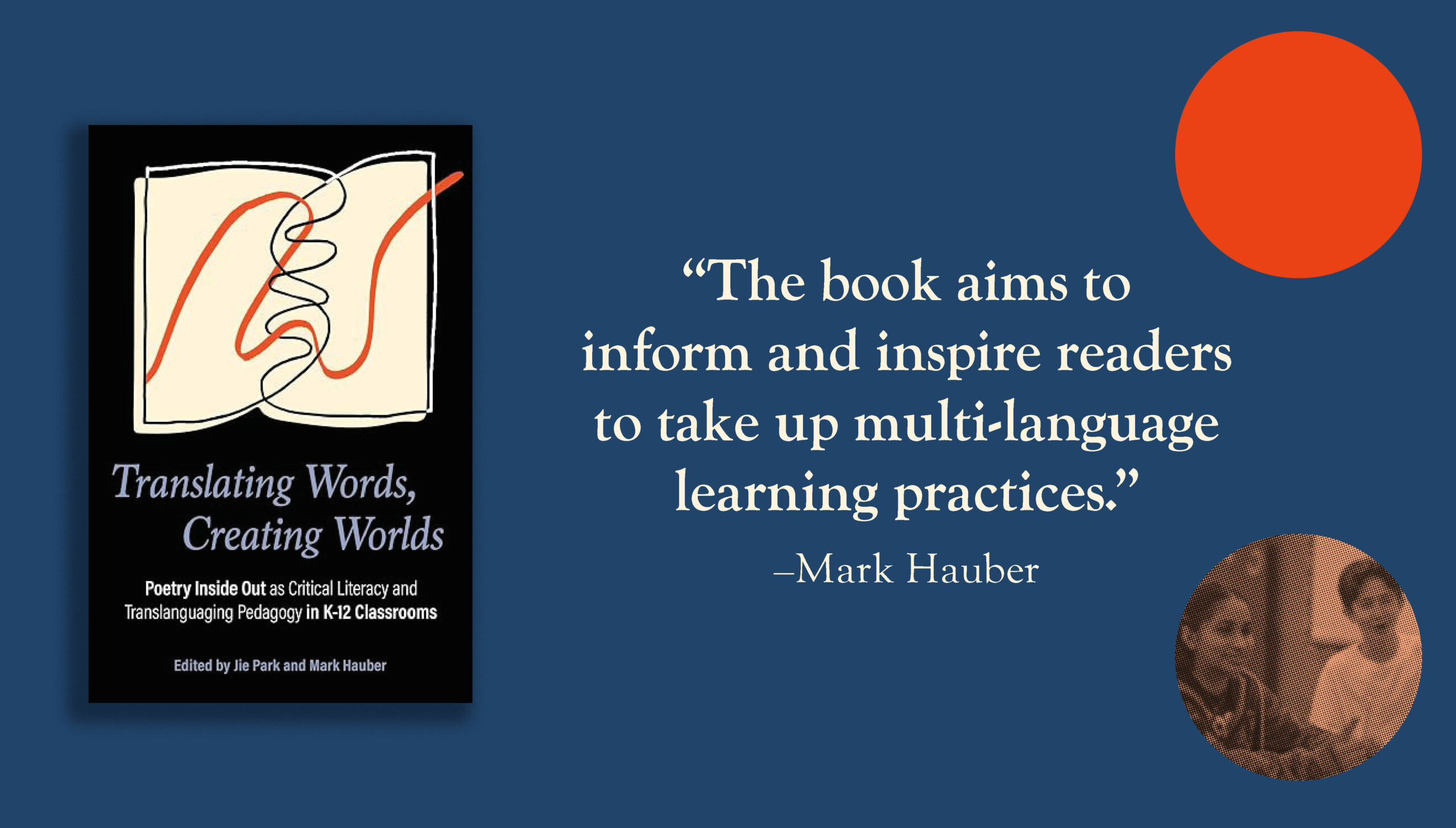
This fall we celebrated the release of Translating Words, Creating Worlds: Poetry Inside Out as Critical Literacy and Translanguaging Pedagogy in K–12 Classrooms. This book, published by Myers Education Press, was inspired by our education program and offers a guide to educators who want to bring critical literacy and student voices into their classrooms through poetry translation. In this interview, editors Mark Hauber, Program Director of Poetry Inside Out (PIO), and Jie Park, Associate Professor of Education at Clark University, share how they put the first Poetry Inside Out book together and their own experiences working with students and educators.
CAT: What do you hope this book offers educators who are teaching or would like to teach poetry in translation in their classrooms?
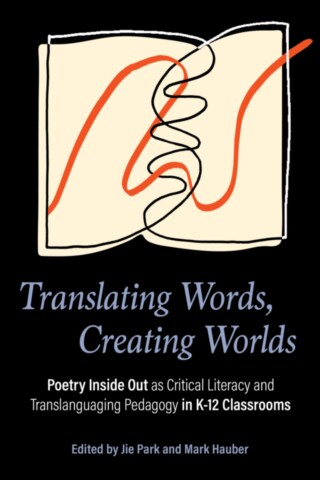
Mark Hauber: This book offers several opportunities for educators. In addition to introducing PIO, the book offers many strategies for transforming language and literacy learning in today’s classrooms. The chapters are written by educators working in different contexts (e.g., elementary to high school, ELA and Humanities to ESOL/ELA) and present a range of teaching and learning details and pedagogical considerations for implementing PIO curriculum. The book aims to inform and inspire readers to take up multi-language learning practices, specifically PIO, in their classrooms and provides opportunities to do so. The book offers accounts of our education program in action as we work to create classrooms where multilingual students engage in powerful linguistic, social, and intellectual work together.
CAT: What did working on this book allow you to see about PIO’s lessons and impact on educators and students?
Mark Hauber: Hearing from teachers and students involved in PIO is always enlightening and has helped shape every aspect of the program from the beginning. From new, innovative classroom approaches to student insights into their transformative experiences, each has contributed to a broader view of this work and its impact. The insights and teaching approaches strengthened my belief in the power of a co-construction of meaning through dialogue, listening, and collaboration, rooted in the cultural and linguistic experiences students carry with them every day.
I’ve expanded my understanding of translation to include a concept that I am calling “collective epistemic responsibility” (a shared responsibility to translate the poem and render its meaning).
CAT: How has your experience with PIO changed or expanded your understanding of translation?
Jie Park: This is my thirteenth year as a researcher and practitioner of PIO, and every translation creates new connections and questions (and seeds lines for further inquiry). I’ve always understood and approached translation as a critical literacy practice. That is, translation is not a mechanical substitution of words and phrases from one language to another language. Instead, translators reflect on language in use, and grapple with questions of audience and power, as well as the impact of their translation. But in the last couple of years, I have begun to draw more centrally upon theories of translanguaging to understand PIO. I’ve had the privilege of implementing and researching PIO in South Korea, in settings where young people are learning English as an additional language. The emergent bilingual youth in South Korea approached translanguaging as not only a creative practice, but also one of constructing meaning and negotiating knowledge. For example, when translating a Japanese haiku into English, students utilized Korean, noting that a kura (蔵) was where people stored “유품” (possessions that once belonged to a deceased family member), which is actually a term derived from Chinese (遺品). Their use of Korean helped students construct knowledge about the poem, specifically the poem’s possible connections to a family member’s death. I’ve expanded my understanding of translation to include a concept that I am calling “collective epistemic responsibility” (a shared responsibility to translate the poem and render its meaning).
CAT: The book explores how poetry translation can foster critical thinking about language differences and the cultural associations connected to different word choices. Can you share a particular moment or example that illustrates what this looks like in practice?
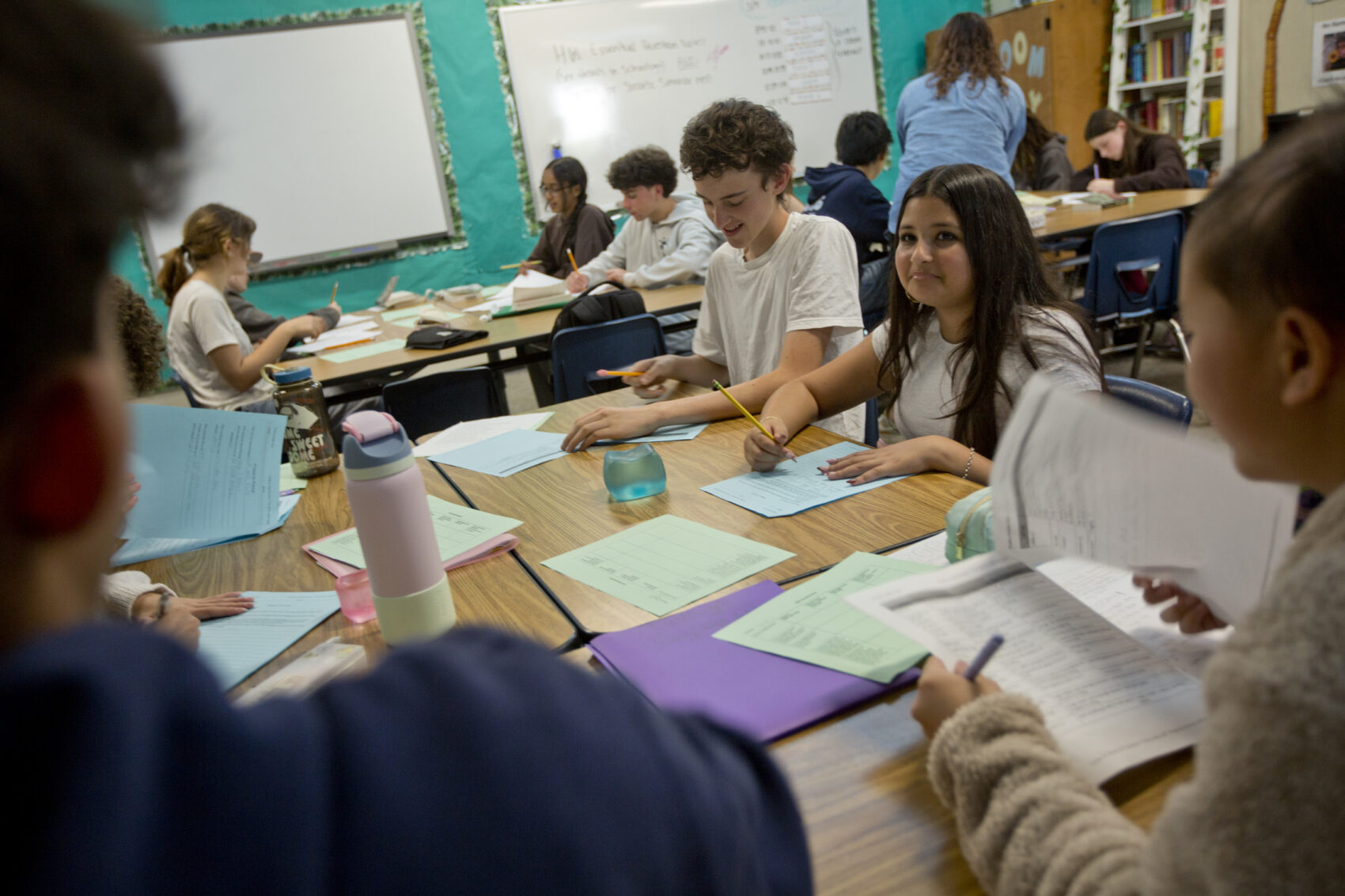
Jie Park: The book is full of examples that highlight, with richness and complexity, how translation fosters what we call critical literacy: reading the word and world, and understanding that language, including word choices, is never neutral, but deeply cultural and political. There is an example in chapter 8 (Susan Minniks) where students are translating a Spanish poem, and they’ve identified “mariposa” as a butterfly. One of [Minniks’s] students, Daniel, who’d missed a lot of school due to illness and seemed an outsider in the class, offered up that “acuerdo” changes meaning, depending on how you use it, either as a noun or a verb. As the only Spanish speaker in his group, he suddenly had moved to having linguistic status. Another member of his group wrote that they had to struggle with the translation, because “words can have multiple meanings.” His group read the poem, connecting it with the picture of the elderly poet, and took it to caution us to never forget our childhood memories, making an inference from the biography. There are countless examples from the classroom where students share the stories and cultural meaning behind their word choices, which foster cross-cultural understanding and metalinguistic awareness.
Poetry Inside Out is a collaborative, cross-cultural language arts curriculum designed for grades 3–12 that celebrates classroom diversity, builds literacy skills, improves critical thinking, and unlocks creativity by teaching students to translate poetry from around the world. Translating Words, Creating Worlds can be purchased through Myers Education Press(opens in a new tab).
If you’re in the Bay Area, join our Lit Crawl event: So You Think You Can(‘t) Translate—Youth Edition! on October 24, 6:30 PM at 826 Valencia. The 2025–2027 PIO Teaching Fellows will host a fun workshop geared toward youth ages 12–18 (but all ages welcome!) and a spontaneous performance for youth writers.