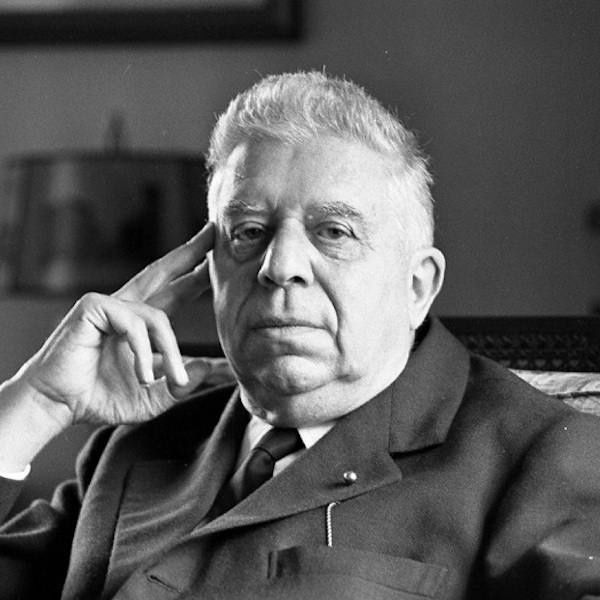
Eugenio Montale
Eugenio Montale (born in 1896) published his first book, Ossi di seppia (Cuttlefish Bones), in 1925, and was received by critics as a profoundly original and experimental poet. In 1938, Montale was dismissed from his directorship of the Gabinetto Vieusseux research library for refusing to join the Fascist party. He withdrew from public life and began translating English writers such as Shakespeare, T. S. Eliot, Herman Melville, and Eugene O’Neill. In 1939, Le occasioni (The Occasions) appeared, his most innovative book, followed by La bufera e altro (The Storm and Other Things, 1956). It was this trio of books that won Montale the Nobel Prize for Literature in 1975 and established him as a founder of the hermeneutic school of Italian poetry. After a long break from writing poetry, Montale published four collections during the last ten years of his life: Satura (Miscellany, 1971), Diario del ‘71 e del ‘72 (Diary of 1971 and 1972, 1973), Quaderno di quattro anni (Notebook of Four Years, 1977), and Altri versi e poesi disperse (Other and Uncollected Poems, 1981). Eugenio Montale died in Milan in 1981 at the age of 85. (Photo credit: courtesy of TES)