Two Voices Salon: Doug Slaymaker and Akiko Takenaka on Hideo Furukawa
Center for the Art of Translation | 582 Market Street, Suite 700| San Francisco, CA
Although Furukawa is little-known in the United States, in Japan he is celebrated an a prolific and expansive author, someone who has vaulted onto the Japanese scene with a ferocity and who has quickly taken on a leading position.
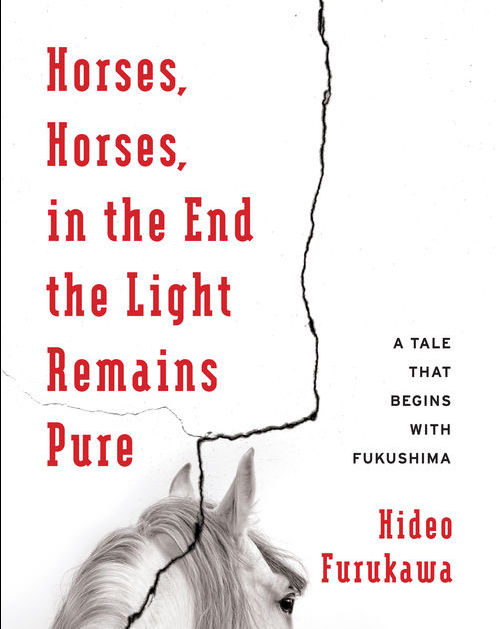
Horses, Horses, in the End the Light Remains Pure deals directly with the disastrous earthquake, tsunami, and nuclear meltdown in Fukushima, Japan, that began on March 11, 2011, and that continues (by some counts) to this day. It is also a response of sorts to September 11, 2001 in the United States and the assassination of Osama bin Laden. Slaymaker and Takenaka discuss these enormous historical events, as well as Furukawa’s unique evocation of his experiences in Fukushima after the meltdown, the challenges of translating his Japanese prose, his other literary works, and what Japanese literature they are looking forward to experiencing.
TABLE OF CONTENTS
0:00 Introductions
1:20 Origins of the translation of Horses, Horses, in the End the Light Remains Pure and background on author Hideo Furukawa
4:45 How uncommon was it for a book to come together and be published as rapidly as Horses, Horses was, just four months after the 3/11 disaster?
6:25 Overview of the 3/11 disaster, and Doug’s and Akiko’s experiences in Japan during and immediately after the earthquake, tsunami, and nuclear meltdown
11:35 Furukawa’s experiences of the earthquake, feelings of guilt and “spirited away” because he was away from Tokyo when the earthquake struck
15:30 Furukawa’s decision to go to Fukushima directly after the disaster
18:00 Furukawa’s integration of his mammoth novel The Holy Family into Horses, Horses, and what exactly Furukawa is doing when he puts a character from that book into Horses, Horses
21:30 Integration of taboo elements of Japanese history into Horses, Horses
29:30 Furukawa’s arrival in New York City right after the assassination of Osama bin Laden and integration of that event into Horses, Horses, as well as 9/11/2001 and the broader history between the U.S. and Japan
34:30 Furukawa’s level of involvement in the translation of Horses, Horses and translation challenges of the book
47:30 Furukawa’s decision to abandon the writing he does on any day in which an aftershock strikes
48:30 Furukawa’s invocation of Fukushima and Japanese politics and society in books after Horses, Horses
50:45 Doug’s and Akiko’s favorites of Furukawa’s books
54:15 Audience Q & A
Hideo Furukawa is a novelist based in Tokyo. He has received the Noma Literary New Face Prize, the Mystery Writers of Japan Award, the Japan SF Grand Prize, and the Yukio Mishima Award.
Akiko Takenaka is an associate professor of Japanese history at the University of Kentucky. Her first book, Yasukuni Shrine: History, Memory, and Japan’s Unending Postwar (University of Hawai’i Press, Studies of the Weatherhead East Asian Institute, Columbia University), examines the significance of the Yasukuni Shrine as a war memorial.