6 Questions for Acclaimed German Translator and Author Susan Bernofsky
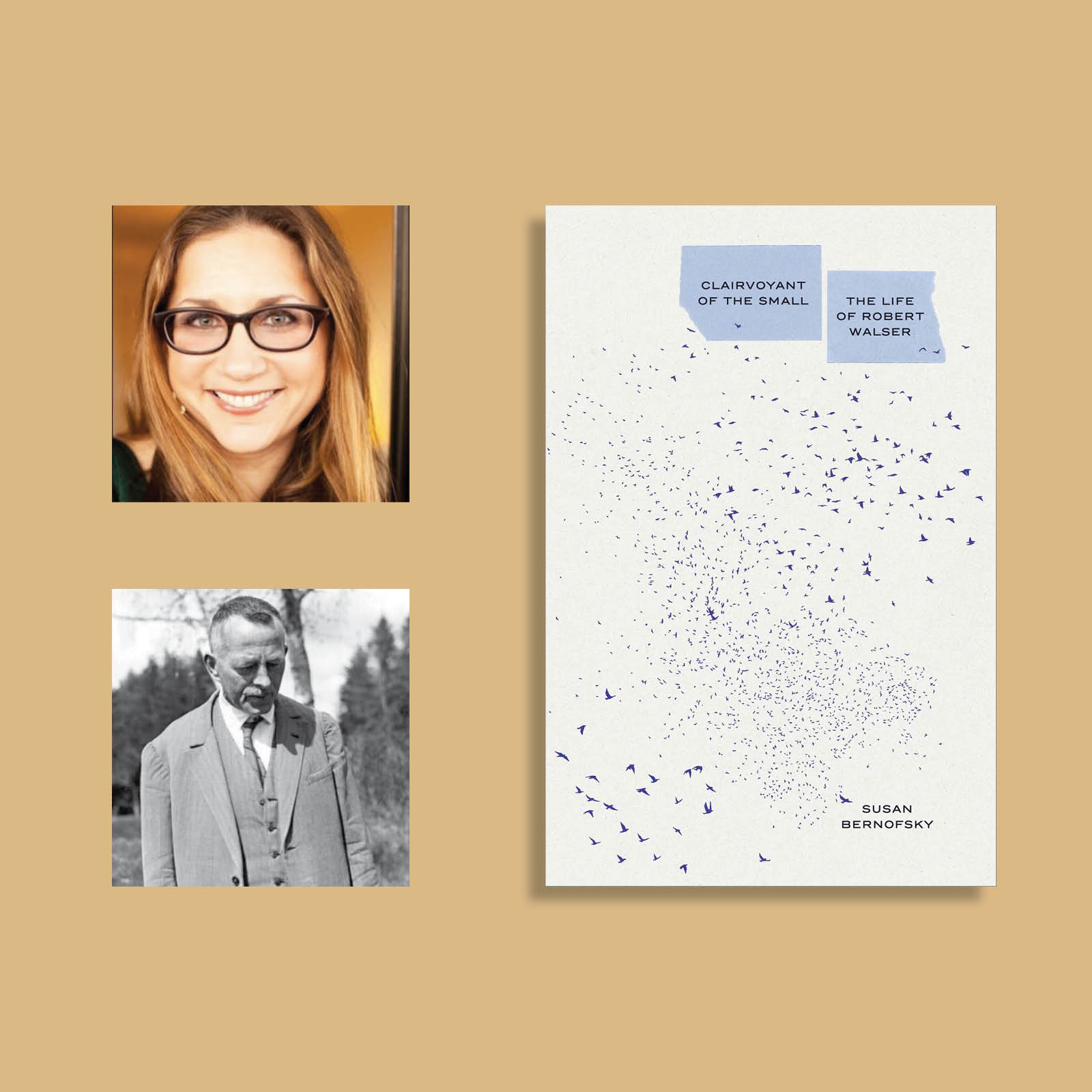
Susan Bernofsky’s biography of the German-speaking Swiss writer Robert Walser, Clairvoyant of the Small, is out now from Yale University Press. In advance of the Center’s June 3 event with Bernofsky and Kate Zambreno, we invited her to answer six questions about her work.
Susan Bernofsky hardly requires an introduction. When we at the Center for the Art of Translation consider literary translation writ large, she is one of the first people to come to mind. In addition to her perfectly calibrated translations of Robert Walser, Jenny Erpenbeck, and Yoko Tawada, among others, she directs the influential Literary Translation program at the Columbia University School of Arts—and she never ceases to advocate for translators everywhere. She is one of the translators we admire most.
In advance of our upcoming June 3 event with Kate Zambreno to celebrate Bernofsky’s biography of the great Swiss writer Robert Walser, Clairvoyant of the Small—which critic Hilton Als calls “nuanced, astute, and revelatory”—I invited her to answer six questions about her work. —MH
Michael Holtmann: We consider you one of literary translation’s stars. Your first book was Walser’s Masquerade and Other Stories (Johns Hopkins). In the 30 years since then, you’ve published six more books by Walser and now his biography, Clairvoyant of the Small. Can you tell us a little bit about what Walser and his work have meant to you over your career?
Susan Bernofsky: Thank you so much for the kind words and also for proposing this conversation. I fell in love with Walser’s language and way of looking at things at an early age, and kind of grew up as a writer and translator in the course of reading and immersing myself in his work. The first two books I translated were both by him. I’ve learned so much from him about what can be done in and with language, including making discoveries about the world.
MH: Walser is best known for his short stories, vignettes, and novella-length books. Where should readers coming to Robert Walser for the first time start?
SB: I tend to ask people if they prefer novels that tell stories or weird thick prose that creates its own universe. In the former case, I send them first to The Assistant or Jakob von Gunten, and in the latter, to Microscripts.
MH: Robert Walser’s work has been influential to contemporary writers such as Kate Zambreno, Ben Lerner, and J.M. Coetzee, whose essay, “The Genius of Robert Walser”(opens in a new tab) appeared in the New York Review of Books. What do you think it is about Walser’s voice or style that speaks to readers and writers today?
SB: Honestly, I think it’s precisely the qualities of his work that made him commercially unsuccessful a century ago (modesty + quirkiness) that explain his appeal today. In the English-speaking world, we’ve developed a new taste for short forms and an appreciation for the sorts of work that can be done in them. Walser’s way of writing in a maximalist mode about tiny things in tiny forms is very well suited to our short attention spans and blog-cultivated taste for reports from the field of everyday life.
MH: As you wrote Robert Walser’s biography, is there something you learned about him that you found especially striking or surprising?
SB: Yes, I learned to my own surprise that the notion that Walser actively sought out life as an outsider was a myth. He really was trying for mainstream success, but found himself thwarted at every turn (sometimes because of his own actions and decisions, sometimes not). His outsiderness helped make him who he became as a writer, but it wasn’t something he actively chose for himself.
MH: Walser is an eminently quotable author. Do you have a favorite quote or passage?
SB: Here’s my favorite line from The Assistant. “Man sah den Wegen am Abendlicht an, dass es Heimwege waren.” You could tell by the evening light on the roads that they were roads home.
MH: For readers who have immersed themselves in Walser’s work, is there another writer, translated from German or otherwise, you would encourage them to pick up next?
SB: She’s a very different sort of writer, but for sheer inventiveness, attention to the transformative potentialities of language, and finding the magic embedded in everyday life, I recommend the great Yoko Tawada, who writes in both Japanese and German.
Michael Holtmann has worked in the arts for more than fifteen years. Prior to joining the Center, he held positions at the National Endowment for the Arts and the Folger Shakespeare Library. He has served on the board of the American Literary Translators Association (ALTA) and the international programming committee of the Bay Area Book Festival.