Creative Translation in the Classroom
On March 2nd I was a panelist on “Creative Translation in Educational Contexts in the 2020s,”(opens in a new tab) a symposium organized by the Queen’s College Translation Exchange(opens in a new tab) and the Stephen Spender Trust(opens in a new tab) in the U.K. The event brought together programs in the U.K. and the U.S. that bring creative translation to young people.
This was a fantastic opportunity to talk with other organizations about using translation in an educational context, whether as part of in-school language learning, cross-curricular programs, or extracurricular activities, particularly in this current moment.
One thing we all agreed on: although translation can build academic skills and is an inherently creative and engaging activity, it’s not always considered a viable approach to language instruction in educational environments that prioritize the “correct” answer.
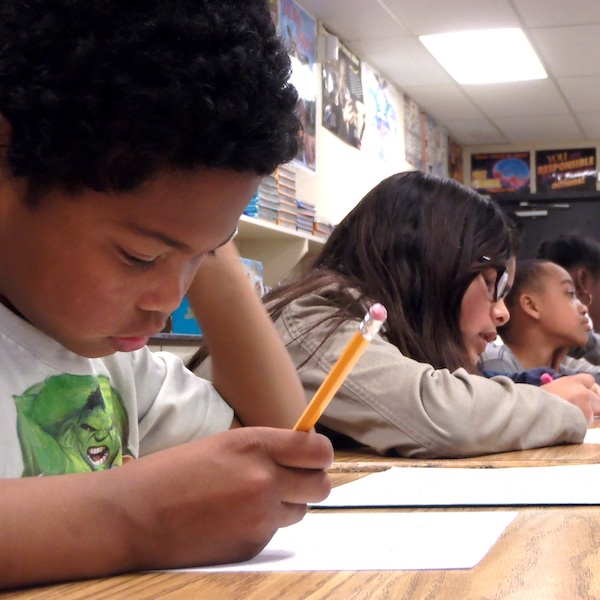
The practice of creative translation can transform classroom environments and help students feel truly engaged in learning.
It was refreshing to hear other programs echo what I see as one of the most significant benefits of translation in the classroom: it creates a unique opportunity for deep and relevant conversations. This is especially important now as students grapple with the disruptions of the last two years and struggle to reconnect with classmates and the world. Looking at recent events through the lens of creative translation allows students to draw on their diverse backgrounds to use as learning tools, and their translations often reveal profound responses to language, society, culture, and personal experience.
We explored the potential for creative translation to improve language learning and the tensions that exist between creativity and curriculum, syllabi, and standards. We have all seen that translation can bring students’ linguistic and cultural assets into view in the classroom. The practice also builds awareness of language usage and structure, and translation offers teachers a way to address educational standards with innovative, intellectually rigorous, and language-rich materials. Most exciting, the practice of creative translation can transform classroom environments and help students feel truly engaged in learning.
I look forward to continuing the conversation!
Read more about the Queen’s College Translation Exchange(opens in a new tab).
Read more about the Stephen Spender Trust(opens in a new tab).
Read more about the Center’s Poetry Inside Out poetry and translation curriculum.
Mark Hauber has more than fifteen years of experience in the nonprofit and education sectors. A lifelong musician, he enjoys photography, ultrarunning, and reading.