Empty Rooms
They sat on the sofa and sobbed, rage smoldering, grief flaring, inflamed with despair—none of it had anything to do with me.
梁莉姿
作者的話:1968年,劉以鬯寫下〈動亂〉,以十四件死物視角切入,書寫六七暴動中的紛亂現場,各死物間,似乎多是無措無知,對動亂緣由一無所知;2020年年末,威權時代逼近,我寫下〈空室〉回應原作。
願所有離開的人都記得一切背負,是為記。
梁莉姿
作者的話:1968年,劉以鬯寫下〈動亂〉,以十四件死物視角切入,書寫六七暴動中的紛亂現場,各死物間,似乎多是無措無知,對動亂緣由一無所知;2020年年末,威權時代逼近,我寫下〈空室〉回應原作。
願所有離開的人都記得一切背負,是為記。
(一)
我是一扇窗。這個房子中,我最討人歡喜。人們踏進來,總一窩蜂向我奔靠,呼歎聲此起彼落。起初,穿西裝的人說,這是海景單位,可望到維港和煙花。不知是甚麼意思,我無法看到自己的背面,只能繃直身軀頂撐邊框,避免因鬆垮而墜下,否則將粉身碎骨。這是前輩們告訴我的。
有人入住了,兩個人、一隻貓,後來添了兩個孩子。他們常靠在沙發上望向我,嘴裡說好美、好美。我自覺飄飄然,這是我的價值。卻又漸感不妥;定睛凝視,發現他們的眼神好遠——原來從沒有人看我。目光像一道線,穿透我的肚子,越到半溫半燙的背後——女子說:「這裡的日落真美。維港多美。」原來,這是個殘忍的誤會。
好多年過去,我安慰自己仍有一個透明的肚子,每天為窗前眾人映照我無法觀望的風景,儘管身體漸漸長滿水印、霧痕和塵漬而氤氳起來,好癢。也許這個緣故,近月他們不再聚攏於我,反而忙碌穿梭在客廳和房間,搬動紙箱,垃圾袋和行李。
如今仍會告訴我,身後的日落有多好看的,只餘每天盤在陽台前昏睡的貓。
Author’s note:
In 1968, the Hong Kong modernist author Liu Yichang wrote the story〈動亂〉( “Turmoil”), using the perspectives of fourteen inanimate objects to convey the chaotic scenes of the 1967 riots. Most of these inanimate objects seemed to be at a loss, knowing nothing about the cause of the turmoil. At the end of 2020, with the age of authoritarianism looming, I wrote “Empty Rooms” in response to Liu’s original work.
This is a record so that everyone who leaves may remember all that we’ve shouldered.
1
I am a window. In this apartment, I am the most adored. Whenever people step inside, they immediately swarm over to me, oohing and aahing. At the outset, the man in the suit said this was an ocean-view unit overlooking Victoria Harbour and the fireworks display. I didn’t know what that meant. I can’t see my own back; I can only straighten my core to prop up the frame, preventing it from becoming too slack and falling down—otherwise, I’ll shatter to pieces. This is what my elders told me.
Some people moved in: a couple, a cat, and then later, they added two children. Back then, they often settled on the sofa and studied me, mouthing, so beautiful, so beautiful. I was floating on air—such was my worth. However, gradually I began to sense something was amiss. Staring intently, I found their eyes were focused on something far in the distance––no one was looking at me after all. Their gazes were like rays boring through my midriff to my half-warm, half-hot back. The woman said, “The sunset here is really beautiful. How beautiful Victoria Harbour is.” It turned out this had all been a cruel misunderstanding.
Several years later, I comfort myself that I still have a transparent midriff. Every day, I project scenery that I have no way of seeing for the people before the window, though little by little, my body has begun clouding up with water spots, fog marks, and dust stains—so itchy! Perhaps this is why, during the past few months, they no longer gather around me, instead busily shuttling between the living area and other rooms, moving cardboard boxes, garbage bags, and suitcases.
The only one who still comments on the beauty of the sunset behind my body is the cat who coils up in front of the balcony for her daily nap.
2
I am a photo album. To be precise, I am one volume among many. My brothers and I have been lying around the cabinet for years, discussing each other’s stories time and again. They’re younger than me, but they’ve had more experiences, enjoying scenes such as Canadian snowfalls, Japanese zoos, and South Korean cherry blossoms. When we sometimes hold secret competitions to determine which setting boasts the loveliest sights, or which architecture looks the most exquisite, I’m always tongue-tied.
Although I was the first to arrive, I store little beyond a few yellowed photographs from the 1990s. There’s only the man and woman, along with group photos taken in different mainland cities. The backdrops are mostly parks, piers, resort villages, mountains, and the like, the clothing hickish and far from attractive.
At times, my little brothers tease me for being an outdated cliché, unable to keep up with the world. I have no way of defending myself—after all, the “world” I know merely consists of two people visiting Shenzhen’s Window of the World theme park many years ago; naturally, each region’s replicas of famous tourist attractions aren’t as realistic as what they depict. That is my sole way of understanding the world. I don’t know why, but after that trip, I was only updated every now and then. My final photo is a family portrait taken in front of an ancestral home, “01022014” inscribed on the lower right-hand corner.
Since then, for me, time has stood still. My younger brothers have continued moving forward. I alone hold yellowed photos and a vast blank space.
One day, the woman took us out of the cabinet. After spending the afternoon flipping through our pages with the man and two children, she suddenly pulled out several tissues. Turning around, the man plopped us into a splayed-open suitcase.
3
I am a TV. In the past, the people here liked nothing more than fixating on my vibrant innards. They sat on the sofa, captivated as I manipulated marionettes and regaled them with stories. They reveled in dissecting each and every bit, sometimes chuckling at the hijinks, sometimes shocked at the calculated twists and turns. I delighted in tugging at these people’s heartstrings more than I did maneuvering the dolls on the screen—it was all too simple; it only took one line of dialogue to trigger their tears, one gesture to fuel their anger. They were so easy to reel in, size up, and string along.
I once thought that playing with emotions was such a simple thing, until just over a year ago.
That afternoon, my organs ached for no clear reason, twisting into a ball. Clutching the remote control, the people only saw smoke filling the screen, a large crowd running away from something. Suddenly, there was nothing but a blast of screams and howls. I went berserk—this wasn’t my familiar routine, nor was it a scene that I’d designed. The strangeness and unpredictability sent me into a panic. I tried to slow and blur the image, forcing them to turn to other images instead. Don’t look, don’t look—why not go back to the story about the dolls? That was easy to understand and accept. However, no matter where they turned, jumping from this intestine to that liver, then skipping over to a kidney, it was still the same image, the same chaos and loss of control.
After that, they were no longer interested in my made-up tales. Day after day, they just gaped at those unforeseeable things: bullets piercing flesh, people inexplicably dying, blood, streets… Later on, even a fire broke out, blazing so hot. They sat on the sofa and sobbed, rage smoldering, grief flaring, inflamed with despair—none of it had anything to do with me.
I was terrified of being unable to command my own body and these people’s feelings—if I couldn’t manage them, what purpose did I serve?
4
I am a middle-school boy’s homework. The squares on the grid paper for the “comments on newspaper clippings” assignment are peppered with phrases such as “No comment” and “Actually, there are some things I’d like to say, but on second thought I’d better not.”
It didn’t used to be this way. The boy’s odd behavior is puzzling.
Once upon a time, every weekend, he wrote hundreds of words on my body, the length practically exceeding that of the original news article he’d pasted. Ever since the beginning of this school year, however, his face would fall as soon as he finished, scrutinizing each word over and over. At first, he only erased and rewrote a few words. Later, he simply set down his pencil and furiously rubbed the eraser against my body, wiping out the entire essay. In multiple spots, I was rubbed so raw that my skin tore, becoming riddled with holes, hurting and infuriating me—why didn’t he collect his thoughts before moving his pencil? Did he not consider the consequences of acting impulsively? If he would’ve deliberated carefully beforehand, he wouldn’t have harmed someone innocent like me. Humph.
One day, the woman, wanting to check the boy’s homework, discovered the faint traces lingering on my body. Her hands suddenly trembled, pinching my cheeks between her fingers. I curled up in pain. This family was all the same, so violent and disgusting.
5
I am a wooden dining table. I seat a family of four on a regular basis. Here, they have their meals, glue their eyes to their phones, read, study, snack on fruit—live. I am so close to them, their limbs always stuck to me, such intimacy persuading me that I belong here, belong to this family.
One night, the wife came out of the son’s room and threw herself onto me in tears. She and the husband voiced their various worries, some that I didn’t understand and couldn’t go outside to experience firsthand—where could I go? I was rooted here. Then, they brought up leaving.
After that, night after night, they spread numerous papers, documents, and books across my face, spending the hours between dusk and dawn discussing topics such as where to settle down, housing, money, and what supplies they’d need. They planned their family trip as carefully and meticulously as they’d planned previous annual holidays—only this time, there was no laughing during the process.
They discussed the children, as well as the cat—after much back-and-forth, the cat somehow became their most frequent topic of conversation. The cat was sick and couldn’t go with them. The husband hoped to wait until the cat passed away before leaving, but the wife kept saying, “There’s no time, there’s no time. The kids can’t wait.” I didn’t understand: The children were so young and healthy—why couldn’t they wait? I knew the cat. She was old; before the children were born, she’d often slept on the balcony or atop my body, lazing around.
The cat’s coat used to be silky. Unafraid of strangers, she’d brushed up against everyone. Then she got sick and started wasting away, frequently vomiting uncontrollably, requiring daily medication. Once, while the daughter was cleaning up her mess, she couldn’t help grumbling that the cat’s illness was so annoying. After that, the cat began disappearing, hiding in the corner between the cabinet and me.
In the end, the couple appeared to have reached a consensus, sending away the cat seemingly as neatly and efficiently as they sent away other belongings. Cardboard boxes, trash bags, and suitcases were strewn throughout the living room. Strangers appeared, rushing in and out, moving everything out of here one by one. I couldn’t understand how such a familiar place could become so unrecognizable—all the people and things I loved were vanishing and changing at an alarming speed.
The cat is sick and can’t leave. What about me? I’m not sick, and all I can do is stay—where can I go? That night I had a dream. I dreamed that the papers, documents, and books that had been spread across my face intertwined with my body, all of us growing into one big tree with roots so long that they drilled down and down until they firmly grasped the soil.
6
I am a sticker with the words “add oil” printed in white on a black background. It’s been over a year since I arrived in this room. Before that, I was held up in the street and distributed by a woman who kept her face covered. That afternoon, the whole street was teeming with people. Some chanted slogans, some waved flags, some dragged banners. They were excited and enthusiastic, the sun beating down ruthlessly. A child accepted me. She seemed cheerful enough as she dropped me into a backpack. Inside, there were companions of all sorts of shapes—some with words, some with pictures of helmets, masks, frogs, and other things. When the child returned home, she stuck us one by one onto the frame of a bunk bed, next to numerous princess and animal stickers. My only complaint was that she’d positioned me the wrong way—I was supposed to be horizontal, but she stuck me straight up and down.
This evening, the child came in carrying a garbage bag and threw away the objects in the room one after another. When she got to the bed, she hesitated for a moment, then after deliberating with her mother, began tearing away my companions one by one, scraping the corners with her fingernails and peeling them off. I didn’t know what was happening; it was a sudden extinction. The child had no malice. Even while she was hurting us, her face was partially scrunched. When it was my turn, she tried so hard that she tore off the half with the word “oil,” leaving behind the word “add” on the wooden board. A splitting pain coursed throughout my body: I’d been decapitated.
7
I am a memory book. When the girl handed me to her classmates, they asked her why she was leaving. Scratching her head, she replied with the answer her mother had given her when she’d asked the very same question: “This place is sick, just like our cat.”
After the children took me away, some scribbled a few phrases, some cast me aside and ignored me, and some were so angry they ripped me. I didn’t understand why they hated me so much. What caught my attention was that, after the girl’s best friend brought me home, she placed me on her desk, staring me down for an uncomfortably long time. Just when I thought she might hurt me like those angry people had, stroke by stroke, she painstakingly wrote: “To be honest, after hearing the news, I’m so disappointed in you, because you’re bound to soon forget us.”
I secretly cried, No! This is way too blunt! Surely the girl would be heartbroken after reading these words—fortunately, as her best friend was writing, it probably likewise occurred to her that this wasn’t appropriate. She covered up the sentence with a long band of correction tape, changing it to: “Keep in touch! I hope you have a happy life!” I heaved a sigh of relief, even though there were glaring white marks hidden beneath these words.
After the girl took me back, she read her best friend’s page, pausing unconsciously. I broke into a cold sweat, afraid her suspicions might’ve been aroused. I saw her take out a metal ruler and inch closer to the corrected area. Just when I told myself It’s all over! she suddenly set down the ruler, and after a while, simply closed me.
Whew! Great—thank goodness she was sufficiently naïve.
8
I am a suitcase. When it comes to moving, I’m the most authoritative. Everything stuffed inside me as I lie splayed out on my back eventually will leave with me and these people, though I don’t know where we’re going.
Every day, the objects in the apartment beg me to shelter or hide them. I used to think that I was lucky, that it was better to be chosen than given up—it took a long time for me to discover it wasn’t pleasant at all. Once, the woman put in two towels. They were so excited that they had to stop themselves from shaking. Immediately, the man picked one up and said it’d be better to just buy it over there. The towel left behind has been depressed ever since.
With each passing day, I grow more and more bloated, my insides bulging with this and that. Some objects are overjoyed, some are reluctant to leave, some are champing at the bit for an opportunity to escape me, having no desire to move. I used to think I was the most authoritative, but now I realize I’m simply a shell. I’m empty, merely waiting to be filled. Naturally, I don’t have the authority to decide who gets to leave with us.
Then again, what’s the criteria for deciding which things get to leave? Who grants them this opportunity? And how are they deemed worthy of being taken along? I don’t know. As I just said, I’m only a shell.
9
I am a sick cat. I used to live a charmed life. People showered me with toys, snacks, and love, and I repaid them with affection and companionship. I once thought that life would always be as comfortable and beautiful as it had always been.
Until I got sick.
Getting sick turned everything ugly. I became weak and emaciated. I vomited all the time, my breath stinking to high heaven. My fur lost its sheen. It was hard to win people’s affection. The most difficult thing to bear was needing to be cared for. I’d once lived so proudly, but now I had to rely on medicine to survive. They kept telling me to “add oil” and that “things will always get better.” When I heard that, I thought it seemed more as if they were encouraging themselves, a sugar-coated lie. The day that the little girl complained, the truth poking out like my sharp claws, I was too ashamed to show my face and began hiding from people.
They said they loved me, yet they’re sending me away from this place. But I live here. I’ve prowled every inch and corner of this apartment. No one knows it better than I do. Now I’m the only one left by the window day in and day out, waiting for the setting sun, for the rosy evening clouds to sink into the distance, dyeing the sea. What is the unknown landscape like where they’re going?
I am sick, but I still live here, beneath this beautiful sunset.
10
I am an empty apartment. Everything has been sent away. First the furniture, then the cat, next the people, and finally the smashed décor. No people, no living things, no things living inside me—nothing. This is a quiet place. Will its future be swallowed up by an empty existence like me?
December 17, 2020 Hong Kong
“空室” from Fleurs des lettres (字花). Hong Kong: Spicy Fish Cultural Production Ltd., 2021.
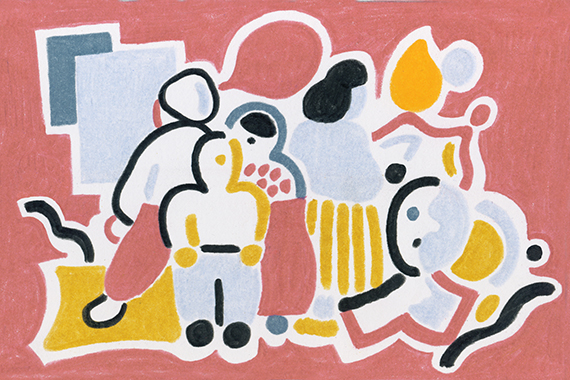
Image by Thomas Colligan.
One of Hong Kong’s youngest award-winning authors, Leung Lee-chi began writing about individuals and the times in which they live when she was fifteen. Her work includes the novels 住在安全岛上的人 [The one who lives on the safety island] (2014) and 明媚如是 [Bright as it is] (2018), as well as the poetry collection 杂音标本 [Staticky specimen] (2017). A graduate of the Chinese University of Hong Kong, she was invited to participate in the 2020 Singapore Writers Festival.
Jennifer Feeley is the translator of Not Written Words: Selected Poetry of Xi Xi, Carnival of Animals: Xi Xi’s Animal Poems, the White Fox series by Chen Jiatong, Wong Yi’s chamber opera Women Like Us, and Mourning a Breast by Xi Xi. She holds a PhD in East Asian Languages and Literatures from Yale University and is the recipient of the 2017 Lucien Stryk Asian Translation Prize and a 2019 National Endowment for the Arts Literature Translation Fellowship.