Six Fingers
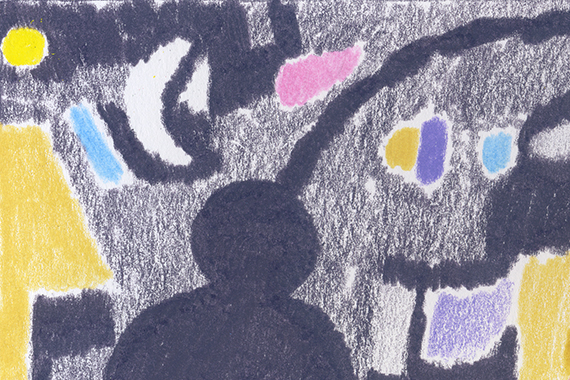
Before I knew it, I was sliding out the window like an eel, flying through the tops of the trees, sucking in the cool air, tasting freedom for the first time in my life.
六指
又醒了。天已微微放亮,一只鸟试探性地啁啾。D圆木般滚向床边,抓起手机看,四点二十。“人家都睡到自然醒,我他妈睡到大自然醒。”D咕哝着爬起来,趿拉着拖鞋走向洗手间。
六指
又醒了。天已微微放亮,一只鸟试探性地啁啾。D圆木般滚向床边,抓起手机看,四点二十。“人家都睡到自然醒,我他妈睡到大自然醒。”D咕哝着爬起来,趿拉着拖鞋走向洗手间。
D记不清这是第多少次“睡到大自然醒”了,但原因永远一样——只要他一翻身,身体触到她曾经睡过的另一半床,就会立刻醒来,一秒钟都不会拖延。冲了冷水澡,D套上T恤提上短裤,换了人字拖,决定下楼溜达溜达。此时室外有夏天最凉爽的空气。走出楼洞,D仰起脖子,深吸了几口,转了转脑袋,颈椎喀拉喀拉响,让他想起那次跟朋友去棚里做后期,音效师用一把新鲜芹菜逼真地模拟出骨头被拧断的声音。回家后她正在做饭,他抓起案板上的芹菜梗,在她耳边扭断,跟她说今天自己长的见识。“真的啊,”她说,“太神奇了,怎么想出来的。”她也学着他,抓起一绺, “你再不听我话——”她抬起胳膊,翠绿扫过他鼻尖,凉飕飕的,“你的胳膊就跟这芹菜一个下场——”
Six Fingers
Awake again. Dawn has just begun creeping into the sky; a bird lets out a tentative note or two. D rolls to the edge of the bed and grabs his phone: 4:20 a.m.
“Everybody else wakes up naturally, at a normal hour,” he growls to himself, “while I wake up with fucking Mother Nature.” He sits up, slides into a pair of sandals and shuffles to the bathroom.
D sits down on the toilet to pee. He lights a cigarette before letting his bladder go.
He can’t remember how many times he’s “woken up with Mother Nature” by now, only that it’s always for the same reason—he rolls over and his body touches the side of the bed she used to sleep on. It snaps him awake instantly. This morning, after a cold shower, D pulls on a pair of shorts and a T-shirt, swaps his shower shoes for a pair of flip-flops, and decides to go for a walk. The air at this hour is the coolest and the freshest you can get in the summer. Emerging from his building, he stops to look up, then breathes deeply, slowly rolling his neck out. The cracking of vertebrae reminds him of the time he and his friends visited the studio for post-production. The audio engineer had used a bunch of fresh celery to reproduce perfectly the sound of breaking bones. When he got home that night, she was making dinner; he twisted a stalk of celery by her ear and described what he had seen.
“No way,” she exclaimed. “That’s amazing. How’d they even come up with that?” She picked up more celery to try it out herself. “If you don’t do as I say—” she raised an arm, and a streak of bright green flashed past his nose with a cool smell— “your arm’ll end up just like this celery.”
By the river the air is a full five degrees cooler. It prickles his bare arms. He thinks about jogging along the riverbank and turning around when he gets to the bridge but then quickly dismisses the idea. That’s how everything has been with him recently—his mind strewn with the corpses of ideas. Another one had been born just last night: he’d thought about going online first thing this morning to buy a train ticket to some random city to hang out for a few days. He strangled that idea the minute he got off the toilet. A strange city meant strange toilets; his butt and his toilet seat would miss each other.
All the benches along the riverbank are empty. D finds the bench (or, at least, what he thinks is the bench), sits down, and pulls out his cigarettes. He lets his gaze descend from the smog in the air to the sluggish current of the dirty river. He hears someone approaching, the sounds of footsteps and a cane. It must be an old person, probably a stroke victim—they’re usually the ones who use those four-footed canes that go ka-dunk, ka-dunk like a hobbling mule. Her father used one back when he was alive. D had bought it for him. When the sound grows close, D raises his eyes. An old man, but not too old, probably between sixty and seventy. Most of his hair is still black, but scattered liberally with gray. He has a short, uneven mustache, as if he has merely forgotten to shave; his upper lip has an oily sheen.
D bows his head and extends his left leg to take up the part of the bench his ass can’t cover, then turns to look toward the bridge and the old guard tower built over it.
“Move that leg, young man, and let me sit down.”
There’s benches all over the place, what do you need to sit here for? Crazy bastard, D complains to himself. It’s always the last thing you want.
D puts his leg back down without turning his head. The avenue passing under that guard tower has a long, narrow park in the median where they used to go for walks. In early spring, the sky above the park fills with kites of many shapes and colors. They had a kite, too, one of the famous ones, which they had bought in Weifang. He was too clumsy to ever get it in the air, but she was better; she could get it to fly high over the top of the guard tower, its pale orange tails fluttering in the wind. If you walk along the riverbank and take the underpass, there is a public garden; D decides he may as well head that way. Maybe they’ll have just cut the grass. She loved the smell of freshly cut grass. He would tell her, “That’s the smell of grass murder,” and she would roll her eyes at him. Just as D makes to stand up, a hand presses down on his knee.
“Don’t leave, stay and talk with me.” The old man has sat down and placed his cane to one side—it’s one of the four-footed ones, like D guessed. The old man’s grip is quite strong, though D can still extract himself.
What the hell is there for them to talk about? Why is it so hard for D to find some damn quiet? D drops his spent cigarette and grinds it under a flip-flop. He moves away from the old man’s hand. Controlling himself, he replies, “Talk about what?” while considering possible excuses for getting up and leaving.
“About me and my wife.” The old man reaches into a vest pocket and pulls out a pack of expensive Zhonghua cigarettes. He jiggles the pack until a pair poke partway out. Here comes the bribe, D thinks, but instead replies, “Thanks,” and waves his own pack of Zhongnanhai 0.5 Lights. “I smoke these, blended. Can’t do the Virginia stuff.”
“What’s the difference?” The old man examines the white box. “I don’t know much. I just started smoking.”
Shouldn’t he have better habits at his age? D takes out a cigarette, begins to light up, but stops himself. He passes it to the old man and holds up a protected flame for him. The man stares blankly at the swaying fire for a second or two before snapping back, as if startled from a dream. He puts the cigarette in his mouth and leans in, then takes a deep pull and blows the smoke out through his nose. It’s time he cut his nose hairs. Watching the graying hairs in the old man’s nose flutter in the smoke makes D’s own nose start to itch. He has a pair of small, sharp grooming scissors attached to his keychain, but he shouldn’t use them now. He rubs his nose.
“I only started smoking after she passed.” The old man turns the cigarette back and forth between thumb and forefinger.
“If you’re not addicted, it’s probably best if you don’t,” D replies. The old man takes another drag and starts to cough. D can hear the phlegm in his lungs. “If you have to smoke, I recommend you go for these instead. They’re low tar, so they won’t make you cough as much.”
“Mmm, gotcha. Blended,” the old man replies once he stops coughing. “She passed—you know what I mean by ‘passed’?” D nods.
“Just last month, a cerebral hemorrhage. It happened quickly, so she didn’t suffer much.”
“That’s good to hear,” D replies. “Anyway…keep your head up. I’ve gotta—”
“Our story is a little…well, it was actually pretty miraculous. I first met her when I was seventeen, but I’d known about her well before then because the gang of boys in the military compound were always talking about how she was so damn good-looking, how she was the prettiest girl in the yard. They said marrying her would be worth it even if you died the next day. It’s a good thing none of them could see the future, otherwise they never would have come after me. They didn’t do it out of the goodness of their hearts, that’s for sure. Gang boys back then weren’t like the ones today. When it came to fighting, they weren’t afraid of anything, but they didn’t have the guts for ‘slapping’—I guess you all call it ‘flirting’ now, we called it ‘slapping.’ They’d talk real big, but when it came time to make a move, they’d lose their nerve. And she had that icy look to her, too, never paid any attention to the common people, so none of the gang boys dared, and to tell the truth they just didn’t know how to deal with her. They could talk as dirty as they wanted, but the fact was that most of them had no experience with women. We’d heard she had really strict parents who didn’t let her spend much time out of the house apart from school. The schools all closed shortly after anyway, and they even beat the principal of No.4 Middle School to death—maybe you heard about that. Everyone was on edge back then, so there weren’t many chances to see her.”
“So why did the hard boys come after you?”
“Sorry, I lost my train of thought. Happens all the time when you get old. Long story short—”
“No, no,” D reaches out a hand as if to touch the old man’s shoulder, then retracts it, afraid the gesture isn’t quite appropriate. “I’m just curious. It’s fine, take your time with the story, I’ve got nowhere to be.” He’s low on everything these days except time.
“They talked up how pretty she was and asked me if I had the guts to ask her out. In the heat of the moment, I blurted out, ‘Sure, why wouldn’t I?’ So I went over to her building and waited outside. And I wasn’t acting purely of my own will, either; the gang boys were quick with their fists, and I knew they were testing me. There was a parasol tree that stood right in front of her front door, so I made myself comfy on the opposite side, figuring she had to come out sometime. Luck was with me: she came out carrying an empty bottle, probably sent by her mother to get soy sauce or vinegar or something.
“It was almost dusk by then, but low light didn’t diminish her beauty. Not even midnight could have hidden it. At first, I wanted to abandon the plan; even after I’d spent the whole day pumping myself up, seeing her deflated me completely. She was beautiful and her parents were both intellectuals—how could she see anything in me? I had never even met my mother, and my father was a factory worker—good class background and all, but what good was that really? Even though he talked about how we were the real leaders of society, that we looked down on the Nine Rotten Classes, he didn’t really believe it. Otherwise, why would he keep telling me to study hard, and beat me every time I failed a test? At least he died young, so there was no one telling me what to do…
“I banged my head against the tree a few times, and that worked all right; the pain stopped me from overthinking and brought my courage back. I went after her, and when she reached the main gate of the compound, I called her name. She stopped and looked sidelong back at me. Her face was expressionless, but I still didn’t dare look her in the eye; I was afraid that if I did, I would drown in her gaze. I stuffed my hands in my pockets, looked at the ground, and said, ‘Did you ever realize how beautiful you are? You should be my girlfriend.’ The gang boys had agreed on that line after hours of arguing. I thought it was pretty dumb, but that’s what they made me say. They were probably hiding off in a corner somewhere, watching me. I heard myself say it, as if the words were coming out of someone else’s mouth, then waited for her to slap me. The gang boys liked to slap people when they got angry at them. I figured hers would be a lot easier to take.”
“So she slapped you?”
“Nope. Not only didn’t she slap me, she actually smiled. I almost fell on my face. No joke, my ears rang like someone had hit me in the head. When she smiled, the right corner of her mouth turned up like a crescent moon. And that smile was like a key to a different existence; this indescribable fragrance crept into my nose, making me even dizzier, until I thought I was going to faint. Later, I told her, ‘There’s something wicked in your smile.’ And that made her smile, too, and even though she wasn’t young anymore by then, I still got lightheaded, just not quite so bad. Anyway, even though I was dizzy, I heard what she said clear enough—yup, she spoke to me, still smiling. She said: ‘I hear you have six fingers on one hand. Is it true? Can you show me?’”
“But you don’t have six fingers.” D passes another smoke to the old man and helps him light up. The hands are wrinkled, dark, covered in liver spots and fine gray hairs, but have no extra fingers.
“I used to.” The old man lifts his left arm to show his hand, both back side and palm. D notices the tremor. “I chopped it off with a cleaver.”
“Why?”
“Didn’t hesitate at all when she asked. My left hand leapt out of my pocket, and I went like this—opened the palm and twisted it outward as hard as I could—so she could see the extra finger clearly. She looked at it, and when she lowered her eyes, I stole a glance at her face. It was all I could do to keep from running up to her, embracing her, and kissing her beautiful little nose—but that would have been barbaric. She didn’t give me any more time to stare. She looked up at me with that evil little smile and asked, ‘Can you do magic? If you can make that thing disappear, I’ll go out with you.’ And then she walked off to go get her soy sauce or vinegar, holding the bottle from its string, high so it swung back and forth beside her leg.
“I waited till I could no longer see her silhouette and went home. Ran home. Got inside and went straight for the cleaver. Made the five other fingers into a fist, extended the extra one so it was over the cutting board, aimed the knife, and took it off in one chop. The little thing curled so fast it jumped off the table like a grasshopper, and I had to get down on hands and knees before I found it beside a table leg. Strangely, it was still curled —I’d had it out straight when I cut it off. I found a piece of cloth to wrap it in, then went to the medical office in our compound. I was a little in shock, but I wasn’t dumb; I knew that if I didn’t find a doctor to sew me up I could bleed to death. As I walked over there, I wondered why I didn’t feel any pain. It hurt later that night, though, hurt like hell. I didn’t sleep at all, just kept thinking about her. It made me grateful for the pain, otherwise I would have fallen asleep and who knows if I’d have dreamed about her…
“The next morning before dawn I left the house to go wait for her, with the thing I’d cut off stuffed in a pocket. But she never showed, from the time the first birds started singing until everybody was awake. I went back again the day after. At noon the sun was so hot that even the crickets couldn’t bear to make noise, and I fell asleep under the pagoda tree. I woke to somebody kicking me. It was the gang boys, standing around me with their shirts off and homemade ping-pong paddles in hand. One of them smacked me in the face with his and I woke all the way up. When they asked, I told them everything that had happened. I even pulled the finger out of my pocket and showed them. That made a couple of the young guys go pale and back up a few steps. Their leader, who was the best-looking of the group, didn’t back away; he just glared at me for a long time. I thought he was gonna hit me in the jaw with a smooth right hook the way he always did, but this time I didn’t raise my arms around my head like I had before. I just glared back at him—at least, I thought I was glaring, I’m pretty sure I was. But he never touched me. He put one hand on the tree, bent down, and looked at me like a general inspecting a sand table, his nose inches away from my forehead. Eventually, he spat out, ‘Stupid fuck.’ Then he straightened up, threw his shirt over one shoulder, and stalked off. Some of the younger ones parroted him, dragging out the vowel—stupid fuuuuuuuck—like they were birds crooning or something, then strutted off after their general. They had decided not to continue my initiation, but I didn’t really care.
“I went out the next day to wait. The sun was brutal, even in the morning. Some fat old lady walked up to me, jiggling all over, with a couple of cops in tow. Their bright white uniforms hurt my brain. They took me back to the station and made me squat down by the wall while they interrogated me. I told answered all their questions truthfully: I wasn’t a predator, I wasn’t a spy, I was waiting for my love, my undying love. I even pulled the little thing out of my pocket and, with both hands, held it aloft for them like a testament. One of the younger cops sneered, ‘Your dick hairs haven’t even sprouted and you’re talking about love?’ The older cop used two fingers to pick up one corner of the cloth wrapping and flicked the whole thing out the window into the stream that ran past the wall. It caught all the runoff from the battery factory; nothing could have lived in that water. If only some fish could have eaten it, it wouldn’t have gone to waste!
“Motherfucking piece of shit cops. I was angry, cursing them out in my head, and somehow it came out of my mouth, too. The younger one immediately leapt over and started punching and kicking me, cursing me. Didn’t we used to shout some slogan like ‘Demolish the police state’? How come nobody ever demolished it? Shit.
“I woke up that night on the concrete floor of the holding cell, my whole body burning. I wanted to roll over and find a cool spot, but I didn’t dare move; I was afraid that if I turned over, my broken ribs would pierce my lungs. But I couldn’t endure where I was, either—my back felt like it was being burned by a thousand invisible sparks, a thousand snakes biting my spine. If I puncture my lung I puncture it, I thought, I’ve got to get up. At least if I lean against a wall, it might feel a little cooler. So I put both palms on the floor and pushed hard. To my horror, it launched me straight into the air, so high my head almost hit the ceiling. But then, instead of falling back down, my body just floated there like a balloon. Frightened and confused, I flailed my arms, looking for something to steady me. One hand caught a freezing cold iron rod—part of the rebar cage around the window. The window wasn’t much more than a porthole, and the holes in the cage were much too small for a person of any size to get through. I grabbed the cage and pulled myself toward it, hoping for a few breaths of cool air to relieve my burning insides, but I underestimated my strength and drove my head straight against the bars. That’s when the miracle happened—not only did it not hurt, but I found myself passing head and shoulders through the window. Before I knew it, I was sliding out the window like an eel, flying through the tops of the trees, sucking in the cool air, tasting freedom for the first time in my life.
“Since I could fly, you can imagine the first place I flew to. Yup, right back to her house. It was the only place I wanted to go.
“I lay down at her windowsill with my chin on my hands the way we used to lie on our desks at school and listened to her faint breathing. Once my heart had stopped pounding so hard, I slipped through the window screen and flowed into her room as quietly as water. That’s when I recognized that smell that had been saved in my brain, except this time it didn’t just make me dizzy—it wrapped around me gently, penetrated my pores like snowflakes, until my mind and body separated and melted away.
“Eventually I woke up—or, I should say, came back to myself—and found I was lying in my own bed, my sheets damp. Neither of those things worried me at that moment, though, because there was a middle-aged man with black-rimmed glasses sitting next to my bed. I could tell at first glance that he was her father, no question. His smile was just like hers, the right corner of his mouth curling up. And yet, even with the same smile, the same upward curl, hers felt a little devilish, while his suggested something I couldn’t quite fathom. Maybe all adults smile that way, with a little bit of compassion and a little of something else in there.
“‘You’re awake?’ He lifted an arm as if to pat my shoulder but merely touched the bed. Then he said ‘excellent’ three times in a row. His voice was gentle and relaxed; the repeated word ‘excellent’ came through the lenses of his glasses, and the air between us in the suffocating room felt cool and fresh. Seeing that I looked confused, he said, ‘You should call me Uncle. I’m—’
“‘I know who you are,’ I said. ‘You’re Dr. Wu from the factory hospital, you’re…her dad. Nice to meet you, Uncle.’ I did my best to be polite. His smile wasn’t the only reason I knew he was her father; there was the cool, sanitized feeling of my injured hand, the milk-white gauze newly wrapped around it, the smell of Lysol in the air. He kept smiling and nodding, helped me sit up, and propped my greasy pillow up behind me, then picked up a can of sliced pears from the floor, peeled off the top, and offered it to me. I was hungry and parched, and that first sweet gulp felt so good. When he saw me trying to catch the pear slices with my tongue, he went over to the balcony, found a spoon near the spot where’d I’d cut my finger off, washed it, and started feeding me with it. I said I could do it myself, but he pushed me back with a gentle but firm hand. He fed me pears and told me what had happened the previous evening.”
“The night the police hauled me off, his daughter—meaning her—ran a fever in the middle of the night. Hearing strange sounds from her room, her parents rushed over to see what the matter was; they found her tossing in bed, flailing her arms and legs, and making noises that were as discomfiting and embarrassing as they were worrying. Her mother grabbed a blanket and covered her daughter with it while her father went for a thermometer. He gave her pills and a shot while the mother held down her daughter’s feverish body with a force that seemed less like love than the desire to repress shame. Once she had her pinned, the mother put an ear to her daughter’s mouth to catch the words that were leaking into the air. Among those snippets of words like shards of celluloid, she caught my name. She asked her husband, but he shook his head; he had no idea who I was at that point. By dawn, as the first birds were waking up and testing their voices, her sweat had soaked through the blanket. The fever broke, she stopped turning, and grew quiet, resuming the pose of a sleeping young girl. While her father sat by her bed, her mother rushed out to find me, as alert and committed as a detective in the movies. She came back around breakfast time with hot soy milk and everything she thought she needed to know about me.
“Their daughter woke up. Raising herself against the headboard, she told her father about her dream, her pale cheeks blushing. ‘She wouldn’t say anything to her mother, only to me, even things that were…’ She told him that the six-fingered orphan had come into her room last night. When he showed her his hand, there were only five fingers left, the skin totally smooth with no trace of a scar. She was shocked and started to cry from fear, but the orphan embraced her and held her gently, whispering all sorts of things into her ear. At some point, he kissed her; overwhelmed by confusion, she resisted at first, but then kissed him back. ‘Dad, I could taste the flavor of being an orphan on his tongue. Really. Even though I can’t describe it.’ She grabbed her father’s arm and shook it, as if to show her sincerity.
“While she spoke to her father, her mother, back from her scouting trip, stood at the end of the bed, a dark expression on her face. The daughter paid no attention to her mother, which was unlike her. She spoke plainly, without glossing over anything, despite her mother’s sharp looks. After she said all she needed to, she told her parents that she wanted to marry the orphan, ‘but there’s no hurry. I want to wait until we’re both a little older.’ These words, so cheerful and conclusive, sent her mother over the edge, and she exploded at her daughter, no matter that it was midsummer and all the windows were wide-open. The daughter grinned at her mother, probably with that half-moon curl in one corner of her mouth. Instead of mediating, the father went around the room with a doctor’s thoroughness, checking the doors and windows for forced entry. He found nothing, not a single paint chip out of place. Returning to his daughter’s bedside, he fixed his gaze on his wife and growled, ‘Do you want the whole damn compound to know our business?’ He made a motion in the air with one hand like an emperor dismissing a subject, and the room immediately fell silent. ‘Give me his address and I’ll pay him a visit,’ the doctor told his wife. ‘Have her sleep some more. When you leave, lock the door behind you.’
“That’s how the doctor ended up at my house. He also told me something I didn’t know, which his wife had discovered: the cops, having found me half-dead in the holding cell, had been eager to avoid a scandal, so they brought me back home that night.”
“So…” D watches the river water trail along like ripped cloth, an empty paper bowl of ChapaGuri instant noodles spinning in the current. Dawn has broken; the morning stars have disappeared and the clouds are scattering as the sky waits for the sun to give it color. Morning exercisers have sprung up by the river as cars pass over the wet asphalt road, sounding like hordes of people sighing. “What did her father want with you? What did he say?”
“Like any other sensible father in the world, he told me to stay away from his beloved daughter. He was insistent, and he chose his words with the precision of a surgeon. ‘The world is chaotic right now, but the chaos won’t last too long. My daughter still needs to go to college, perhaps even study abroad. So…’
“He told me not to be impractical, while reminding me of his powerful status; after performing cataract surgery on our local military representative’s mother, he was totally capable of getting me into the army. He said that with my parents gone, he was my elder—and elders would never harm the prospects of the younger generation—so my joining the army was by far the best option. ‘You know how influential the military representative is. All it takes is one good word from him—or, I suppose, from me—to make you a soldier.’”
“How did you respond?”
“I mean, I was just a kid. I had no idea what to say, so I just nodded. But the reason I nodded wasn’t the one he was hoping for. That was the moment I learned how to lie. When you lie to someone, you have to keep quiet, because language has holes in it; every word leaves a trace, leaves you open to getting caught. By the time he left, I could tell he didn’t entirely believe me, but he was most of the way there. He fell for it not because I was a good liar, but because he was overconfident.
“Then morning came—give me another one of your cigarettes, you’re right, they’re easier on the lungs—but I’ll skip the unimportant stuff. After my hand healed and I’d fully recovered, I went right back to that spot to wait for her. I was a little crazy back then, and crazy people get crazy ideas. I thought about going to the gang boys for help, but it seemed they had disappeared from the face of the Earth. So I decided I should find a reason to get arrested and beaten up by the cops again. Then maybe I’d get to have another transcendent experience, and I could get back into her room and melt away in her breath. But just then the chaos got worse, consuming the whole country, until it felt like the loudspeaker in our compound never turned off—just one hysterical shriek after another, forcing every new directive from on high into every single ear. Every day, new big-character protest posters appeared on the outer walls of the compound, and the names listed on them became actual people, yanked out of their homes by the little generals of the revolution, paraded around, shouted down, beaten, and eventually disappeared one by one.
“Then one day—I can’t remember exactly when—a new poster went up with her father’s name on it, written boldly in red ink. The doctor’s new ‘title’ was as a reactionary academic in collusion with the enemy; the poster exposed his history studying abroad and the fact that his grandfather had been a comprador for Western powers. He was struck down immediately. I watched from the crowd as they paraded him down the street. The lenses of his glasses were cracked—forming webs like the veins of bloodshot eyes—so there’s no way he could have seen me watching. A radio hung from his neck, protected in a black faux-leather case; the chrome antenna had been snapped off and was now being wielded by a young revolutionary guard, her hair in braids, who took turns waving it like a baton and bringing it down like a cane on the doctor’s shoulders and back. His jailers enumerated his offenses to the onlookers, including listening to enemy radio broadcasts and attempting to apply the corrupt and backward stratagems of Western medicine to revolutionary bodies. Another guard, holding a screeching, squirming white mouse, shouted: “Look at this coyote wearing the white robes of an angel, using revolutionary soldiers as lab rats for his heartless experiments!’ They nearly pushed his head into the dirt as they frog-marched him onward; the hands that had fed me tinned pears were bleeding from the wire binding them together.
“Then it was her mother’s turn. She was a schoolteacher. They’d made her kneel beside him during his struggle session, but later someone dug up dirt on her that was even worse than his: she was the niece of a reactionary Kuomintang commandant who had plotted against the nation. Anyone with an uncle like that deserved to be struck down, defiled, and kicked a thousand times! All of a sudden, she was ‘promoted’ to number one offender, and her husband was put in second place.
“They both disappeared soon afterward, as new enemies took the stage, and I stopped waiting for her—by which I mean that I didn’t have to wait any longer. I walked right into her house and pulled her, trembling and weak from starvation, out from underneath the bed, holding her in my arms. We kept things quiet for two years before registering our marriage. Once the country’s fever broke, we started looking for her parents, but after spending everything we had, we only turned up one piece of useless information. An old man who had lived long enough to be ‘rehabilitated’ said he’d met the doctor in a labor camp way out West. ‘He didn’t come back,’ the old man said. ‘Pretty good chance he died there.’ We never found anything on her mother.
“Eventually, she accepted the loss, and we stopped looking and started living for ourselves. We never had any children, just relied on each other for all those decades. She didn’t smile much, so I was always telling jokes to make her laugh. No bullshit, I could make her laugh the way no one else on Earth could. I just couldn’t stand to see her unhappy. She died last month. Just before she went, she put a hand on my face and reminded me how to pay the utility bills, told me I should shut off the gas when I needed to, and asked me to come to her grave and tell her jokes when I had the time.”
The old man stops talking. He puts one hand down on the bench and the other on his cane and hoists himself up. “Thanks for listening to me rattle on all morning, and thanks for the smokes. I’ll remember that—blended. I should get home. But I’ll tell you the truth before I go, something I never told her even as she was dying: I was the one who put up the poster about her father. I wrote the words with my left hand, the one that used to have six fingers.
“Everybody on the internet’s been saying: It’s not that the old people turned bad, it’s that the bad people got old. Look at me: I’m one of those bad old people.
“Still, the poster about her mother—that wasn’t me. I imagine I’ll die before I find out who did that. Whoever it was, they helped me out quite a bit.”
The storyteller falls silent. He leans on his cane and watches the pedestrians on the bridge. The four-fingered claw of his cane grips the earth like a waiting predator.
“You probably think I’m inhuman?”
D doesn’t answer, just shakes his head softly.
“My love for her was real. I never expected that poster would do what it did to her family. If I had known, I probably wouldn’t have done it. Still—
“I also don’t regret it.”
Image by Thomas Colligan.
Former anesthesiologist Ah Ding is a fiction writer who has published multiple collections of short stories, two novels, and a collection of essays. His short story collection Done with the Living reimagines many of the most macabre ghost stories from the famous nineteenth-century collection Strange Tales from a Chinese Studio.
Canaan Morse is a literary translator, poet, and scholar of pre-modern Chinese literature. His translations of Chinese fiction and poetry have been published in Kenyon Review, Southern Review, The Baffler, and many other journals, as well as twice in book form via the NYRB Classics series. His recent translation of Ge Fei’s classic novel Peach Blossom Paradise was a Finalist for a 2021 National Book Award.