Virginity | Betrayal
the fanatical night will threaten to stone me with stars,
I’ll slip through their fingers like mercury.
Dziewictwo
My.…
Chaos leszczyn rozchełstanych po deszczu
pachnie tłustych orzechów miazgą,
Dziewictwo
My.…
Chaos leszczyn rozchełstanych po deszczu
pachnie tłustych orzechów miazgą,
krowy rodzą w parnem powietrzu
po oborach płonących jak gwiazdy. —
O porzeczki i zboża źrałe
soczystości wzbierająca w wylew,
o wilczyce karmiące małe,
oczy wilczyc słodkie jak lilje!
Ścieka żywic miodna pasieczność,
wymię kozie ciąży jak dynia —
— płynie białe mleko jak wieczność
w macierzyńskiej piersi świątyniach.
A my…
… w hermetycznych
jak stalowy termos
sześcianikach tapet brzoskwiniowych
uwikłane po szyję w sukienki
prowadzimy
kulturalne
rozmowy.
Zdrada
Nie upilnuje mnie nikt.
Grzech z zamszu i nietoperzy
zawisł na strychach strachu półmysią głową wdół —
O zmierzchu wymknę się z wieży, z warownej ucieknę wieży
przez cięcie ostrych os,
przez zasiek zatrutych ziół —
Ciężko powstaną z rumowisk tłoczące tumie przykazań,
dwadzieścia piekieł Wedy,
płomienie,
wycie
i świst,
noc fanatyczna zagrozi, zakamieniuje gwiazdami,
Rtęcią wyślizgnę się z palców.
Nie upilnuje mnie nic.
Ty w wilka się zmienisz, ja w pliszkę —
ty w orła, ja w kręte dziwy — —
nieprzeniknionym zamysłem uprzedzę każdy twój pościg.
Nie upilnuje mnie świat,
o luby — o drogi — o miły,
jeśli nie zechcę
sama
słodkiej majowej
wierności.
Virginity
We…
The chaos of hazel, bedraggled after rain,
carries the fragrance of plump, pulped nuts,
while cows are birthing on sweltering terrain,
birthing in barns which burn like nighttime skies—
O ripened currants and ripened corn,
succulence surging and floodwards swelling,
O she-wolves nursing your newly born,
the eyes of she-wolves as sweet as lilies!
Honeyed resin drips its apiarity,
the goat is weighed down by its pumpkin-round udder—
—white milk flows like eternity
in the temples of the breast of the mother.
And we…
…in cubes of peach-tinted wallpaper,
as hermetically sealed
as a steel thermos,
ensnared to our necks in dresses,
carry out
civilized
conversations.
Betrayal
No one will shackle me.
Sin out of suede and bats
has hung in the attics of terror, its half-mouse snout upside-down—
At dusk I’ll slip out the tower, escape the fortified tower,
through slash and slice of wasp,
barbed wire of poisoned herb—
Heavily they’ll rise through the rubble: the commandments’ crowded crags,
the twenty hells of the Vedas,
the flames,
the tempest
the screech,
the fanatical night will threaten to stone me with stars,
I’ll slip through their fingers like mercury.
Nothing will shackle me.
If you become a wolf, I’ll turn into a wagtail—
if you be eagle, I’ll be winding wonders——
with impenetrable intent I’ll prevent your every turn.
The world won’t shackle me,
my darling—my love—my dear
unless I myself desire
sweet
Maytime
constancy.
“Dziewictwo” and “Zdrada” from O Centaurach. Warszawa: J. Przeworski, 1936.
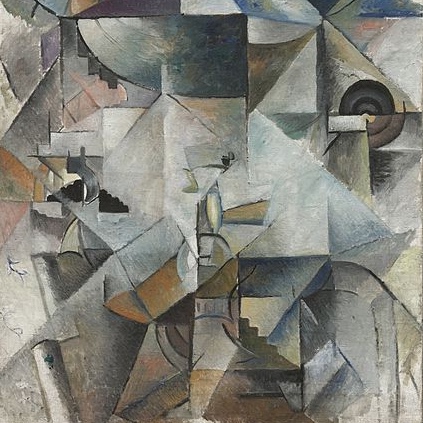
Image by Antonio Carrau.
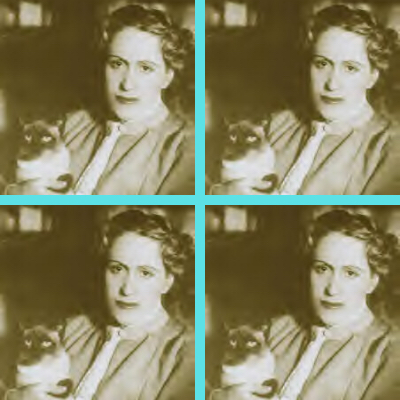
Zuzanna Ginczanka (1917–1945) was a Polish-Jewish poet murdered during the Holocaust. Admired during the interwar period for its dazzling language, her work languished in obscurity under communism, only to be rediscovered at the turn of the twenty-first century. Her work explores themes of women’s rights, female sexuality, human and animal nature, and the sensual qualities of language.
Eve Bigaj is a Boston-based writer, painter, and translator. She holds an undergraduate degree in mathematics and philosophy from the University of Oxford and a PhD in philosophy from Harvard University. She grew up in Poland, the US, and the UK.