La noche tiene su brillo
su música y su silencio…
pues cada estrella es un grillo
entre la hierba del cielo.
Glossary
|
WORD
|
DEFINITION
|
POSSIBLE SYNONYMS
|
|---|---|---|
| brillo (n.) | strength of light | shine, glow, glitter, sparkle, brilliance |
| cada (adj.) | every one | each, all, every |
| cielo (n.) | region above earth | sky, heavens, blue yonder |
| del (prep. + art.) | connected with something | of the |
| entre (prep.) | indicates comparison | between, among, amongst |
| es (v.) | from the verb ser (to be) | is |
| estrella (n.) | mass of gas in space | star |
| grillo (n.) | leaping, chirping insect | cricket |
| hierba (n.) | hollow-stemmed green plant | grass, lawn, weed, turf |
| la (art.) | feminine form of the article meaning one as opposed to another | the |
| música: (n.) | sounds that produce effect | music, melody, song |
| noche (n.) | dark time of the day | night, nighttime |
| pues (conj.) | for that reason, seeing that | because, since, as, therefore, then |
| silencio (n.) | quietness | silence, stillness, calm, hush, lull |
| su (pron.) | belonging to something or someone previously mentioned | her, his, their, its, your |
| tiene (v.) | from the verb tener (to have) | has, contains, encompasses, holds |
| un (art.) | masculine singular—indicates that something is unique | one, a, an |
| y (conj.) | plus | and, as well as |
Background
I. About the Mexican student movement
In the year 1968, young people around the world rose up in rebellion against established
institutions. In Mexico, students were angry with corruption and abuse of power on the part
of the ruling party. The Summer Olympics were about to be held in Mexico City, and
students hoped to showcase their demands to the world. As a high school senior, Alberto
Blanco supported the student movement and participated in marches and demonstrations.
On October 2, 1968, government troops surrounded a peaceful demonstration in the plaza
of Tlatelolco and opened fire. Hundreds of people were killed. Alberto Blanco has dedicated
recent poetry readings to the memory of those who fell at Tlatelolco.
II. About Quatrains
Quatrain is a four-line stanza, rhyming with various forms for example:
o ABAC or ABCB (known as unbounded or ballad quatrain), as in Samuel Taylor
Coleridge’s “The Rime of the Ancient Mariner.”
It is an ancient Mariner,
And he stoppeth one of three.
Now wherefore stopp’st thou me?
The Bridegroom’s doors are opened wide
And I am next of kin
The guests are met, the feast is set:
May’st hear the merry din.
o AABB (a double couplet); see A.E. Housman’s “To an Athlete Dying Young
The time you won your town the race
We chaired you through the market-place;
Man and boy stood cheering by.
And home we brought you shoulder-high
Today the road all runner come,
Shoulder-high we bring you home.
And set you at your threshold down,
Townsman of a stiller town.
Bio
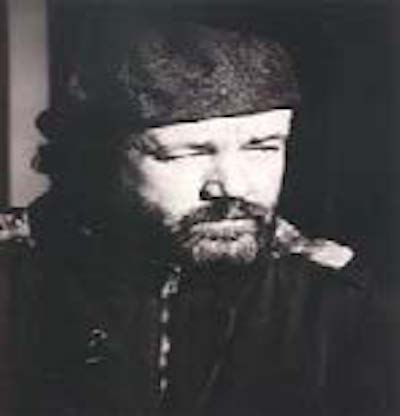
Alberto Blanco was born February 18, 1951 in Mexico City. As a young man, Alberto was confused about what to study in college. He started off majoring in engineering, following a family tradition, but he didn’t enjoy it. He decided to switch his major to art, and the very day he was supposed to take the entrance exam he came down with a fever that kept him in bed for three months. Out of that experience he wrote a poem entitled “El vacio/ Emptiness,” that was his first published work. Alberto ended up majoring in chemistry, then studied philosophy, and finally received his Master’s degree in Asian Studies, specializing in Chinese. His poems reflect all these fields of knowledge. As a young man, Alberto Blanco sang and played keyboard in a rock group, Las Plumas Atómicas, a title which can be translated two ways: The Atomic Feathers and The Ballpoint Pens. He is also a visual artist: his collages and paintings often illustrate his books for children.
Alberto Blanco is deeply conscious of the indigenous roots of the culture of Mexico. Today’s Mexico City, then named Tenochtitlán, was the capital of the glorious and brutal Aztec Empire that was conquered by the Spanish under Hernán Cortés in 1519. No fewer than 65 Native American languages are currently spoken in Mexico, some by over a million people. Nevertheless, he resists the romanticization of that culture: reading his work in California, he told the audience, “I don’t have to wear a penacho (crown of feathers) to consider myself a Mexican poet.”