from “Fragments from The Book of Decline”
please, open your eyes. / there, beyond the borders of day, the insurrection has begun.
III
пусть смерть все ведет, смерть
все решает
пусть мы
она и я
и георг
III
пусть смерть все ведет, смерть
все решает
пусть мы
она и я
и георг
сворачиваясь лентой чёрной
пусть в ней путаясь идем
по слизистым тропам в город
заброшенных датчиков, красного камня
пусть смотрим, как больные, любимым в глаза
и следуем дальше, глаза выдавливая смертельным богам –
вырасти довелось
пусть все будет как смерть –
имеет она хорошо,
как доводилось ранее
белые губы на
открытом плече
вспыхнут
и черный рот помощника
как там ты? как я?
что будет, если сжигается весело? мертвый корабль
в сетке ума плывет, и касание пишет, что лжет. весело.
так — ничего: белые губы и белый
сомышленника говор, стадом меж белых
в старой части света ромы идут, извиваясь,
к теплому камню от красного камня. пусть смерть
границы определит, впустит, того, кто издавна ждет
прижатый ко времени голодом. их коротко пишет
некто, никто, одна.
одного на двоих
помощника делим, червя.
губы, касаясь плеча.
ромы поют: «хватит смотреть,
развлекаясь, втаптывать в землю ногами свой страх, –
вся земля вовлеклась.»
СПб, 2018
IV (Приложение: из книги любви)
пожалуйста, открой глаза.
во сне я держу твоё отсутствие.
пусть это будешь ты –
там, за мостом лжецов, на другом берегу
входишь в тяжелую воду,
красный флаг растворяется на тебе, –
накрываешься тёмным.
открой и увидишь
похоронную процессию, где смеются,
в городе, нагретом чёрным солнцем,
с иссечёнными часами на башне,
и, когда будет утро, услышишь,
как здесь нет никого, и разбивается лёд
над забытыми землями
и мы бежим дальше, укрывая ребенка,
обнимая потерю, наши книги упадка
дрожат. это шаббат наступил,
вечный шаббат, начинается мир
в любви, как ты хочешь
(не видишь),
в бездействии.
пожалуйста, открой глаза.
там, за границами дня началось восстание.
я держу книгу, где всё началось, – дыхание.
коханий, починається світ
Сибиу, 2018
V
*
чёрное солнце вместо дневного всходит, иссекая землю, мы ждём
сообщества; исход — мы идём нитями света, без общего, отмыслившись от мест,
мой мобильник почти разряжен, я пишу это, чтобы зафиксировать: край ночи,
словно липкая пена скатывается в уголках глаз.
мы достигли пределов.
никто из любимых не откроет глаза.
никто из выживших не будет прежним.
красные лица в фонтанах нефти… обгоревшие здания…
я знала земли, где от жажды лижут солёную жёлтую землю,
где убивают, не глядя на кровь,
и земли, где сберегают воздух, наслаждаясь бликами солнечных батарей,
пьют прохладное просекко под радужным куполом…
мы достигли пределов.
последние насекомые на разных концах земли опыляют бурый бутон:
ненависть.
мой мобильник почти разряжен, я пишу чтобы зафиксировать: край ночи
другой, с другими, и снова
книга упадка взорвана,
вблизи от огня.
Бухарест, 2018
III
and so death leads, death
decides
and so
she and I
and georg
a black ribbon curling
tripping us up as we go
along entrails into the city
of abandoned gas meters, of red stone
and like the sick gaze into our loved ones’ eyes
and move on, gouging the eyes of lethal gods—
and so it lead to growth
everything will be like death—
death possesses well,
leading the way as before
white lips
will flash
on a bare shoulder
and the black mouth of the accomplice
you ok there? am I?
and what if it burns great? the dead ship
sails in the mind’s net, their contact writes that it lies. great.
it’s alright: the white lips and white
speech of the co-spiritor, as a swarm among white creatures
in the old part of the world the Roma wind their way
from the red stone to the black stone. death will
define the borders, admit those who’ve long waited
pressed to time by hunger, they are written shorthand
by someone, no one, her.
we split one helper two ways
between us—the worm.
the contact of lips and shoulder.
the Roma sing: “stop staring, distracting yourself,
stop stamping fear into the earth—
the whole earth’s already contracted.”
St. Petersburg, 2018
IV (APPENDIX: FROM THE BOOK OF LOVE)
please, open your eyes.
in sleep I cradle your absence.
let it be you—
there, beyond the bridge of liars, on the other shore
you enter into heavy water,
a red flag dissolves upon you—
you dive into darkness.
open them and you will see
a funeral procession, with people laughing,
in a city warmed by a black sun,
a clock face harrowed on a tower,
and come morning, you will hear
there’s no one there, as the ice breaks
over forsaken lands.
and we run onward, covering up our child,
embracing loss, our books of decline
tremble. shabbat is here,
shabbat eternal, the world
you want (and don’t see)
begins in love,
in idleness.
please, open your eyes.
there, beyond the borders of day, the insurrection has begun.
I hold the book where it all—respiration—began.
amor, el mundo comienza
Sibiu, 2018
V
the black sun arises in place of the day one, carving the ground, we await
company; exodus—we walk by the threads of light, uncommoned, outplacing in thought.
my phone almost out of charge, I write this to record: the brink of night,
as if sticky foam tangling in the corners of eyes.
we have reached the limits.
none who is loved will open their eyes.
none who has lived through it will be the same.
red faces among jets of oil… scorched buildings…
I knew lands, where from thirst they lick the salty yellow earth,
where they kill without looking at blood,
and lands, where they save air, taking pleasure in the glare of
solar batteries,
and drink chilled prosecco under a rainbow dome…
we have reached the limits.
the last insects at the different ends of the earth pollinate a red brown bud:
hatred.
my phone is almost out of charge, I write to record all this: the brink of night
is the other, with others, and again
the book of decline blasted open,
next to fire.
Bucharest, 2018
From “Fragments from The Book of Decline,” from Life in Space. New York: Ugly Duckling Presse, 2020.
Translated by Anastasiya Osipova with Marijeta Bozovic, Catherine Ciepiela, Julia Kolchinsky Dasbach, Pavel Khazanov, Mila Nazyrova, Eugene Ostashevsky, Emily Van Buskirk, Val Vinokur, and Michael Wachtel.
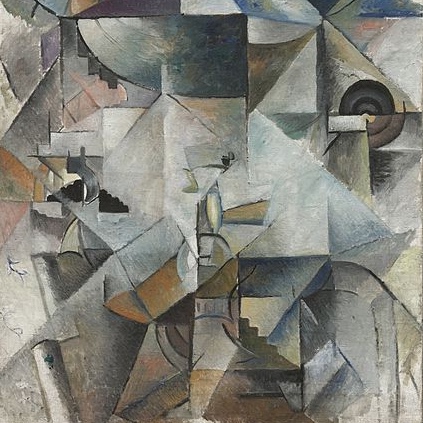
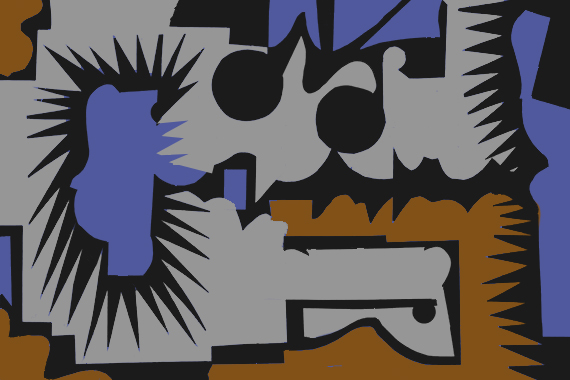
Image by Antonio Carrau.
Galina Rymbu is, in the words of Time Magazine, “part of a new generation of Russian poets taking up language as a form of political protest, challenging state, societal, and patriarchal norms with poetry that draws from personal experience.” Her poetry collection Life in Space, translated by Joan Brooks and others, was published recently by Ugly Duckling Presse.
Anastasiya Osipova is a cofounder and editor of Cicada Press, an imprint that pursues contemporary politically engaged poetic texts. She has translated the writing of Keti Chukrov, Pavel Arseniev, and Roman Osminkin. Her writing on art and cinema has appeared in publications such as n+1, The Brooklyn Rail, Artforum, and Texte Zur Kunst. She teaches in the Russian Program at the Universtity of Colorado, Boulder.