Elemental: Author Roundtable
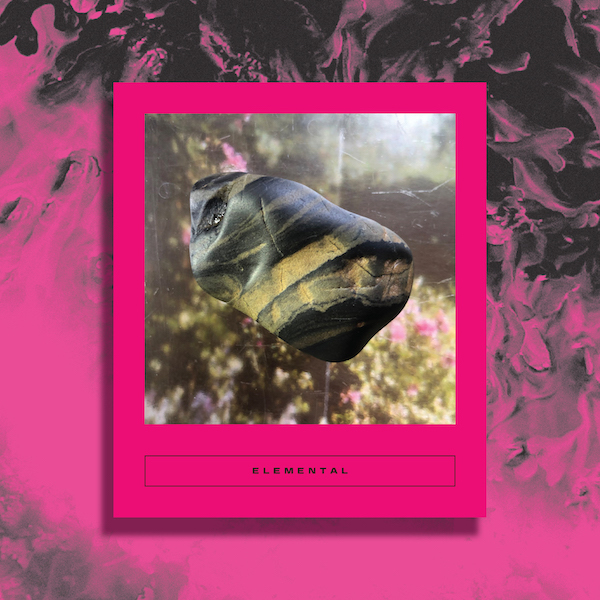
Each story in Elemental explores the questions at the heart of this third edition in the Calico Series: How can we understand our complex, ever-evolving relationship to the Earth and its elements?
And yet at their core each story explores the questions at the heart of this third edition in the Calico Series: How can we understand our complex, ever-evolving relationship to the Earth and its elements? While putting together this collection of what we call “earth stories,” I was delighted to find that we were inundated by fascinating stories by writers who were new to me, having not yet appeared widely in English translation. I wanted to take a moment to speak with a few of these writers, to hear more about the inspiration behind their stories and how they approach writing about a topic as monumental as the Earth.
The three authors I corresponded with—Tamar Weiss-Gabbay (Israel), Farkondeh Aghaei (Iran), and Erika Kobayashi (Japan)—work in different languages and literary traditions, and yet Elemental brings their work into close proximity. Weiss-Gabbay’s “The Weather Woman,” translated from Hebrew by Jessica Cohen, tells the story of a weatherwoman-turned-prophet in a small Israeli town prone to flooding. In Farkondeh Aghaei’s surreal “Dog Rose in the Wind, the Rain, the Earth,”(opens in a new tab) translated from Persian by Michelle Quay, a young woman in Tehran finds respite from a life of obligations and a suffocating future when she’s swept off by floodwater. And in Erika Kobayashi’s “Precious Stones,” translated from Japanese by Brian Bergstrom, a woman unearths the stories of her grandmother’s radiating jewels, Japan’s Ni-Go Project , and a mysterious ghost named Quartz living beneath the surface of the Earth.
While I corresponded with each author individually by sending my list of questions either to them or their translators, I wanted to place their answers together, in a kind of roundtable, so that, as in Elemental, their words could mingle.
—Sarah Coolidge, Calico Series editor
***
Sarah Coolidge: Can each of you talk a bit about your story featured in Elemental and the inspiration behind it?
Tamar Weiss-Gabay: In my city, Jerusalem—a mountainous city on the edge of a desert—there is an admired local weatherman, whose verdict everyone awaits. This is a land that always longs for rain, a place where snow is a wishful desire. So, sometimes it seems as if there is an expectation that the forecaster himself will influence the weather. People feel grateful to him when he forecasts the weather they wished for.
I found this interesting, because it touches upon the limits of our influence on reality and particularly on nature; it expresses our desire to be the center of everything around us and to control it—a hopeless matter when facing forces greater than us. I wanted to describe the person who stands in between, who knows the natural forces and carries the human hopes to them, and from them.
Farkondeh Aghaei: In the dog days of summer 1987, a sudden downpour caused a flood in Tehran. As a result, 300 people lost their lives. The flood began in the affluent neighborhoods of north Tehran in the foothills of the Alborz mountains and continued all the way down to the poorer areas of south Tehran, including a public cemetery.
Erika Kobayashi: I’ve always been very interested in what lies beneath the surface of the earth. Japan has myths about a Land of the Dead located underground, and this story [“Precious Stones”] was born from remembering myself as a child being fascinated by a new subway line being dug into the ground in my neighborhood and connecting that to these myths.
SC: In your story, how do your characters relate to the Earth and vice versa? Is there intimacy? Estrangement? Something else?
TW-G: I think that the townspeople in my story do feel intimacy with the Earth – but maybe the kind of intimacy a baby feels towards his mother: he believes she is his own. From a baby’s point of view, Mother is there only for him, she is his food and his playground and a place to rest—his habitat. The town’s people will do everything to make Earth keep fulfilling their needs. The weatherwoman can see Earth as something separate from her. But the separation hurts. You want to be part of it again.
FA: The narrator of my story is a young girl caught up in conflicting emotions and feelings. The unrelenting downpour and her sudden fall into the drainage canal transport her from a world full of pain to a place of obliviousness and calm.
EK: In my story, the surface of the earth is dug into, and what emerges are stone and pieces of the past. Two things I wanted to explore in my story were: What if stone itself could remember the past? And what if a person him- or herself could become a stone?
SC: The sense of place is strong in all the pieces in Elemental. Why did you choose to set your story where you did? What was alluring about this real or imagined place?
TW-G: The town is imaginary and could be any remote town that found itself on a flood path. One of the places that were in my mind while writing was Tzafit, a creek south of the Dead Sea, into which ten teenagers went two years ago, led by their teacher. He encouraged them not to fear the stormy weather. A flashflood swept through, and they never returned.
FA: The setting of the story shifts from real life to a life beyond ours. As a result of a sudden downpour, the settings of the story—a mansion, cemetery and canal—eventually lead to a promised land, a place where, in nature’s embrace, there is only satisfaction, and everyone is living in peace, calm, and an environment of love. In this place, there is no sign of poverty, misery, illness or suffering.
EK: When I was thinking about what happens when the surface of the earth is broken, I recalled that not only stones emerge, but also natural spring water. This reminded me of the court diarist and poet Izumi Shikibu—whose name, “Izumi,” is the Japanese word for such a spring—who lived about a thousand year ago, during the Heian Period.
There are places all over Japan that claim to be her birthplace, but among them is Ishikawa, in Fukushima Prefecture, and this became an important location in the story.
One reason for this importance was that Ishikawa was also the site for the top-secret Ni-go Project—a wartime collaboration between the Japanese military and the National Institute of Physical and Chemical Research to develop a nuclear weapon for the Japanese Empire—using radioactive ore excavated there. So the surface of the earth there and what lies beneath it became important to the story I was telling as well.
There is a resort village in Ishikawa called Nekonaki Onsen—Cat’s Cry Spring—that is built around a radium spring. The name of the spring derives from the story of Izumi Shikibu’s cat, who, legend has it, cried and cried for its mistress after she left for the Heian capital (now Kyoto) until it became stricken with illness. Near death, it dove into the spring’s waters one day and, miraculously, emerged cured completely.
The half-life of radioactive material is so long. For example, the half-life of radium is apparently 1,601 years. By then, the time we live in now will be even more distant than Izumi Shikibu’s time is to us now—I couldn’t help but think of this future when contemplating the radium spring named for her beloved cat.
SC: Are the Earth and its natural forces particularly important topics to you as a writer? What themes are central to your work more broadly?
TW-G: The more I write, the more I notice that what interests me is the way we try to ignore our basic natural habitat and our natural needs, believing we are stronger or smarter than them. My new novel is about a father who tries to help his little sensitive boy adjust to a new kindergarten, and his journey to understanding how much current society had grown far from meeting the real needs of a parent and child. “The Weather Woman” is the first piece I wrote about natural forces more directly, and it intrigued me so much that I wrote two sequel stories about this town and the way it copes with the forces of nature.
FA: The majority of my work deals with women’s issues. Additionally, I have been a vegetarian for many years, and there is special attention paid to animals in my work. The relationship between humankind and animals is as old as history and is one of humanity’s concerns as sentient beings. You can know a person by their relationship to animals and nature.
EK: Ore dug up from the earth is a very important motif in my work. Throughout my career, I’ve been interested especially in the discovery of radioactive ore and the scientists investigating this radioactivity—their relationship to the radioactivity itself.
Further, another major theme in my work is light—its terror and its beauty—starting with Prometheus’s fire and continuing with the light produced by nuclear fission and nuclear power.
SC: Lastly, has your work been translated into English before? What has the process of translation been like for you?
TW-G: This is the second time my work has been translated into English. The deceased translator Prof. Miriam Shlesinger, who raised generations of translators in Israel, and was awarded the Lifetime Achievement Award by the Israel Translators’ Association, translated my short piece “Blind Spot” with her students and sent it to me. I wasn’t part of the process and it was a great honor for me (later this work was published in The London Reader). Now, I’m grateful that “The Weather Woman” was translated by the brilliant Jessica Cohen. It is a unique experience to be translated into a language that I understand well, because then I can really enjoy the quality of the translation. Although in a way the translation is the translator’s new creation, I still feel it reflects my own voice (in much better English than I could express myself) and this fact allows me to fully stand behind the story, in front of a new audience. I think this is what every author wishes for, when being translated.
FA: A few short stories of mine have been translated into English, along with the novel From the Devil Learned and Burned. Reading these stories could be of interest to readers from various other cultures.
EK: The short stories “See”(opens in a new tab) and “Sunrise”(opens in a new tab) were translated by Brian Bergstrom and published in Asymptote. “See” won runner-up in Asymptote’s 2017 Close Approximations Translated Fiction contest.
Further, the writing accompanying my visual art installations has been translated into English (and sometimes other languages as well!) that has been displayed alongside my Japanese during various exhibitions in Japan and around the world. A recent example is my contribution to the group show Image Narratives: Literature in Japanese Contemporary Art that was held from August 28 to November 11 in 2019 at the National Art Center in Tokyo. The text for this exhibit was translated by Brian as “She Waited” and displayed there, and it was republished in Chic Magazine(opens in a new tab) as part of a feature on my work.
Indeed, Brian and I have been collaborating on the English translations of my short stories and art texts for many years now, ever since we met at a conference on nuclear culture held at Université de Montréal, and this has now resulted in his translations of my novel Trinity, Trinity, Trinity and a book-length collection of my shorter pieces coming out from Astra House in 2022 and 2023, respectively.
It is always exciting to collaborate on translations with Brian. I think his translations are wonderful, of course, but even more than that, it highlights how translation doesn’t have to be a one-way street—it can even end up influencing my Japanese! For example, there have been times when the titles of pieces in English, which sometimes end up re-created entirely, become reflected in my subsequent work in Japanese, part of an ongoing process of co-creation.
Elemental is now available from Two Lines Press. Grab a copy from us or from your local indie bookstore, and check out all current and forthcoming titles in the Calico Series here.
Farkondeh Aghai’s answers were translated from Persian into English by Michelle Quay. Erika Kobayashi’s answers were translated from Japanese into English by Brian Bergstrom. And thank you to Jessica Cohen for connecting me with Tamar Weiss-Gabbay, who responded to my questions in English.
Sarah Coolidge (they/she) is a queer editor and musician based in Oakland. They have worked at the Center for over a decade, serving as editor of the Two Lines journal before launching the Calico Series in 2020. They’ve had the honor of working with countless translators they admire and have edited work by Mariana Enriquez, Iman Mersal, Pirkko Saisio, Dorothy Tse, Wilson Bueno, and Elena Garro, among others.
Tamar Weiss-Gabbay is an Israeli author. She has published five books in Hebrew, both for adults and children, and has earned rave reviews. Her recent children’s book was chosen to be distributed to preschools throughout Israel. She leads various literary-social projects, including The Israeli Women Writers’ Forum, Two: A Bilingual Project for Arabic and Hebrew Contemporary Literature, and the street libraries in Jerusalem.
Farkhondeh Aghaei is one of the leaders of a highly successful wave of women writers in post-revolutionary Iran. She harnesses magical realism to express feminist themes and explore class divides. Following an initial burst of productivity in the 1990s, Aghaei’s acclaimed literary career—which treats topics as diverse as the transgender experience and religious persecution—began to face opposition from state censors. Her novel Zanī bā Zanbīl (Woman with basket) was finally published in 2015 with significant cuts to the original manuscript after languishing under review for nearly a decade.
Erika Kobayashi is a novelist and visual artist based in Tokyo. History, memory, and radiation play an important role in her work. In her novels, Kobayashi traces the history of radiation via the lives of ordinary people over generations—particularly generations of women: mothers and daughters, grandmothers and granddaughters. Through her writing she wants to make the invisible visible, the unseen seen. (Photo credit: Mie Morimoto)