Eight African Women Writers to Read for WIT Month
Celebrate Women in Translation Month with this list of contemporary and historical books by African and African descent women writers in translation.
It’s the last day of August, and just enough time to squeeze in one last hoorah for Women in Translation month! If you’re anything like us, you love reading women in translation all year round, so we’re excited to share this list of African and African descent women writers in translation to finish the month off strong and provide some reading recs for the months ahead. Check out our round-up of contemporary and classic women writers in translation from African and European languages.
And while you’re here, don’t miss out on the last day to shop our special WIT month sale, where we’ve put together exclusive collections like “Women Translating Women,” “This Woman’s Work,” and “The Complete #WITMonth Collection.”
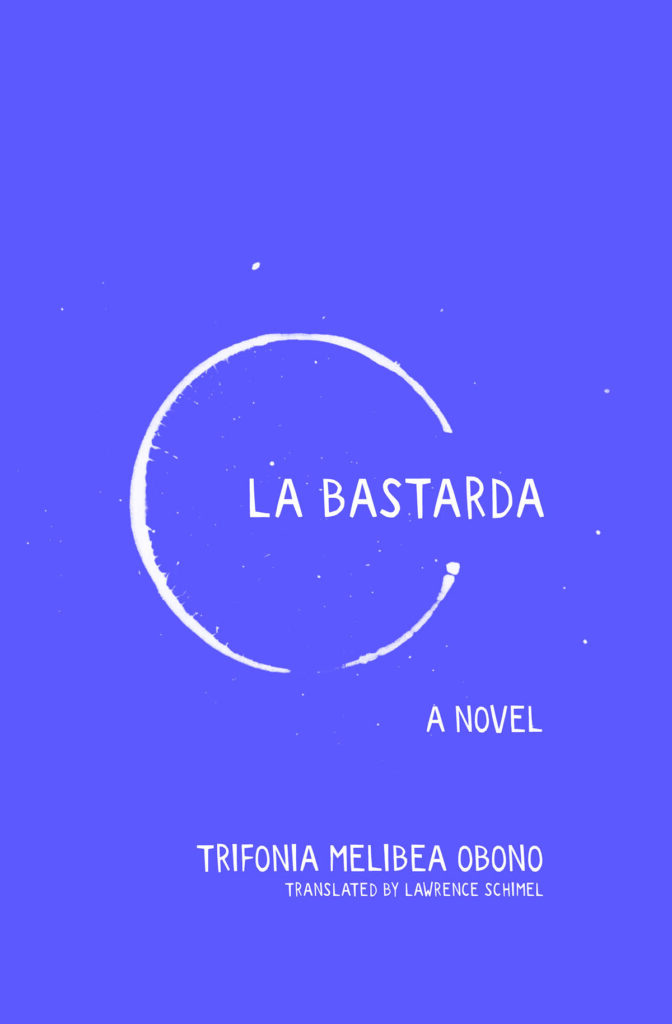
1. La Bastarda by Trifonia Melibea Obono, translated by Lawrence Schimel (Spanish)(opens in a new tab)
Growing up under her grandparents’ watchful eye, orphaned teen Okomo dreams of escaping her traditional Fang community and of finding her father. For help, she relies on a cast of village outcasts: her gay uncle and a group of rebellious girls in the woods who hate braids and make-up. Initiated into their “indecency club,” Okomo becomes part of a new community that celebrates the traits that marginalized her—her femaleness, abandonment, and sexuality.
La Bastarda is the first novel by an Equatorial Guinean woman to be translated into English, and the original Spanish title gestures toward the novel’s function as an allegory for Equatorial Guinea’s relationship with its colonial “parent,” as well as its separation its Latin American and African siblings. But la bastarda is also just the personal identity of queer African girl who can finally say, “I’m a bastarda, a Fang woman; I’m a bastarda, daughter of an unmarried Fang woman; I’m a bastarda, a lesbian.”

Beginning in the late 1980s, popular fiction written in Hausa exploded among young adult readers in northern Nigeria. Called littattafan soyayya (“love literature”), the books are usually inspired by Hindi films and written by women. Featuring polygamous households, virtuous women, scheming harlots, and black magic, they’re both utterly addicting and have inspired backlash from government censors and book-burning conservatives.
Sin Is a Puppy That Follows You is the first full-length novel by a woman translated from Hausa to English. Since the author is also a prominent director in Kannywood, the Hausa-langauge film industry, it totally makes sense that Nigerian-American fiction and film writer Nnedi Okorafor calls this “the kind of literature I’d ‘binge read,’ then rant and rave about the inequality, injustice and stupidity of the characters’ actions, and then go back and read more.” Sign us up!

A madwoman roams an island village suspended in time, muttering prophecies. Then a woman falls from the sky and gives birth to a child. Years later the child, now a modern businesswoman in a fast-paced city, finds herself haunted by the memory of the village and the mad woman, whose warnings of impending disaster begin to play out in both the city streets and the rural dreamscape.
The Madwoman of Serrano is the first novel by a female author to be published in Cape Verde, and the first to be translated into English. For more firsts in Lusophone African literature in translation, don’t miss The First Wife by Paula Chiziane and translated by David Brookshaw(opens in a new tab). A sprawling and humorous story of a secret polygamist’s comeuppance at the hands of his wives, it’s the first novel published by a woman in Mozambique.

In ten linked short stories, Thirteen Months of Sunrise takes readers on a meandering walk through Khartoum’s streets. We’re introduced to a range of characters from contemporary urban Sudanese society, but Mamoun’s attention lingers most on those at its margins—the poor, homeless, and sick. We meet characters in one story and sense them again at the edges of another, so that at the end this collection feels both atmospheric and ephemeral, tender and connected.
Rania Mamoun is the first female Sudanese author to have a complete work translated into English. For more African Arabic women in translation, check out Elisabeth Jaquette’s translation of Basma Abdel Aziz’s The Queue(opens in a new tab), as well as the magnificent work of Nawal El Saadawi.

A classic of African women’s literature, So Long a Letter is an intimate collection of memories and reflections from Ramatoulaye, a widowed mother and schoolteacher, to Aissatou, her childhood friend in America. In the form of an extended letter, Ramatoulaye reminisces on her marriage and her husband’s painful choice to take a second wife, as well as the difficulties of being an educated woman in post-1960 independent Senegal. In 2016, Bâ’s novel was finally translated into Wolof, the most widely spoken language in Senegal, as Bataaxal bu gudde nii by Mame Younous Dieng and Arame Fal.
Looking for more Francophone African literature in translation? We’ve got you covered:
- Aya: Life in Yop City, a graphic novel by Marguerite Abouet and Clément Oubrerie, translated by Helge Dascher(opens in a new tab);
- Don’t Whisper Too Much and Portrait of a Young Artiste from Bona Mbella by Frieda Ekotto, translated by Corine Tachtiris (opens in a new tab)(two of the first African novels to portray love stories between African women in a positive light);
- and the wonderful work of Scholastique Mukasonga(opens in a new tab), translated by Melanie Mauthner and Jordan Stump and published by our friends at Archipelago Books.

In 1962, a group of soon-to-be-famous African writers gathered at Makerere University in Uganda. Their conversations about style and language (should African writers use English, or their mother tongues?) would influence an entire generation of post-independence African literature. One of only two women at the meeting, Grace Ogot published the first novel by a Kenyan woman four years later.
Known mostly for her exquisite writing in English, Ogot also wrote a novel in Luo, her mother tongue. The Strange Bride retells a Luo myth in the fictional village of Got Owaga. Life in the village is peaceful until the mysterious neighbor girl Nyawir, who was taken to the underworld as a child, returns to marry the chief’s son and stir things up.

In 2017, the publication of Hanna Ali’s short story collection Sheekadii Noloshayada made her the first contemporary writer to be translated and published in Somali, her mother tongue. A year later came its English version, The Story of Us. The stories express the difficulties and joys of Somali womanhood, including experiences of migration, and losing and finding home and love.
Sheekadii Noloshayada / The Story of Us is the first publication of Ali’s online publishing platform, Market FiftyFour, which publishes African language e-books and audiobooks and hopes to increase the amount and accessibility of literature in African languages. To date, Market FiftyFour has published poetry and children’s literature in Amharic, Kinyarwanda, and Tigrinya.

Last, we can’t resist adding one of our favorite women of African descent in translation and Two Lines Press author Igiaba Scego. Beyond Babylon is a stunning polyphonic novel of Afro-Italian experience that weaves together the voices of two young women, their mothers, and their father into an epic tale that spans Somalia, Tunisia, Italy, and Argentina. It narrates what it means to be swept up in history with heart-breaking observations and intimacy.
Other excellent novels to read alongside Scego include Gabriella Ghermandi’s Queen of Flowers and Pearls(opens in a new tab) and Cristina Ali Farah’s Little Mother(opens in a new tab), both translated by Giovanna Bellesia-Contuzzi and Victoria Offredi Poletto.

Now’s your chance to shop our Women in Translation sale, where we’ve put together exclusive collections featuring Igiaba Scego, Marie Ndiaye, Jazmina Barrera, Elvira Navarro, and more!
Kelsey McFaul is part of the editorial staff at Two Lines Press. She has a PhD in literature from UC Santa Cruz with a focus in African language literatures. She first joined Two Lines as a Public Fellow in 2020–21, supporting the creation of No Edges: Swahili Stories.