Spring 2022 Lit in Translation Preview
Du Mois Monthly is the latest iteration of a project now in its fourth season. An elimination-based reading series, the Du Mois recognizes a single work of literature in translation each month with no repeats permitted in the categories of author, translator, publisher, or country. This process operates on a timeline according to the Gregorian calendar, meaning that when the clock strikes midnight on New Year’s Eve we flip the board and begin anew.
The Du Mois arose from a desire to narrow the aperture in terms of what qualifies as a “Staff Pick” while also avoiding homogeneity in our reading habits. In addition, it has successfully broken at least one man’s addiction to fantasy football and for that we should all be grateful. Whether appearing in the form of a newsletter, social media feed, or endcap display (Editor’s Note: There’s also an invite-only bacchanal held in conjunction with the Du Mois that takes place annually at Bohemian Grove), the refrain remains the same: No repeats. No wack shit. No problem.
—Justin Walls & Spencer Ruchti
Haymaker in Heaven (March 2022)
Edvard Hoem, translated from Norwegian by Tara Chace
Milkweed Editions
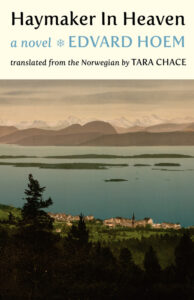
“A brawny ode to fertility and faith (and the official Du Mois selection for March 2022), Edvard Hoem’s Haymaker in Heaven ought to satisfy those who’ve reveled in the wind-blown fortitude and laconic yearning of Roy Jacobsen’s ongoing Barrøy Chronicles or, for that matter, anyone with a penchant for the meandering anecdotes of Grampa Simpson. Unhurried passages delineating the fickle nature of late-nineteenth-century Norwegian courtship or the finer intricacies of saddle fabrication are in abundance, lending a lived-in mien to every divot and pore in the novel’s rolling landscape. Translated by the steady hand of Tara Chace, Haymaker in Heaven is a resplendent, wholehearted affair worth getting swept up in.” —Justin
Order your copy from Third Place Books (Seattle, WA)(opens in a new tab)
Thank You for Not Reading (April 2022)
Dubravka Ugrešić, translated from Croatian by Celia Hawkesworth and Damion Searls
Open Letter
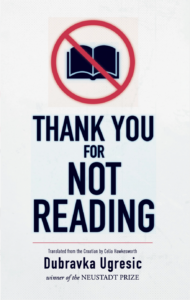
“If you’re a lonely reader with an almost fanatic preoccupation with the intersection of good literature and commerce, Dubravka Ugrešić’s Thank You for Not Reading is a faithful companion. Originally translated by Celia Hawkesworth and Damion Searls in 2003—a translation superteam, if ever there was one—Ugrešiç’s finest collection of essays is getting a snazzy new “package” (as we say) this year. The contents therein are perpetually relevant: Bill Gates is still blurbing books; celebrities are still “writing” memories with the shelf life of an avocado; publishers still shirk away from translated literature because of a few self-fulfilling bugbears about the profitability of such books; and yes, we’re all still having fun. If the unfortunate business of books has touched your life, read Ugrešić and rejoice.” —Spencer
Order your copy from Third Place Books (Seattle, WA)(opens in a new tab)
Yesterday (April 2022)
Juan Emar, translated from Spanish by Megan McDowell
New Directions
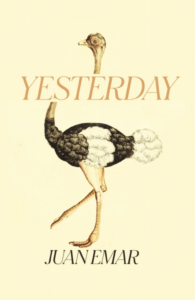
“Juan Emar, the pen name of Chilean writer, painter, and art critic Álvaro Yáñez Bianchi, was an avant-garde surrealist of the 1920’s and 30s whose Dadaist work has never been translated into English… but if Megan McDowell’s brilliant translation is any indication, we’ll all be Emar fanatics soon. Many of your favorite Chilean writers grew up reading him; in classrooms, it was not uncommon to consider oneself in the camp of Cortázar or Emar. Per Alejandro Zambra’s introduction, Emar dedicated the last twenty years of his life to writing Threshold (Umbral), a five volume, 4,135 page magnum opus that didn’t find a publisher until 32 years after the author’s death. In Yesterday’s most notable scene, an ostrich defecates a lion. I couldn’t tell you what else it’s about, but I found it all wonderful.” —Spencer
Order your copy from Third Place Books (Seattle, WA)(opens in a new tab)
Linea Nigra: An Essay on Pregnancy and Earthquakes (May 2022)
Jazmina Barrera, translated from Spanish by Christina MacSweeney
Two Lines Press
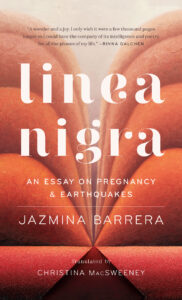
“Nestled within the nucleus of motherhood literature comes Linea Nigra, a sort of über-text to much that’s come before it, written in aphorism and anecdote that intersect over and over again in beautiful orbits. Barrera writes about childbirth, breastfeeding, and care through her mother’s artwork and her grandmother’s experience as a doula, as well as the author’s own extensive reading notes and frustrations with healthcare. Look out for frequent cameos from a Chilean writer who, amongst other talents, is a terribly charming dad. (Ex. “That thing about saying ‘we’re pregnant,’ in the plural. I get the sense of it, but it’s dumb. Unfortunately, I’m not pregnant. But you are. You’re very pregnant.”) Barrera’s seriousness and intelligence is punctuated by expressions of delight in parenthood, what she calls the ‘simple, clear, almost ridiculous happiness I feel eighty times a day.’” —Spencer
Order your copy from Third Place Books (Seattle, WA)(opens in a new tab)
Time Shelter (May 2022)
Georgi Gospodinov, translated from Bulgarian by Angela Rodel
Liveright
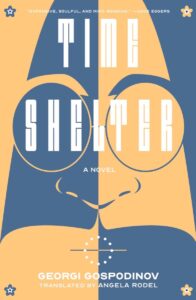
“I’ll be a mess if I can find a better novel this year than Gospodinov’s Time Shelter. Gaustine, a geriatric ward clinician, opens a clinic for Alzheimer’s patients that reproduces decades of the past in perfect detail. The treatment is wildly effective, and within the comfort of past eras, patients inhabit their former selves—the Dante-esque recollections of their regrets and triumphs makes this book a monumental feat all its own. In the second act, Gaustine’s experiment spreads across Europe and nations vote to exist in former decades, down to the cigars and propaganda and global skirmishes of the era. Angela Rodel somehow manages an encyclopedia’s worth of obscure cultural references from across the globe, rending them with clarity and beauty. Gospodinov is a keen observer of both the melancholy of time’s passing and the slippery joy of nostalgia. Not since Lewis Hyde’s A Primer for Forgetting have I found a more compelling work on the topic.” —Spencer
Order your copy from Third Place Books (Seattle, WA)(opens in a new tab)
Bad Girls (May 2022)
Camila Sosa Villada, translated from Spanish by Kit Maude
Other Press
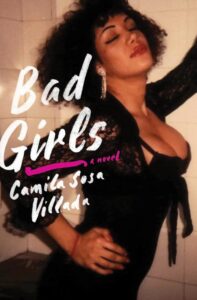
“There’s a touch of the miraculous, a sort of stop-motion fabulism, sprouting through the cracks of the Córdoban asphalt in Camila Sosa Villada’s Bad Girls, imbuing the novel’s ragtag company of trans deities, miscreants, and sex workers with an enduring sense of fantastical improbability. Amid a morass of predatory police and headless suitors, abandoned infants and avian transformations, the tenor of Villada’s diaphony somehow manages to remain undeniably celebratory. With a vivid and boisterous translation, Kit Maude (who, incidentally, was an inaugural Du Mois honoree) has emphatically confirmed this much: Bad Girls is a plaintive vigil that feels like a party.” —Justin
Order your copy from Third Place Books (Seattle, WA)(opens in a new tab)
Clandestinity (May 2022)
Antonio Moresco, translated from Italian by Richard Dixon
Deep Vellum Publishing
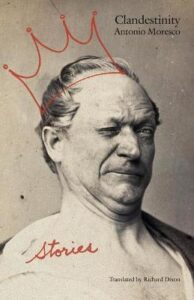
“Psychosexual voyeurism and eldritch plumbing collide in Antonio Moresco’s oneiric ensemble piece, a disconcerting quartet of inverted realities. Clandestinity at times resembles nothing so much as a Yorgos Lanthimos-helmed adaptation of the computer game Myst, while elsewhere masquerading as a Hitchcockian vortex filtered through the distorted lens of Francis Bacon. It’s a book that burbles with inscrutable dread, harboring an implacable sense of foreboding that skulks just beneath the surface. Richard Dixon deserves ample plaudits for dragging this monstrosity in front of an English-language audience, even if its arrival does feel like an amalgam of both blessing and curse.” —Justin
Order your copy from Third Place Books (Seattle, WA)(opens in a new tab)
The Second Substance (June 2022)
Anne Lardeux, translated from French by Pablo Strauss
Coach House Books
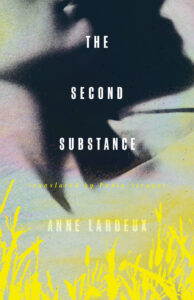
“A nomadic miscellany of gruff scavengers and would-be pioneers has commandeered the derelict filling station at 69 Rue Principale—an anonymous sensualist and moonlighting authoritarian among them—all jockeying for position at the nexus of self-determination and fate. In Anne Lardeux’s enigmatic debut, presented here in a translation by Pablo Strauss, the constant friction between societal strictures and communal revision spark a series of disorderly experiments, abstract epiphanies blasting off in every direction. The Second Substance is a novel about overriding our programming, rewriting our code in order to initiate an even more radical set of protocols for eroticism, destruction, and rebirth.” —Justin
Order your copy from Third Place Books (Seattle, WA)(opens in a new tab)
Click here to read and subscribe to Du Mois Monthly.(opens in a new tab) Follow them on Twitter here(opens in a new tab).
Justin Walls is a former Pacific Northwest bookseller and current member of the 2020 Best Translated Book Award fiction jury.