Pine Garden | Waste Land
A pine forest does not require translation
パイン・ガーデン 松園別館
軒でめざめた草たちは
乳歯のように生えそろう
からだを 立てて いるのです
パイン・ガーデン 松園別館
軒でめざめた草たちは
乳歯のように生えそろう
からだを 立てて いるのです
その茎に 葉に 結ぶ露には微生物
まるい世界に生きている
前進後退 捕食と分裂 ああ
仮死と死 落下 あまやどり ねえ
朽ちる途上の軒下で
画面のとなりにお茶がある
くずおれる生、
くずおれる生 き も の だ
北極圏の氷はとけて
這い上がれない白熊水没
砂のてのひらでやすやすと
撃たれてたおれる民間人
(その画面はほんとうなのか)
打たれない、安い夜景に
料理番組(塩小さじ一)
格安枕 タワーの点滅 天気予報
(ほんとうなのか)
画面に画面が重なって
打ち消しあって 哺乳類
ふたつしかない目のそれぞれに
今日の目薬たらして背後に
ひろがる時間をふるわせる
生えそろう 哺乳類
まるい世界に生きている
松が生えている
ここには松が生えている
たくさんここには生えている
松の針は ふくらむ月を
容赦なく刺し 傷つける
月は目を閉じたまま
今日の航路をだまって辿って
時間の膜からひっそり滲んで
(みな日本人が植えたんだよ)
(もともと松は生えない土地だよ)
(読もうとしてもだめだよ傷は傷)
松林に翻訳は要らない
明日、のようなことを考える
まだ来ていないこと、これからを
生えて いる
ここには松が生えて いる
風の手にしつこくなでられ腰を曲げ
移り変わりに首をかしげて
わだかまりは樹皮に押しこめ
通過する月を傷つけていく
樹脂の黄色い涙をこぼし
からだを 立てて いるのです
軒は 空に線を引いて
仮の区切りを視界に生むが
まばたきひとつで
砕く、こともできるのです
いっぱいに結ぶ露が
それぞれを鳴らしながら
手もとの世界を拡大すれば
捕食と分類 仮死と死 誕生
生えそろう哺乳類 まるい世界
通じない言葉がねっとり枝に
からまり うごめき もみしだかれて
やがてほどけて 飛ばされる
緑の針は 濡れて光る先端を
見えない膜に当てている(そう)
引いてからぐっと刺し(ああ)
内側から こぼれながら(ねえ)
烈しく時間を積んでいく
荒地を
霜がおりたね かすかな氷
息して窓に指を当て
づう、となぞればその幅だけの時空が
胎児のかたちにひらかれる
交雑 野原 向かい風
爪先へ並べられていくのは
新しさゆえになつかしい回路ばかり
一歩の先がいよいよ遠く
今日、答えを
最終的な答えを
引き当てるように狂う
失くすことにより得る地図の上
ひんやり ひろげる ランチボックス
いんげんの次はにんじん
からあげにかかるものは涙の
だいぶ古くからつづく海、潮
異種間交雑かさねられ
吸いこまれる遺伝子の固有性
網の目へ消えていくなら
死のような おだやかさ
それでも、というのなら
なにがいったい 欲しいの あなたは
荒地を沃野と読み替える
読み替える、荒地を沃野と
荒地を、沃野と読み替える
読み替える荒地を、沃野と
失くすことをおそれ溜めこんでいく
なにも もつことは できない のに
手足はなく 転がっていた
うす明かりのなかで葉を食べていました
たしかにそれは 上から降ろされたのでしたが
天からか あるいは仲立ちするものがあったのか
いまとなってはわかりません
食べて 転がり ときおり這うと
避けられないものは遭遇です
おなじ地点を踏んで交わる
有性であることのほか共通点はなく
それゆえに 交わる はてしなく
指図するものの指先、見えない
にんじんの次はれんこん、にんげん
箸の先で豆、押さえて交わる
考えもなしに糸を吐く 糸吐く
街は繭に
偶然、乗り合わせたものだから
からだをこうして座席におさめ
各自の意思で立ちあがる
(けれども意思とは何だろう)
遺伝子の川底に目をひらく三万年前の人
そこへいたるまでの交雑の味
組みこんでしまえば分割できない交配の
パレットは混んでいて
疲れた息や 七色の息 すれちがう
荒地を、沃野と読み替える
読み替える荒地を、沃野と
荒地を沃野と読み替える
読み替える、荒地、沃野
荒地を
その幅だけの時空に
そそいだすべてを今日と名づけて
連れ出す おもてへ 鎖はつけずに
前方からせまり来るものと呼び交わす
濃くなる
煙が濃くなる
すがたよりも早く鳴き交わす
Pine Garden
(Songyuan Bieguan, Hualien)
The weeds awakening in the eaves
Raising their bodies
Like a full set of milk teeth
Inside the dewdrops on their stems and leaves are microorganisms
Living in balloon-shaped worlds
Advance and retreat, predation and fission, oh
Asphyxia and extinction, falling, shelter from the rain, see
On their way to decay beneath the eaves
Next to the image on the screen, a cup of tea
Disintegrating life,
Disintegrating L I V E S—
The polar ice melts,
Drowning polar bears unable to climb up
Atop a palm of sand, civilians
Are shot and fall so casually
(Is it real, the image on the screen?)
A cheap nightscape, unelectrifying
A cooking show (1 tsp of salt)
Discount pillows a blinking tower weather forecasts
(Is it real?)
Screen images pile up one on top of another
Canceling each other out into mammals
Into their single pair of eyes
Today’s eyedrops are applied so that time
Is shaken, stretched against the background
A full set of mammals
Living in the balloon-shaped world
Pine trees grow
Pine trees grow here
Scores of them grow here
Pine needles relentlessly prick
The waxing moon to wound
The moon keeps its eyes shut while
Silently tracking today’s passage
Secretly infiltrating time’s membrane
(They were all planted by the Japanese, you know)
(Originally, pines didn’t grow around here)
(No use trying to read it, a wound is a wound)
A pine forest does not require translation
I think of some semblance of tomorrow
Something yet to come, hereafter
Is growing here
Pine trees are growing here
Their backs are curved, tenaciously caressed by the wind’s hands
Their heads cocked at the changing times
Their grudges shoved beneath their bark
They wound the passing moon
They shed yellow tears of resin while
Raising their bodies
The eaves draw a line in the sky
Creating a tentative boundary in the field of vision
Which one bat of an eye
Would be able to smash
If the numerous dewdrops
Would magnify the world at hand
Ringing each one of them
Predation and fission asphyxia and extinction birth
A full set of mammals a balloon-shaped world
The words that didn’t get across would stick to the branches
Winding, wriggling, crumpling
And then come loose blown away
Green needles’ wet, shiny tips
Touch the invisible membrane (yes)
A tug and a firm stab (oh)
Spills out from inside (see)
Time piles up furiously
*Pine Garden in Hualien was built in 1942 during Taiwan’s colonial era by the Japanese Imperial Army. Its garden has Pinus luchuensis from Okinawa and its building functioned as an office and a retreat for army officers.
Wasteland
It’s frosty out there a bit of ice
A puff of breath on the window and a finger
Squeegees across, opening up a space-time
In the shape of an embryo
Crossbreeding meadow headwind
Lined up at our toes are
Nothing but networks all new thus dearly familiar
Beyond our first step, a widening stretch
Drives us mad as if we had
Drawn the answer today
Drawn the final answer
On the map we gained by losing
Lunch boxes are spread chilly
Carrots follow haricot beans
Sprinkled over the fried chicken is a tearful of
Ocean, a constant tide from way back
Hybridizing one after another,
Genetic indigeneity is sucked into
The mesh and disappears
Until tranquility like death remains
Still, you argue
Tell me then, what are you longing for?
Waste land is misread for fertile land
To read waste land as fertile land
Waste land is misread, for fertile land
To read waste land, as fertile land
Afraid of losing, we hoard
Though we cannot own anything
Without limbs we were lying about
Eating leaves in the dim light
They definitely came down from far above,
But from Heaven or through an intermediary,
We cannot tell anymore
Eating, rolling around, sometimes crawling,
We cannot avoid encounters
We step on the same spot and mate
We are all nothing but sexual beings
Therefore we mate endlessly
The commanding finger is invisible
After carrot, lotus root, then homo erectus
Beans mate, pressed between the tips of chopsticks,
Spinning threads heedlessly, spinning,
The city becomes a cocoon
We are all on the same ride by coincidence
Like so, we squeeze our bodies into seats
Until we each stand up at our will
(But what is will, anyway?)
From the depth of gene’s river, someone from 30,000 years ago stares back
What a taste of crossbreeding up to that point
Indivisible once incorporated, the pallet of
Hybridization is crowded
Exhausted sighs and prismatic sighs brush past each other
Waste land is misread, for fertile land
To read waste land, as fertile land
To read waste land as fertile land
Waste land, misread, fertile land
Waste land
Everything poured into this narrow space-time
That we shall name Today
We take it out, into the open, unchained,
We exchange greetings with what approaches from ahead
It’s becoming dense
The smoke is becoming dense
We exchange howls before we find each other
From 顔をあらう水. Tokyo: 思潮社 (Shichōsha), 2015.
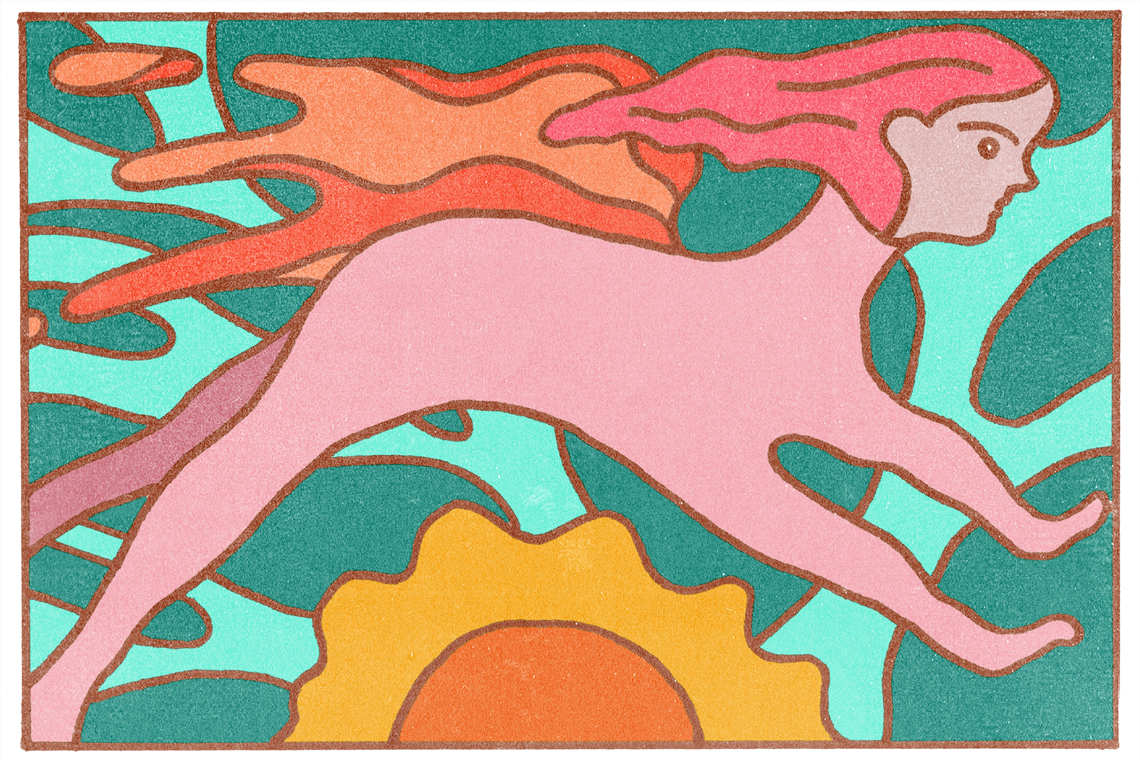
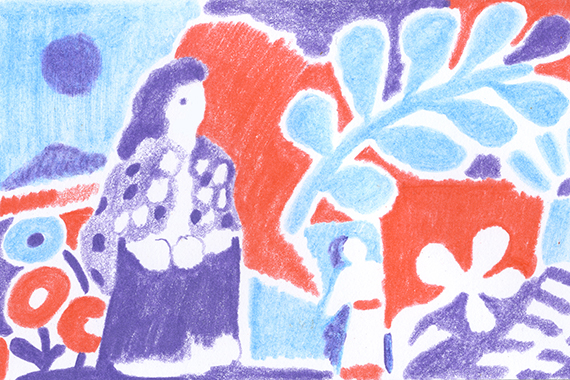
Image by Thomas Colligan.
Mimi Hachikai (1974–) won the Nakahara Chūya Prize with her debut collection in 1999, which was translated by Juliet Winters Carpenter (The Quickening Field). Ever since, she’s been a prolific writer of poetry, fiction, and essays. Her prize-winning fifth collection Kao wo arau mizu (Some Water to Wash My Face, 2015) covers private matters, such as the death of her father, as well as historic catastrophes, such as the 2011 Tōhoku Earthquake and its subsequent nuclear disaster.
Kyoko Yoshida (1969–) is a fiction writer in English, as well as a translator of Japanese contemporary poetry and drama into English and American novels into Japanese. She has two collections of short stories: Disorientalism (Vagabond Press) and Spring Sleepers (Strangers Press). With poet Forrest Gander she translated Kiwao Nomura and Gozo Yoshimasu. She has been the director of Kyoto Writers Residency since 2022. She teaches at Ritsumeikan University in Kyoto.