Introducing Our 2023-2024 Poetry Inside Out Teaching Fellows: Heidi Kern
This school year, the Center for the Art of Translation wants to celebrate our second annual cohort of Poetry Inside Out Teaching Fellows, a year-long program designed to support teachers as they pursue curricular research, build skills in creative language instruction, and learn how to inspire collaborative discussions of poetry in translation in the classroom.
Teaching Fellows join a vibrant network of students, teachers, poets, translators, and academics committed to open-ended dialogue about language and literature, working together to develop culturally responsive, integrated curricula based on Poetry Inside Out’s key practices. They will deepen their understanding of classroom practices that contextualize learning, uplift student achievement, leverage and affirm students’ cultural identity, and develop critical thinking skills.
Each of our Fellows brings a unique perspective and level of dynamism to our programs, and we want to highlight their individual ideas and approaches. Over the course of this next few weeks, we’ll be publishing brief Q&A’s with the fellows to celebrate them with our CAT community.
Heidi has found that Poetry Inside Out has helped revitalize her Spanish language instructional practice. Through her new “Spanish for Spanish Speakers” program, Heidi encourages students to embrace their cultural heritage and blend native language exploration with bilingual authors’ translation skills.
Introducing Heidi Kern
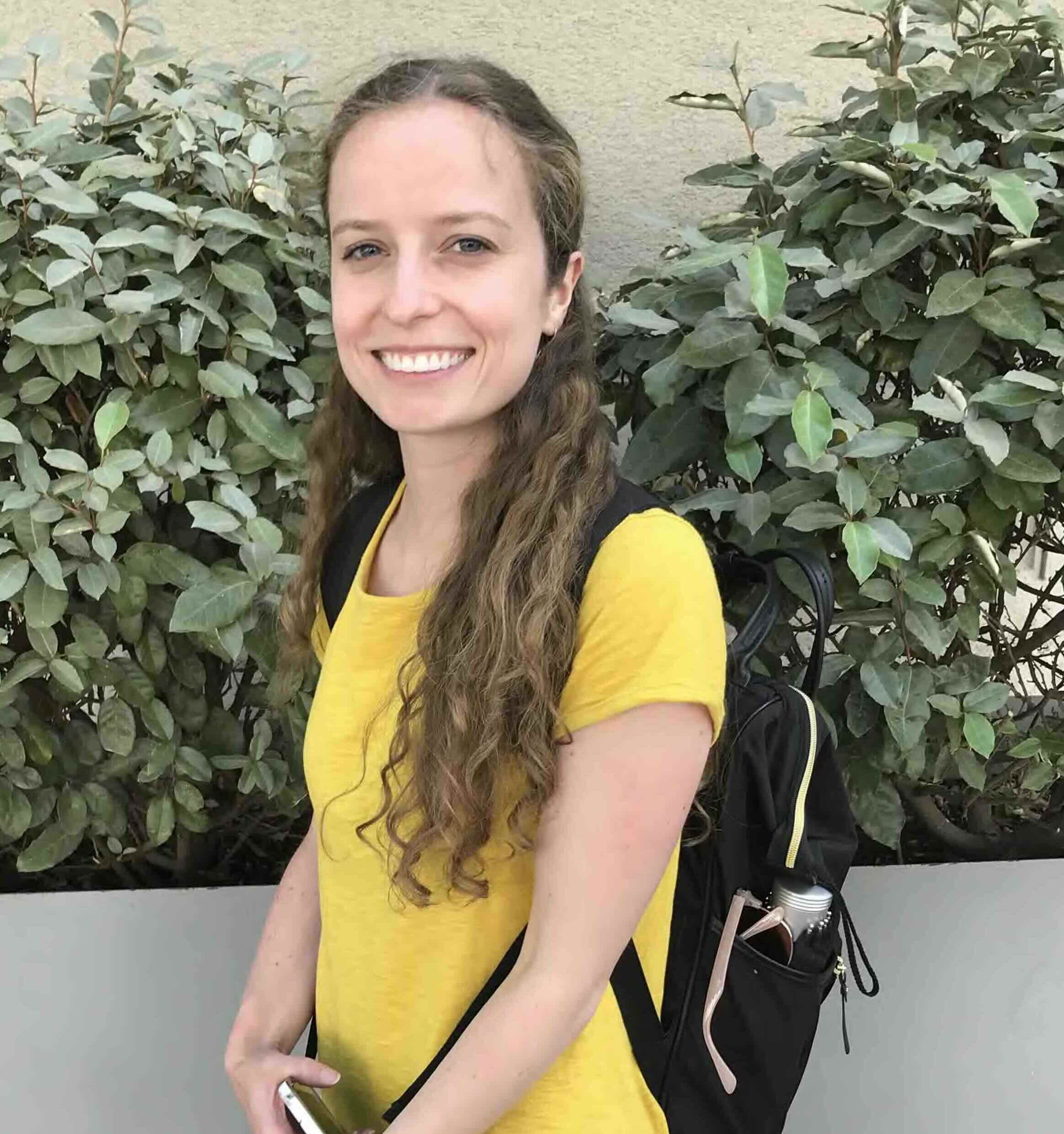
Heidi Kern has been living in Philadelphia since 2017 teaching English and Spanish in a public high school. Her passion for languages has inspired her to create a Spanish for Spanish Speakers program at Franklin Learning Center, where she works with students to build on their cultural pride as Spanish speakers and maintain the language of their heritage at school. She also worked part time writing a Spanish Heritage curriculum for the School District of Philadelphia, and maintains a partnership with Swarthmore College, her alma mater, to continue mentoring other young language teachers in the area.
What interests you about Poetry Inside Out’s programming/curricula, and what excites you about this fellowship? What do you hope to glean from it?
The Poetry Inside Out Teaching Fellowship fuels both the linguist and the educator in me simultaneously. The curricula is an open door for both educators and students to develop connections to one another and make meaning around beautiful texts, and I’m excited to bring that joy and privilege to my students. As a teaching fellow, my goal is to create a thematic unit around poetry for my Spanish for Spanish Speakers class and find enough Spanish-language resources to not only provide content for my own curriculum but establish enough role models and literary mentors for my Latino students to look up to as they progress through their education. I’m hoping to find living poets, authors, or songwriters that will continue to publish their work in my students’ lifetime that they can follow online and build a connection with long-term to find joy and inspiration in the language of their heritage, whether that be Spanish, English, or a mix of the two.
Any interests in international literature/poetry or foreign languages that you’d like to mention?
At Swarthmore college, I was a Spanish major and studied most literature and poetry in Spanish, so when I was asked to start teaching 10th grade English at my school 6 years ago, I felt at a loss finding the right sources in English—most of the texts I was familiar with were from Spanish-speaking authors of Spain or Latin America. Reading translations of these works didn’t have the same effect, and sometimes weren’t even readily available. I did my best to find the appropriate texts that my students would connect to in both my English and Spanish classes, and loved when I did find a bilingual author that offered their work in both languages. “Afrolatino” by Elizabeth Acevedo is one of their favorites. Seeing my Spanish-speaking students light up while reading the original text in Spanish was rewarding and left me craving more diverse literature that would affirm both my students’ cultural identities and language practices. My goal is to establish a language classroom with a decolonial lens that centers voices that have often been silenced throughout history, and to make sure that my students see themselves in the work that they are doing.
Giovanna Lomanto is a poet and essayist with a tendency to play the same song on repeat until she has memorized every last note. She received her BA in English at U.C. Berkeley and finished her MFA at NYU, during which time she published two poetry collections and two mixed media chapbooks.