A conversation with Elvira Navarro about Blood Is Dripping onto the Courtyard
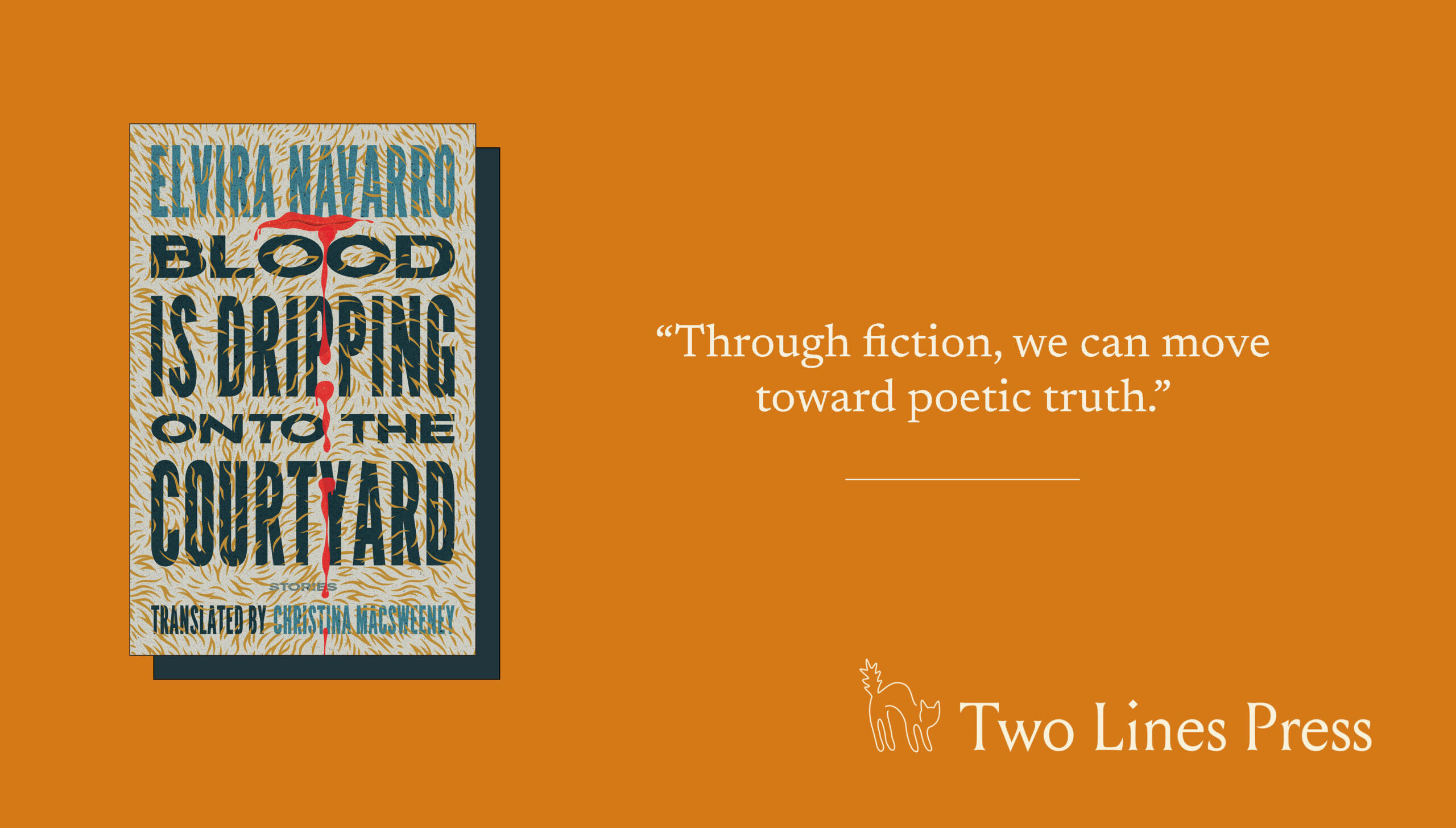
To mark the publication of Blood Is Dripping onto the Courtyard(opens in a new tab), translated from Spanish by Christina MacSweeney, Two Lines publicist Karen Gu spoke with author Elvira Navarro about her new collection of unsettling stories that blur the line between the horrific and the fantastic. In this Q&A, Navarro discusses her interest in liminal spaces, her approach to the relationship between reality and the surreal, and how the collection differs from her earlier short-story collection, Rabbit Island(opens in a new tab).
Two Lines Press: Many of the stories in the collection take place in and around cities, often on the edges and outskirts of the urban environment. Can you talk about why you are drawn to writing about these particular spaces?
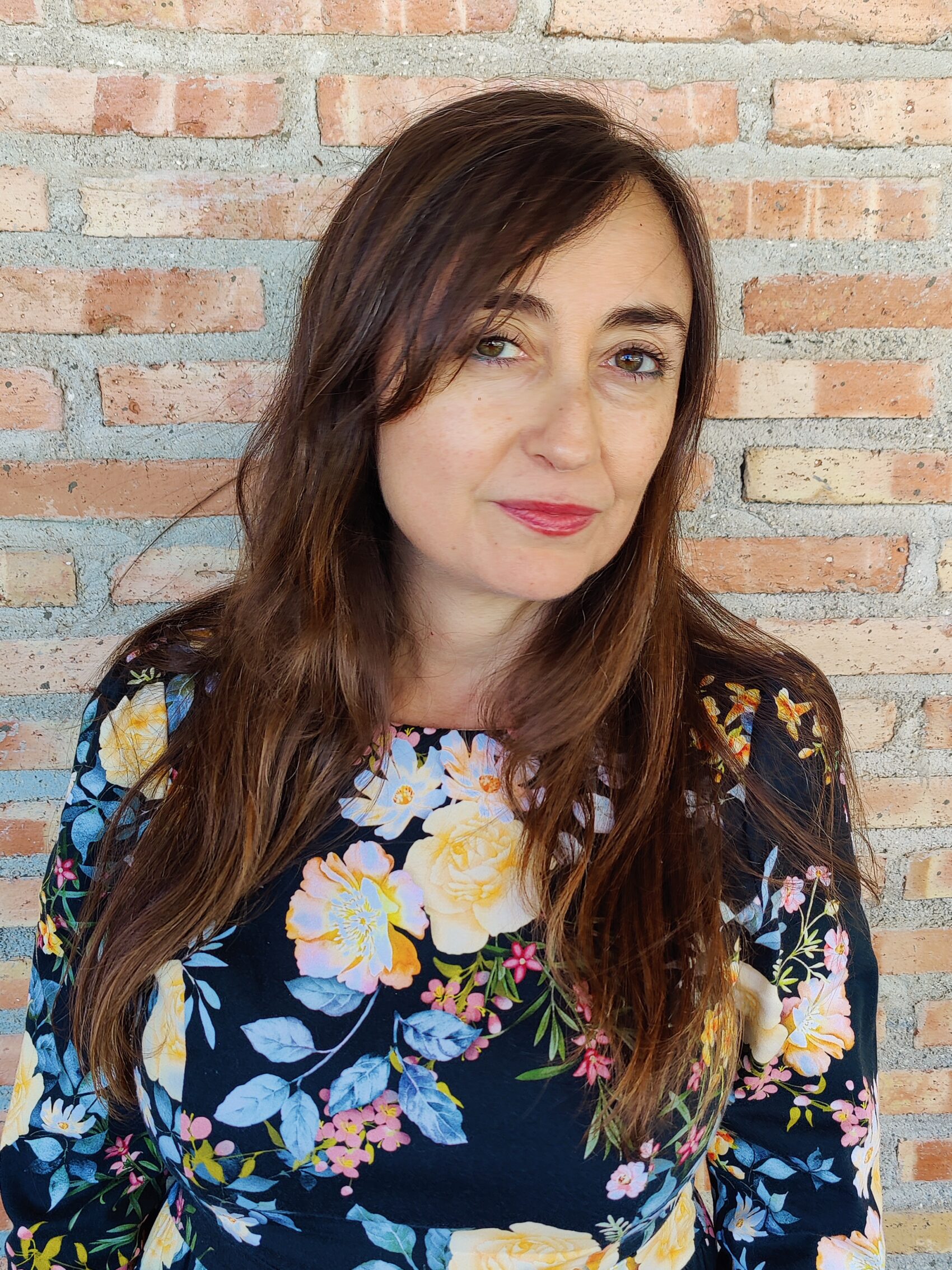
Elvira Navarro: I’m very interested in the concept of liminal space—the idea that there are places that lead us toward the unknown. Because all of that is also a metaphor for anyone’s life: we step out into the boundless, strange world to experience it and also to get to know ourselves. It would be impossible to do that without crossing borders and boundaries that often frighten us. And in my literary universe, all of this is metaphorically embodied in strange, identity-less spaces—like the outskirts of a city—where you never know what you’re going to find.
TLP: Relatedly, some stories name specific cities: Guadalajara, Madrid, or London, for example. Others keep the setting of the story more diffuse and vague, like “the Paris suburbs,” or don’t name a place at all, zooming into the setting of an apartment complex in an unnamed city like in “The Washing Machine.” How do you approach the specificity of place and your decision to set a story in a “real” city?
EN: Usually, when I mention specific cities, I tend to focus on the outskirts of those cities. That’s the case here with Paris: the action doesn’t take place in the city center, but in the suburbs. I like the idea of citing a world-famous city that everyone knows from movies or tourist images—like Paris or London—to debunk the clichés about those cities, to subvert the image we have of them, and to show areas that no one recognizes and that almost no one wants to talk about because they’re problematic. On the other hand, many of the stories I imagine take place in places that lack a strong identity—places that could be anywhere. So I don’t give them names, which is a way of highlighting their nature as generic spaces.
I do not believe in reality as something closed off, purely materialistic and positivist, nor in what we consider normal.
TLP: Some of the circumstances in the stories—a washing machine filling repeatedly with blood, or a man suspecting that his wife is turning into a witch—seem to take place in the realm of the surreal. Other stories seem to be more realist, describing loneliness, isolation, and heartbreak. Can you talk about how you see the relationship between the real and the surreal in this story collection?
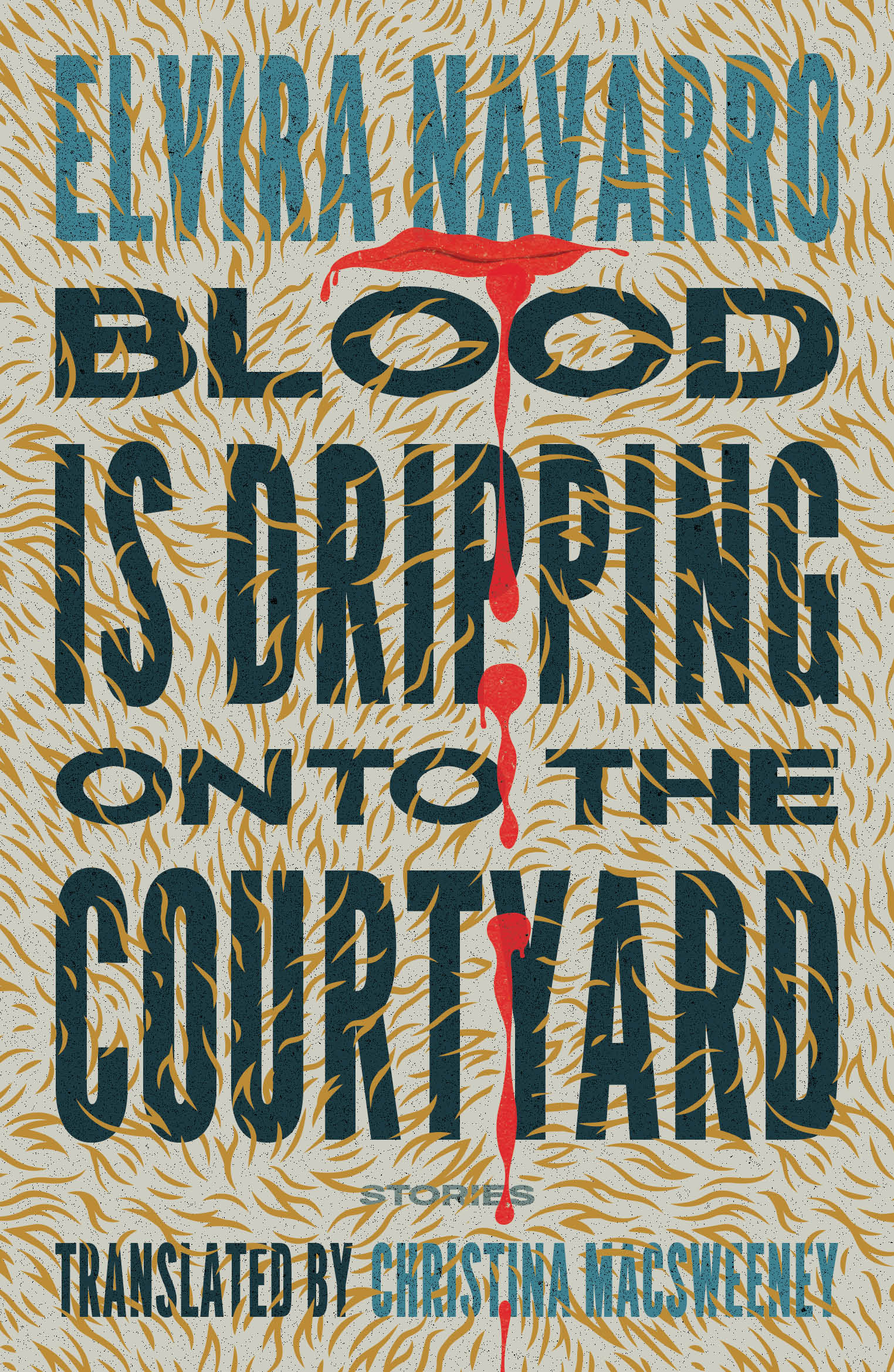
EN: For me, there’s no clear division between the real and the unreal—or the surreal, if you prefer to call it that. Because we don’t know what reality is. We humans understand the world through language, and that language already implies an interpretation of the world. A fiction. It’s not neutral. What we call reality is, first and foremost, a linguistic consensus, but that consensus is constantly breaking down, because there are many things that are inexplicable or that we cannot even name. To begin with, what is this universe? What are we doing here? And then we can move on to what we’ve agreed to call “knowledge,” which is also a convention. It’s a useful convention, but it belongs to human categories and expresses our limitations. Human knowledge is entirely limited, and perception is also limiting: we cannot see beyond our perceptual system. So that translates in my writing into not distinguishing between what is real and what is not real, or between what is normative and what is not. I do not believe in reality as something closed off, purely materialistic and positivist, nor in what we consider normal.
TLP: A character named Almudena appears in two stories across the collection, “Spider Web” and “The City of Fear.” Are we meant to read her as the same character? Can you talk about her significance and your decision to include her in these two stories?
EN: Almudena also appears in a third story, “El miedo a la ciudad” [“The Fear of the City” in the translation], but she isn’t named. There’s a metafictional element: the Almudena in the final story has written the two previous stories to try to explain her experience in the Parisian suburb. She doesn’t know how to convey what she’s been through and prefers to tell it through fiction—which is what we writers do—because fiction often contains more truth than nonfiction. Because through fiction, we can move toward poetic truth.
There’s a greater emphasis on the physical—on bodies—and the characters are swept up by self-destructive impulses they can’t control and don’t even understand.
TLP: Your story collection Rabbit Island, also translated by Christina MacSweeney, was published by Two Lines Press in 2021. How do you think about Rabbit Island in relation to Blood Is Dripping onto the Courtyard?
EN: In both books, a sense of estrangement, strange spaces, and the blurring of the line between the real and the unreal or surreal are very important (a Spanish literary critic used the term “ghostly realism” to describe my writing, and I agree). However, my previous collection of short stories was more conceptual, whereas Blood Is Dripping onto the Courtyard is very visceral. There’s a greater emphasis on the physical—on bodies—and the characters are swept up by self-destructive impulses they can’t control and don’t even understand. It’s a bit like our world today, which is becoming more and more incomprehensible!
Before joining Two Lines Press, Karen Gu worked in publicity at Graywolf Press. While in graduate school, she worked for The Believer and the National Book Foundation. She is a fiction writer and Kundiman fellow.