7 Books in Translation to Read for Pride Month
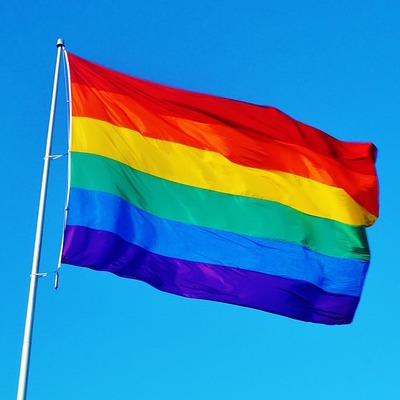
We were inspired by LitHub’s recent article(opens in a new tab) on books to read during Pride Month, so we decided to make our own list of books in translation.
In her introduction to Words Without Borders’ eighth annual queer issue(opens in a new tab), Susan Harris spoke of the recent trials and tribulations facing LGBTQ people in various parts of the world, from the persecution of gay men in Chechnya to the rollback of LGBTQ protections here in the U.S. Harris writes, “In this troubling context, the need for portrayals of queer lives around the world becomes even more urgent.” We couldn’t agree more.
The following books not only give voice to often marginalized voices, they are also truly exceptional pieces of literature. Happy Pride Month!
1. Notes of a Crocodile(opens in a new tab) by Qiu Miaojin, translated from Chinese by Bonnie Huie
Qiu was a Taiwanese novelist and unapologetically lesbian. Her final book, Last Words from Montmartre(opens in a new tab), translated by Ari Larissa Heinrich, came out in 2014. And this past May brought us Notes of a Crocodile. From the publisher: “Set in the post-martial-law era of late-1980s Taipei, Notes of a Crocodile is a coming-of-age story of queer misfits discovering love, friendship, and artistic affinity while hardly studying at Taiwan’s most prestigious university. Told through the eyes of an anonymous lesbian narrator nicknamed Lazi, this cult classic is a postmodern pastiche of diaries, vignettes, mash notes, aphorisms, exegesis, and satire by an incisive prose stylist and major countercultural figure.” Qiu tragically took her life at the young age of twenty-six, but her works chronicling queer youth culture have endured and, thanks to her devoted translators, been made available to us in English.
2. Another Morocco: Selected Stories(opens in a new tab) by Abdellah Taïa, translated from French by Rachael Small
Abdellah Taïa came out during an interview with the French-Arab journal TelQuel in 2006, becoming the first openly gay writer in Morocco, where homosexuality is still a crime. You can read his New York Times op-ed(opens in a new tab) (translated by Edward Gauvin) on growing up gay in Morocco and his decision to come out to the press. Another Morocco was published this past May and is the most recent English translation of Taïa’s work, following his novels Salvation Army and An Arab Melancholia, both translated by Frank Stock. The stories in this recent collection largely follow a young boy named Abdellah growing up in a working-class family in the city of Rabat. You can read an excerpt(opens in a new tab) of the collection on LitHub.
3. Mauve Desert(opens in a new tab) by Nicole Brossard, translated from French by Susanna de Lotbinière
In Mauve Desert, a fifteen-year-old girl in America’s Southwest barrels through the landscape, while her mother, her mother’s lover, Lorna, and several love interests and erotic teachers pepper the roadside. Throw in a motif of nuclear testing, translation, and meta-visual file folders and you have an iconic feminist landmark in Canadian literature. Incredibly, the book is thirty years old and continues to feel urgent. Check out the afterward by poet Sina Queyras. Brossard’s Ardour(opens in a new tab), translated by Angela Carr, shows her poetry at its most minimal and crystalline fineness. A remarkable poet and writer who is a bright star in Quebec’s feminist scene.
4. Mundo Cruel(opens in a new tab) by Luis Negrón, translated from Spanish by Suzanne Jill Levine
Puerto Rican writer Luis Negrón co-edited Los otros cuerpos, an anthology of queer writing from Puerto Rico. His short story collection, Mundo Cruel, won the 2013 Lambda Literary Award for Gay Fiction. From the publisher: “Masterfully satirical with a discrete solemnity at its core, Mundo Cruel‘s most remarkable element is its language. Several of its stories feature unnamed protagonists brought to life by their speech—colloquial, self-incriminating, and idiosyncratic—revealing Negrón’s mesmerizing talent for conjuring the spoken word in all its subtlety.”
5. Beijing Comrades(opens in a new tab) by Bei Tong, translated from Chinese by Scott E. Myers
Published anonymously (Bei Tong is a pseudonym) on a gay website in 1998, this was this first gay novel from mainland China and quickly became a cult sensation. From Publishers Weekly (starred review): “While Beijing Comrades provides a meaningful excavation of homophobia and daily life in a rapidly changing China, it is ultimately a traditional story of forbidden love in all the most classic, wonderful, and devastating ways.”
6. Fair Play(opens in a new tab) by Tove Jansson, translated from Swedish by Thomas Teal
Based on Jansson’s own lifelong relationship with her partner graphic artist Tuulikki Pietilä, this book—a mixture of novel, short story collection, and autobiography—is as much about a relationship as it is about the artistic process. From the publisher: “Fair Play shows us Mari and Jona’s intertwined lives as they watch Fassbinder films and Westerns, critique each other’s work, spend time on a solitary island (recognizable to readers of Jansson’s The Summer Book), travel through the American Southwest, and turn life into nothing less than art.”
7. Poems of a Penisist(opens in a new tab) by Mutsuo Takahashi, translated from Japanese by Hiraoki Sato
Sarah Coolidge received her BA in comparative literature from Bard College. She enjoys reading books in Spanish and English, and she writes essays on photography and international literature.
Emily Wolahan is the author of the poetry collection, Hinge. Her poems have appeared in Oversound, Gulf Coast, Boston Review, and Volt, among other places.