Life | Early Spring | The Fiddle
How much is it worth, that reverential shine in my father’s beautiful dark eyes when he handed me that fiddle?
Life
Our grandmother brought home a small basket full of live carp.
She spilled them out onto the kitchen table, and the fish puffed out their cheeks, opened their mouths, and looked around with their round, glassy eyes. The whole time they were slapping their tails, thrashing about, still jumping, always jumping.
Then Grandma put on her apron.
One by one, she took the carp and scraped off their scales, cut open their bellies, and gutted them. (The bladders—their bulbes, as we called them—she gave to us. We popped them under our feet.) She washed each fish thoroughly under the faucet and rubbed them with salt. And as she put them down, the carp were still jumping, always jumping.
Finally, Grandma put a pan on the stove and poured in some oil. She dipped the carp in flour, sprinkled them with pepper, and started frying them up.
The hot oil hissed, splattered, sputtered, and the carp in the pan were still jumping, always jumping.
Early Spring
A light snow fell, followed soon thereafter by the appearance of a large, warm sun. And in just a few blinks of an eye, the snow vanished.
Gradually last year’s grass was once again uncovered, standing stiff amid the blackened, shriveled leaves that autumn’s winds had brought over from the gardens. And all around, all below, and right on top of it all, there was a meagre sprinkling of fresh greenery, of young grass that grew thicker and greener seemingly minute by minute, minute by minute.
Only there in the distance, on the vineyards’ taut trellis wires, remained a few drops of water still hanging on. Translucent, they dangled drop by drop like a string of pearls, or like the innocent little tears that linger pure and happy in a child’s still bleary eyes, long after the rest of her face has burst into laughter.
The sun shines and shines, and the drops on the wires grow smaller and smaller…
The Fiddle
I remember: My father, a Jew with a week’s worth of stubble and a tattered, grease-stained overcoat, once, unexpectedly bought me a fiddle.
Not a Stradivarius, of course, not even a Stainer. A simple fiddle. A crude imitation of a violin, made from rough, dull wooden plates, sloppily carved, and painted a wild, lurid yellow.
It barely lasted the week. The top came unstuck, the strings went slack. My mother yelled at my father: Idiot! What got into your head? You gave away our last penny! He saw you coming from a mile away, played you like a fiddle…
Soon we started referring to it as “the four-string broomstick” and before too long, it was hidden away in the attic.
But here’s the thing: It’s been so long since then—I was maybe four or five years old—but I remember the fiddle, I can see it.
How much is it worth, that reverential shine in my father’s beautiful dark eyes when he handed me that fiddle?
And how much is it worth, that quiet touch of song in his voice, like the plucking of a string, when he turned to me and said: Go on, son… Play!
“Lebn,” “Fri-friling,” and “Dos fidele” from Shtendik. Tel Aviv: Farlag Y.L. Perets, 1997.
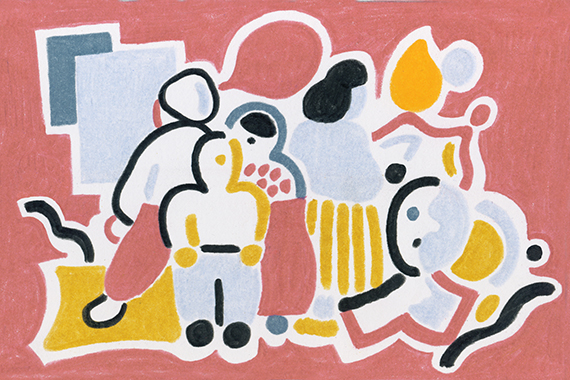
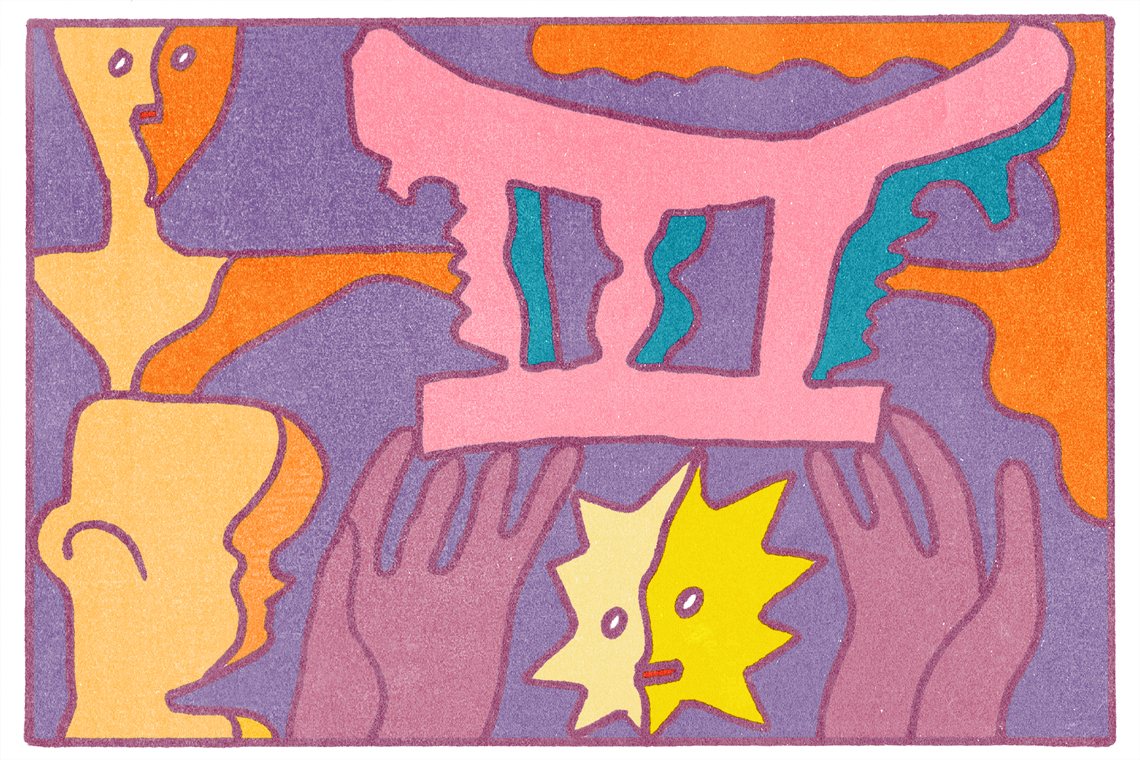
Image by Yusuke Nagaoka.
Yekhiel Shraybman (1913–2005) has been lauded as one of the Yiddish language’s most creative stylists. Infused with the kolorit, or exuberance, of his native Moldova, his works depict the everyday lives of the region’s Jews in rich, captivating detail. Shraybman received numerous awards over the course of his lifetime from literary institutions in Israel, Sweden, the United States, Moldova, and elsewhere. To date, thirteen collections of his work have been published.
Sebastian Schulman is a literary translator from Yiddish and other languages, and the executive director of KlezKanada, a leading organization in Yiddish arts and culture. His original writing and translations have appeared in Words Without Borders, ANMLY, Electric Literature, Tupelo Quarterly, and elsewhere. His translation of Spomenka Stimec’s Esperanto-language novel Croatian War Nocturnal was published by Phoneme Media/Deep Vellum in 2017. He lives in Montréal, Québec (Tiohtiá:ke, unceded Kanien’kehá:ka Territory). (Photo credit: Avia Moore)