Spring 2023 Lit in Translation Preview
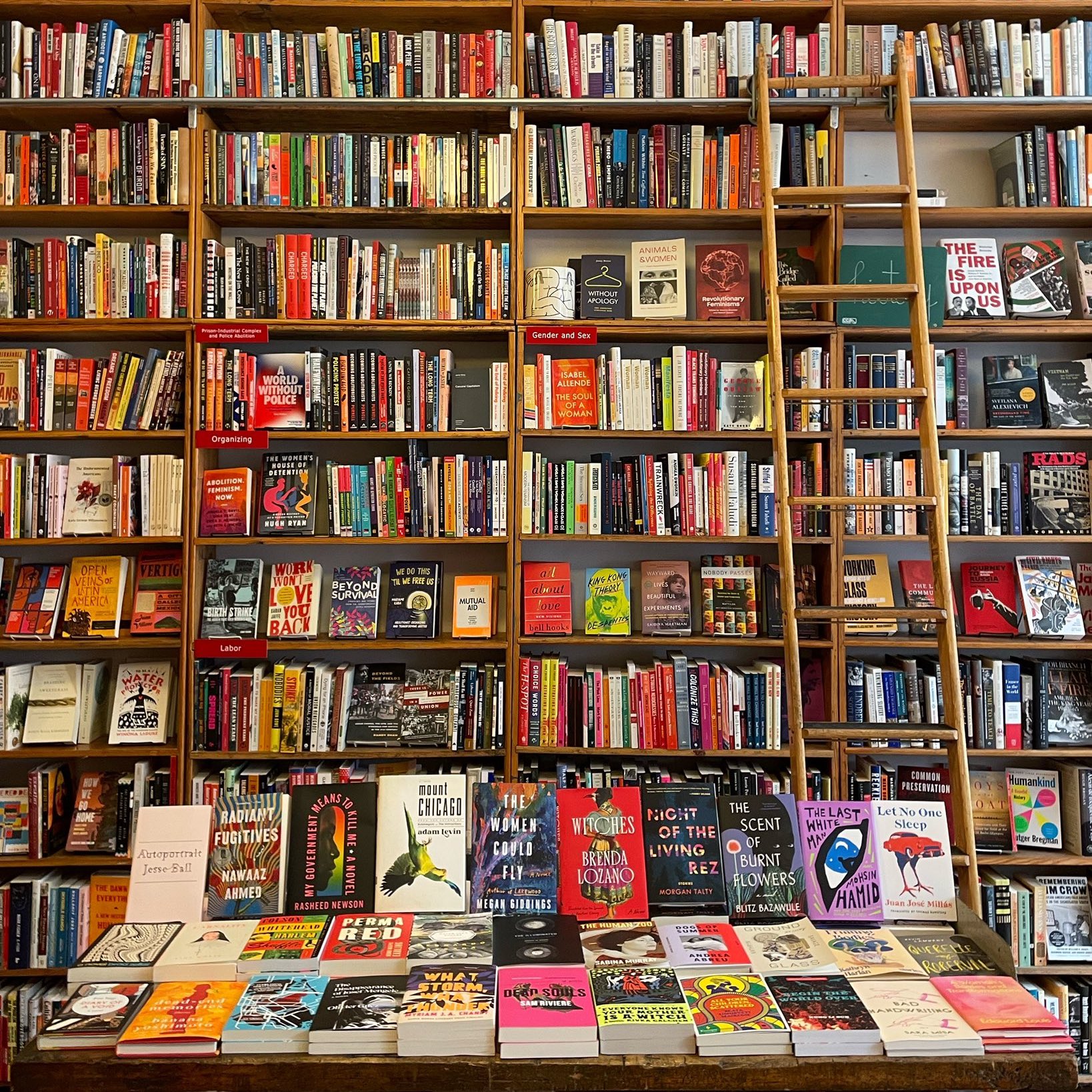
Detailed reading recommendations brought to you by the staff of Pilsen Community Books in Chicago
Pilsen Community Books (opens in a new tab)is a worker-owned and operated independent bookstore in Chicago that specializes in literary fiction, radical history and politics, and literature in translation. The staff’s goal is to unite their bookselling experience and passion for literature with their belief that labor is entitled to all it produces.
We’re big admirers of PCB here at CAT, and couldn’t wait to hear which translated titles the stellar booksellers who work there were looking forward to this Spring. Here are eight books to add to your to-read pile, hot off the presses.
Pirkko Saisio, translated from Finnish by Mia Spangenberg
Two Lines Press
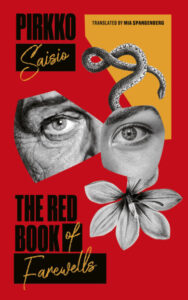
It’s rare that everyone on staff will be so excited about a book that we’ll all read it before it’s released, but Mia Spangenberg’s translation of Pirkko Saisio’s Red Book of Farewells feels tailor-made for our interests here at PCB, “where art and communist politics are hopelessly intertwined”. Not only is it a tender and moving portrait of someone coming of age while both attempting to earnestly live their politics and come to terms with her sexuality (our favorite kind of bildungsroman!), but it’s also a thoughtful and surprising exploration of what it means to be subversive at a time when being queer was becoming state-sanctioned and, dare we say, mainstream. Saisio also perfectly captures the often fraught dynamic between spirited young comrades who attempt to meld the communal nature of a political project with the often solitary act of creating art, and the unconventional narrative threads mimic the way love and desire move through memory. This book will have a permanent place on our staff picks shelf for years to come.
— PCB recommends
Brigitte Reimann, translated from German by Lucy Jones
Transit Books
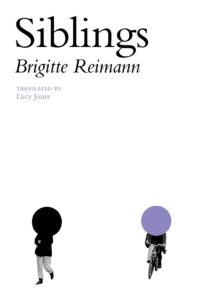
I have to admit that it was Brigitte Reimann’s biography on the back of the galley that originally made me pick up this book, especially the excerpt from her diary— “I enjoyed success too early, married the wrong man, and hung out with the wrong people; too many men have liked me, and I’ve liked too many men.” Like the young painter protagonist in her novel Siblings, Reimann was a state-sponsored artist in the GDR who worked and taught in factories and lost her dear brother when he was lured to West Germany by the promise of economic freedom and an unfettered future. Though Reimann is lauded as a master of socialist realism, Siblings is not an unwavering defense of the party or the postwar attempt at an egalitarian society, but a very human look at the messiness of earnestly attempting to live your political ideals when they collide with the people you love and, perhaps just as important to the young artist, your aesthetic principles. This is the first of Reimann’s fiction to appear in English, and Lucy Jones’ excellent translation captures the warmth and despair in the passionate political turned personal debates between the protagonist and her brother, her lover, and her colleagues—and within herself. Agnes Smedley crossed with Stendhal, this novel is perfect for anyone interested in artistic freedom and the artist’s responsibility to / struggle with collectively building a better world.
—Mandy
Dorothy Tse, translated from Chinese by Natascha Bruce
Graywolf Press
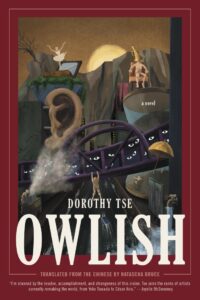
Late capitalist malaise and political turmoil populate Nevers, the glittering, neoliberal city at the heart of Dorothy Tse’s debut novel, Owlish. In this city of contradictions, we meet Q, a professor of literature who, despite his cushy job and perfect wife, takes pleasure only in his collection of dolls. After one, a ballerina named Aliss, springs to life, Q develops an all-consuming obsession with her. Rendered against a backdrop of escalating protests in response to the government’s meddling with high school syllabi and destruction of student newspaper offices, Q’s obsession with Aliss reveals his alienation from his age and impotence in the face of state suppression. Natascha Bruce was awarded a PEN/HEIM grant for her sparkling translation of this richly imagined, modern-day fairy tale.
—Katharine
LASTESIS, translated from Spanish by Camila Valle
Verso Books

Who is art for, and what can it do? In the introduction to Set Fear on Fire, LASTESIS, a feminist performance collective from Valparaiso, Chile, describes “the beauty of being able to translate our ideas and struggles into another region, another language, another culture”. LASTESIS’s goal is to explicitly engage feminist theory through art, and the collective is most famous for “Un violador en tu camino (A Rapist in Your Path)” which transcended language barriers and state borders to become a rallying cry for feminists not just in South America, but across the world. Set Fear on Fire, opens with the claim that “the experience of one is the experience of all”, and Camila Valle’s propulsive translation of the poetry, rage, and defiance in this manifesto brings LASTESIS’s call for collective action against the patriarchy, homophobia and the oppression of the state to our own doorstep here in the United States, linking our struggles and proving that art can do more than sit on shelves or hang on walls— it can start a blaze. In the words of LASTESIS: “Subversion dipped in beauty is revolution.”
—Mandy
Carlos Soto-Román, translated from Spanish by Alexis Almeida, Daniel Beauregard, Daniel Borzutzky, Whitney DeVos, Jèssica Pujol Duran, Patrick Greaney, Robin Myers, and Thomas Rothe
Ugly Duckling Presse
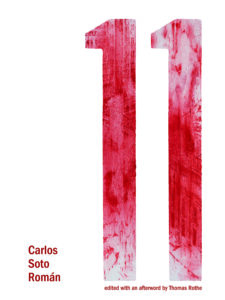
Historiography wonks and folks interested in the politics of archiving will want to check out the latest from Carlos Soto-Román. A collaborative effort between eight different translators, 11 refracts Augusto Pinochet’s September 11th, 1973 military coup of the democratically elected government of Salvador Allende through an assemblage of declassified documents, testimonies, interviews, and media files. In addition to illuminating the brutality of life in Chile under Pinochet’s seventeen-year dictatorship, this monumental text also challenges readers to consider both the long-term effects of state-sponsored violence and how archival work, censorship, and translation shape collective memory.
—Katharine
Mário de Andrade, translated from Portuguese by Katrina Dodson
New Directions Press
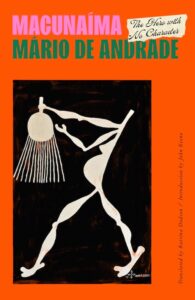
Lispector fans (like me) are already familiar with Katrina Dodson’s brilliant contributions to literary translation, and it was her enthusiasm for Mário de Andrade’s work that compelled me to pick up Macunaíma. This bawdy, raucous, modernist Brazilian epic follows Macunaíma, a man with amorphous characteristics who rises to every occasion, and his brothers on his quest across time and space in Brazil to retrieve a lost amulet. Macunaíma is a world unto itself and refuses to be contained, and it’s clear from the extensive endnotes just how much research across multiple disciplines (Botany! Anthropology! History! Mythology! Pop culture!) Dodson did to bring this new translation to life in all its jubilant, complicated glory. This rambunctious cornerstone of Brazilian literature is a satisfying quest for the adventurous reader, and John Keene’s introduction and Dodson’s translator’s note are helpful guides through Brazilian geography and history.
—Mandy
Oksana Lutsyshyna, translated from Ukrainian by Nina Murray
Deep Vellum
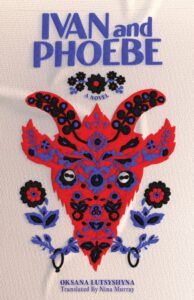
A celebrated poet and translator in her own right, Oksana Lutsyshyna approaches the work of storytelling with a holistic sensibility. Nina Murray’s skillful translation of Lutsyshyna’s third novel traverses space and time in its exploration of revolutionary and post-colonial Ukraine in the late ‘80s and early ‘90s. Using the explosive student- and worker-led protests of the Revolution on Granite as its hinge, Ivan and Phoebe unearths legacies of intergenerational trauma alongside Ukraine’s economic uncertainty and infrastructural breakdown in the wake of Soviet occupation. Sweeping in scope and ambition, Ivan and Phoebe was awarded Ukraine’s highest literary achievement, the Shevchenko National Prize for Literature, in 2021.
—Katharine
Alawiya Sobh, translated from Arabic by Max Weiss
Seagull Books

As the longtime publisher of the Arab world’s best-selling magazine devoted to women’s issues, Alawiya Sobh approaches her work as a fiction writer from a privileged vantage. Women’s friendships underpin This Thing Called Love, a panoramic novel that situates life’s big questions against the backdrop of the 2006 Israel–Hezbollah War. As five women attempt to unravel the mystery of their friend’s disappearance on the eve of the war’s outbreak, they recall the bygone days of their youth, puzzle over the nature of love, and confront their mortality. Through their personal histories, an idiosyncratic portrait of the history of modern Lebanon comes into focus. A heart-wrenching novel embroidered with intimate details, nimbly translated by Max Weiss.
—Katharine