An Interview with Jeff Clark, the Man behind the Covers
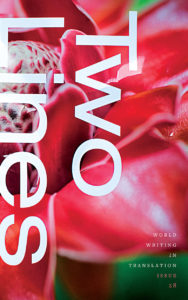
Two Lines 28 is about to come out and we are marveling at the art on the cover. The designer behind it all is Jeff Clark whose talent spans several arenas—art, design, music, poetry (his MFA in poetry alone has led to award-winning work).
As managing editor I send him the content and themes covered in the issue. And he takes it from there. I always know he’s going to send back something unique and visually stunning—images and type treatments (and a juxtaposition of the two) that have never been tried before. I asked him to tell us about his process and what got him into book design.
—Jessica Sevey
Jessica Sevey: Can you share a bit about your creative background and how you became interested in designing book covers and interiors?
Jeff Clark: Although I did French and English as an undergrad at UC Davis, what I loved most were studio art classes and being in a band(opens in a new tab). I think this was my earliest foray into graphic design:
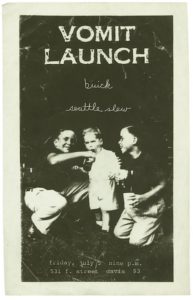
In producing flyers like this I discovered that working with type and making propaganda really turned me on. When I returned to the Bay Area, from the Iowa poetry MFA program, with zero job prospects, I started to design and edit a poetry zine. That led to an entry-level job at a book design studio in Oakland, where I gained hardcore scholarly typography skills, and which I left around 2006 to start my own studio.
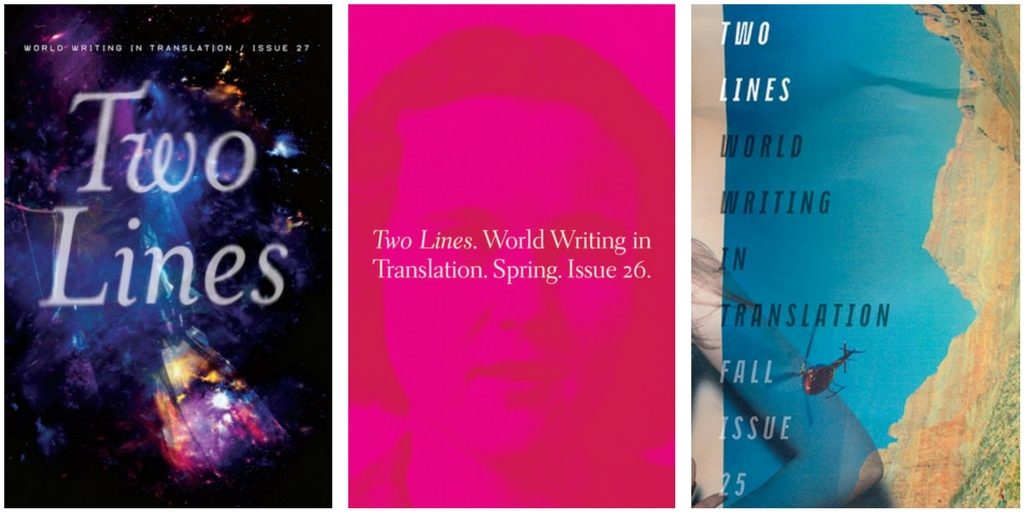
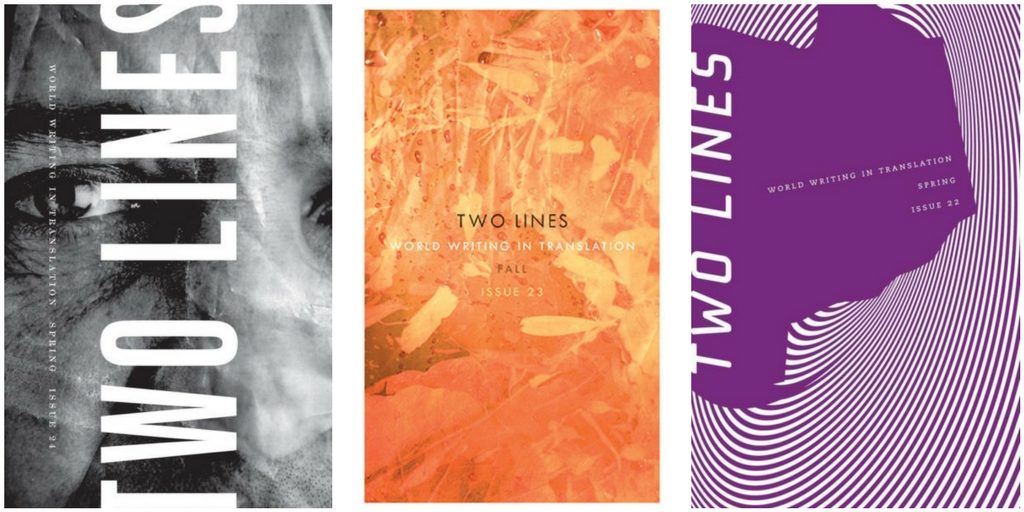
JS: We’re always struck by the originality of each of your covers. How do you come up with image ideas for the journal? Do you follow a similar process for each issue, or does this vary?
JC: I read through the manuscripts you’ve sent me and make a list of words/images/tones that strike me. I also look at the previous couple issues to note what I’ve done for their covers, and then I just start making sketches. A lot of what I produce begins as physical 2-D art (photographs, collages, ink/paint/pencil on paper) and then is scanned or photographed. My process is pretty heterogeneous and intuitive, and my studio has a table saw, a spray booth, a rudimentary photography room, and a screen-printing room. Once in a while I’ll ask a comrade to make art for a project if I feel like I’m failing at generating something compelling. A recent instance of this is Ashanti Africana’s self-portrait for Lauren Russell’s What’s Hanging on the Hush(opens in a new tab).
JS: The Two Lines 28 image seems to be many layers in one. What inspired this particular image? Can you comment on the process you followed to create an image that seems both realistic and abstract?
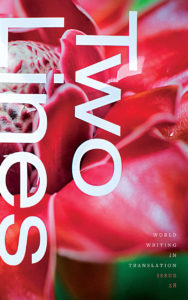
JC: The Monchoachi text had me searching books and magazines for Martinican blossoms. Once I’d found a suitable one, I cut it out, photographed it, brought that image into my cover layout document, arranged “Two Lines” onto the image, made a high-res print of that layout, then lit it and rephotographed it and brought it back into the layout.
JS: Do you have any rules of thumb when designing a cover?
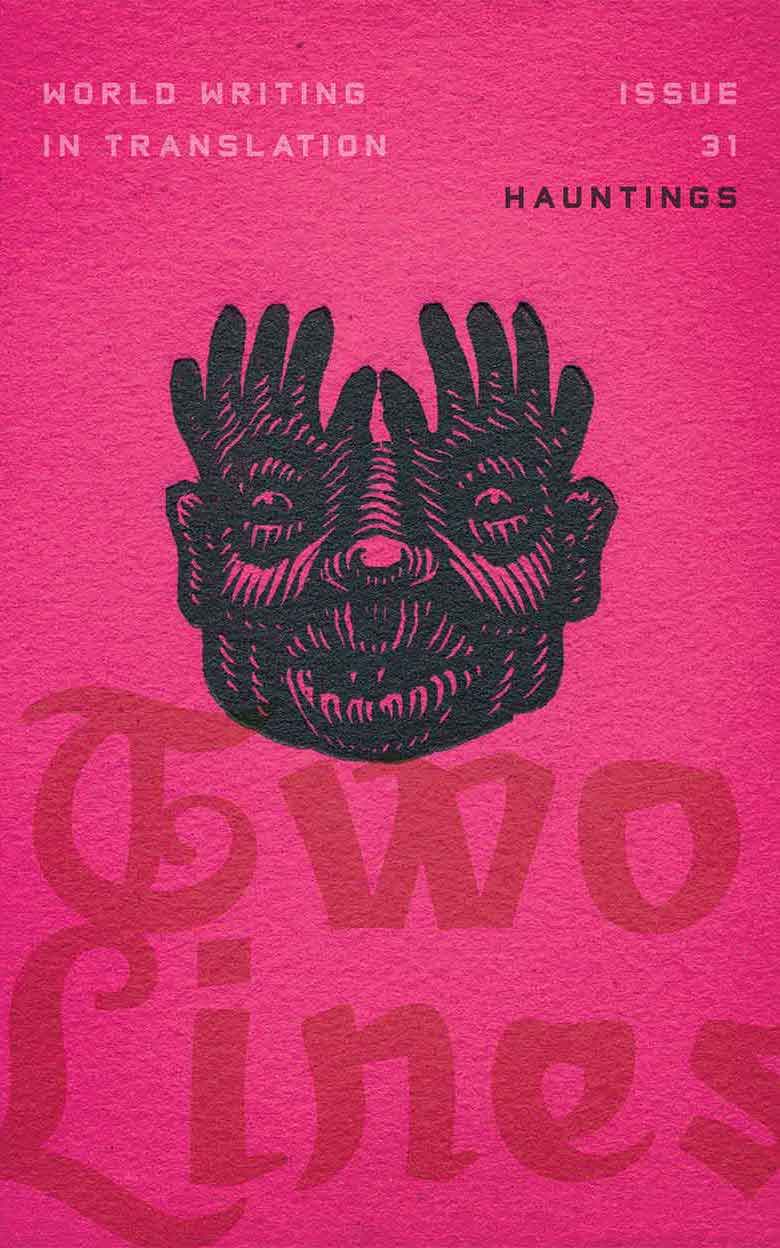
JC: Read the manuscript; never be complacent or derivative, even when working on status-quo writing; wherever possible, torque the conventions/expectations of the publishing scene; be open to a diversity of strategies, including the outmoded; avoid cleverness; avoid stock art; work hardest on books by nobodies; aim for radical legibility.
JS: What is your favorite Two Lines cover and why?
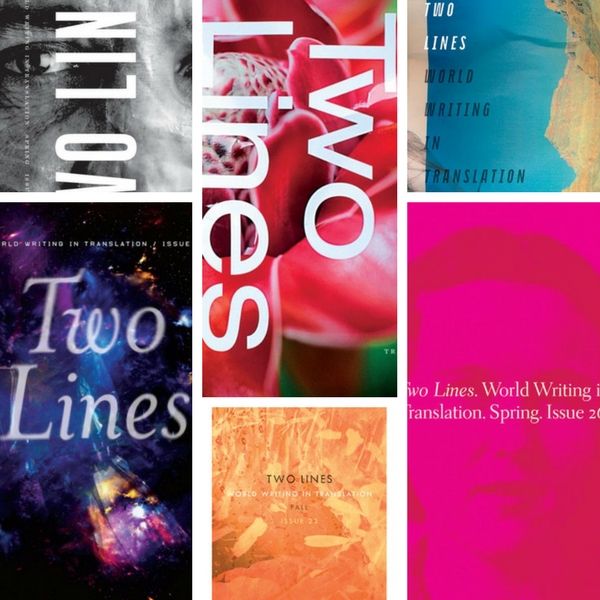
JC: I like issue 21’s cover because it’s always a thrill to hijack capitalist ads and use them as surfaces for ink and type.
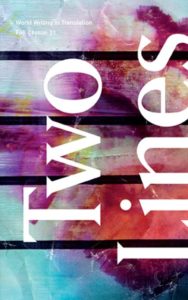
JS: Are there any ideas you have in mind for future issues? Any new techniques you want to try?
JC: Ideas?—I won’t know till I read what you’ve chosen for the next issue! As far as new things to try: when designing and setting interiors, I’d like to liberate myself a bit from the grid, and maybe also from the received wisdom that every design decision needs to have a logic.
Jessica Sevey has been able to develop a satisfying career in publishing that draws on her background in foreign language, love of books, and the creative urge to produce work of aesthetic and poetic beauty.
Jeff Clark is the author of The Little Door Slides Back, Ruins, and Music and Suicide (winner of the James Laughlin Award), among other works, and has made his living as a book designer for twenty years. He is a designer for Two Lines, as well as AK Press and many other presses. His studio is based in Ypsilanti, Michigan, where he is also active in community organizing and public artmaking. He and Robert Bonnono translated A Roll of the Dice by Stéphane Mallarmé (Wave Books, 2015).