Baba Tochka’s Good Luck
She was tall and thin and wore all black, her dark headscarf rippling like a flag of mourning marking some lost battle.
Късметът на баба Точка
Слаба и висока беше, обличаше се в черно, а черната ѝ забрадка правеше така, че отдалече да прилича на траурно знаме. Свикнали бяхме да я виждаме единствено като приближаващо или отдалечаващо се знаме, навярно от изгубена битка – в зависимост от това дали вече си е купила хляб или върви към хлебарницата. Друго не си купуваше, само хляб. Ако никой от съседите не ѝ занесе парче козунак за Великден, поръсваше захар върху филийките хляб. Така различаваше делника от празника. Празниците ѝ бяха трийсет грама захар за година. Един пакет захар може да ти стигне за цял живот, но цял живот може да не ти стигне да усетиш сладостта на живеенето.
Късметът на баба Точка
Слаба и висока беше, обличаше се в черно, а черната ѝ забрадка правеше така, че отдалече да прилича на траурно знаме. Свикнали бяхме да я виждаме единствено като приближаващо или отдалечаващо се знаме, навярно от изгубена битка – в зависимост от това дали вече си е купила хляб или върви към хлебарницата. Друго не си купуваше, само хляб. Ако никой от съседите не ѝ занесе парче козунак за Великден, поръсваше захар върху филийките хляб. Така различаваше делника от празника. Празниците ѝ бяха трийсет грама захар за година. Един пакет захар може да ти стигне за цял живот, но цял живот може да не ти стигне да усетиш сладостта на живеенето.
На всеки два дни купуваше половин хляб, не ѝ достигаха нито апетит, нито стотинки за цял. Децата и късметът от години заобикаляха къщата ѝ. Те, защото си мислеха, че тук живее баба Яга. Той, защото знаеше, че тук нищо вече не живее.
Обаче стана така, че веднъж късметът се спъна и влезе в къщата ѝ. След него и наградата.
Вече не си спомням за какво беше том болата – за платени данъци, или за платени битови сметки, за участие в масовата приватизация ли, много време мина и наистина сега няма значение. Наградата се оказа хладилник тип мини бар, а печелившият – баба Точка от нашето село. Но когато късметът е спънат, каквото донесе – все наболява.
Поискали от бабичката да заплати превоза на хладилника, а после калкулирали и това, че го пренесли през четирите стъпала към къщурката ѝ. Дала им всичките си пари и постояла за малко пред хладилника. Никога не си била представяла, че има излишни награди в този живот. Да си наградена със съпруг, деца и внуци, а после с достойни старини и лека смърт, това го разбирала. Ако я питали, ако имало възможност да подмени наградата, сигурно би избрала нещо друго. Например няколко месеца безплатен хляб. Така би спестила пари и да ги прати на внуците, нищо че не знаела къде са. Погледнала още веднъж към хладилника баба Точка. Бил твърде голям за да стане кутия за хляб и твърде малък, за да стане на ковчег. Приличал на живота ѝ: твърде малък, за да ѝ стигне да забрави, и твърде голям, за да го гледа как се изнизва бавно. Нещо като разликата между половин и цял хляб. Хладилникът останал неразопакован.
Докато хората в селото за първи път ѝ завидели. Не спирали да се самоизмъчват като се питат защо точно на нея се паднала наградата от томболата. Едни се питали за какво ѝ e хладилник, други умували дали да не ѝ предложат да им го продаде евтино. Сигурно имало и такива, през които минала и мисълта да ѝ го откраднат.…
Baba Tochka’s Good Luck
She was tall and thin and wore all black, her dark headscarf rippling like a flag of mourning marking some lost battle. To us, she was only ever a black flag coming or going, depending on whether she was on her way into town to visit the bakery or on her way out. She bought only bread, nothing else. And if none of her neighbors remembered to bring her some kozunak on Easter, she simply sprinkled her plain bread slices with sugar. It’s how she delineated ordinary days from holidays. A year’s worth of feasts, all in thirty grams of sugar. You could perhaps stretch a kilo of sugar to last you a lifetime but could you stretch a life long enough to taste its sweetness?
Every other day Baba Tochka bought herself half a loaf of bread; she had neither the change nor the appetite for a full loaf. For years, children and good luck had steered clear of her house, the children because they were certain it was Baba Yaga who lived here, the good luck because it was sure that nothing did.
But it just so happened that one day good luck stumbled right into her house. And after it, the prize.
I no longer remember what you had to do to get entered in the raffle in the first place—pay your bills or taxes on time or maybe take part in the mass privatization programs. Either way, too much time has passed now and it’s not important. The big prize turned out to be a mini fridge, the same kind you find in hotels. And the big winner? Baba Tochka from our village. But if it so happens that your luck’s all tripped up, someone’s bound to get hurt.
Not only did the delivery men make the elderly woman pay for the shipping, they also calculated the cost of carrying the mini fridge up the four measly steps to her tiny cottage and down to her cellar. Baba Tochka handed over all her money and turned to look at it. She’d never imagined there could be such a thing as a superfluous prize in this life. To be rewarded with a husband, children and grandchildren, dignity in old age, and an easy death, that she understood. Had they asked her, had she been able to switch out the prize, she’d have chosen something else. A few months’ bread, for instance. That way, she could have saved her money and sent it to her grandchildren, not that she knew where they were. Baba Tochka looked at the mini fridge again. Too tall for a bread basket, too short for a coffin. It felt like her life: not nearly long enough to forget all that needed to be forgotten, too long to have to sit through it. Something like the amount between half a loaf and a full loaf of bread.
The mini fridge sat unwrapped. But the other villagers began to agonize over every last detail of the prize. For the first time in their lives they envied Baba Tochka. Why did it have to be her who won the raffle and why did she even need a fridge in the first place? Some considered offering to buy it off her for half price. Others contemplated just plain stealing it. Most were just itching to see the damn thing with their own two eyes. But how to go and ask to see the fridge of a woman whose threshold you’d never so much as bothered to cross to see her?
Maybe, they thought, they’d chat her up at the bakery, offer their congratulations. It would be easier to pay her a visit after that. But it just so happened that for three whole days Baba Tochka didn’t come out to buy bread. The village gossip grew legs and prowled all over town. It had to be that, as part of the winnings, the fridge had been filled to the brim with food, so naturally, the old woman wouldn’t be coming out of her house until she’d eaten every last bite. But just how much food could one little fridge hold? By day three they were counting her mouthfuls—so ravenous were they for her to come out and feed them some news.
But come out she did not.
They marched toward her small house and up her four steps, and when nobody answered the door, they barged in uninvited.
Had it not been for that mini fridge, they’d never have found out just how Baba Tochka really lived. Or how she didn’t: in a tiny room with unfinished walls, a lone bed and nothing else. There was no electricity, but the misery shone bright enough.
They found Baba Tochka in the cellar. She’d climbed up on her mini fridge to reach the noose.
If all your life you turned to ice just standing amongst your fellow man, I’m pretty sure at the end you’d be within your rights to climb atop that frigid box so that you could, for once, rise above the arctic freeze and all your earthly woes. Climb atop this emblem of your poverty and loneliness, all packaged up as though your wretchedness needed to be gift wrapped: so that you could neither touch it nor let go of it.
Such was Baba Tochka’s good luck. Where’s the good luck in that, you might wonder. Well, sometimes good luck shows up to give you a leg up for a quick ending. Or finds you just in time to bury you. It lets your story be told. It’s all the same—too little, too late.
“Късметът на баба Точка” is from Кедер. Plovdiv: Janet 45, 2018.
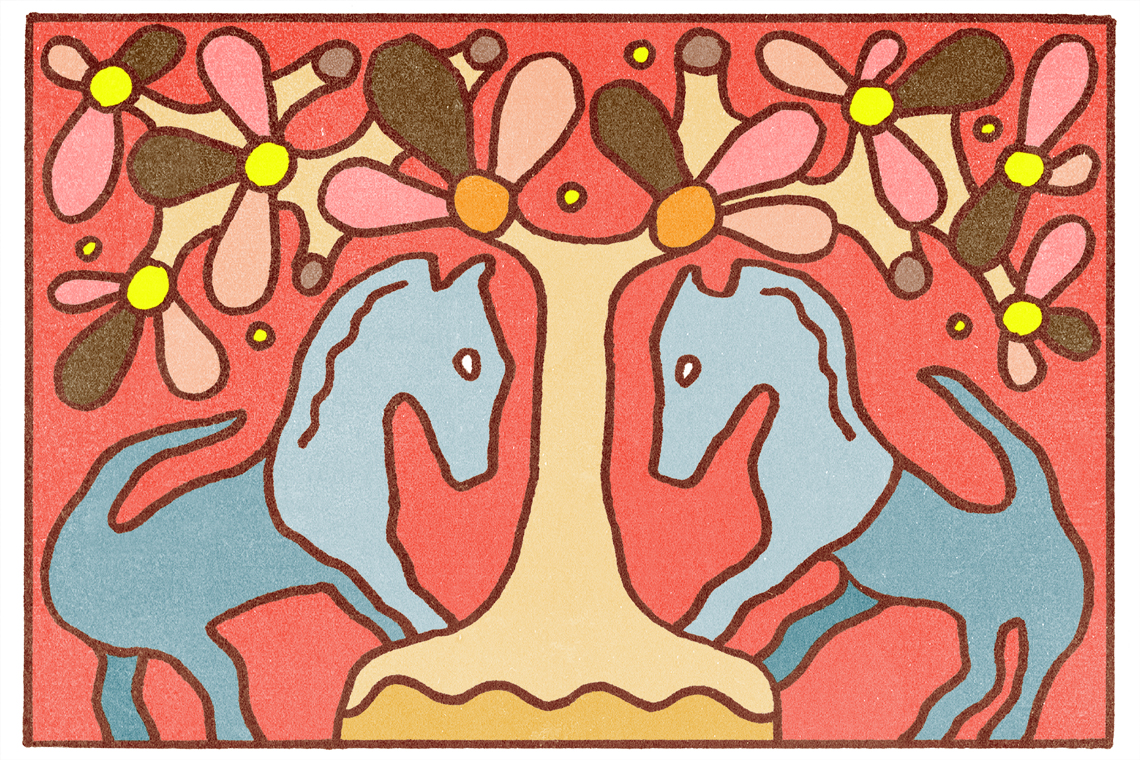
Image by Yusuke Nagaoka.
Izidora Angel is a Bulgarian-born writer and literary translator in Chicago. She’s the author of two book length translations and an NEA grant recipient for her work on Yordanka Beleva’s Keder. Izidora’s writing has appeared in Astra, Electric Literature, Two Lines, Chicago Reader, and elsewhere. Her work has been recognized by English PEN, Art Omi, Bread Loaf, the Rona Jaffe Foundation, and others. She’s a 2023 Elizabeth Kostova Foundation Fellow for her in-progress memoir.