A conversation with Juliana Leite on Exemplary Humans
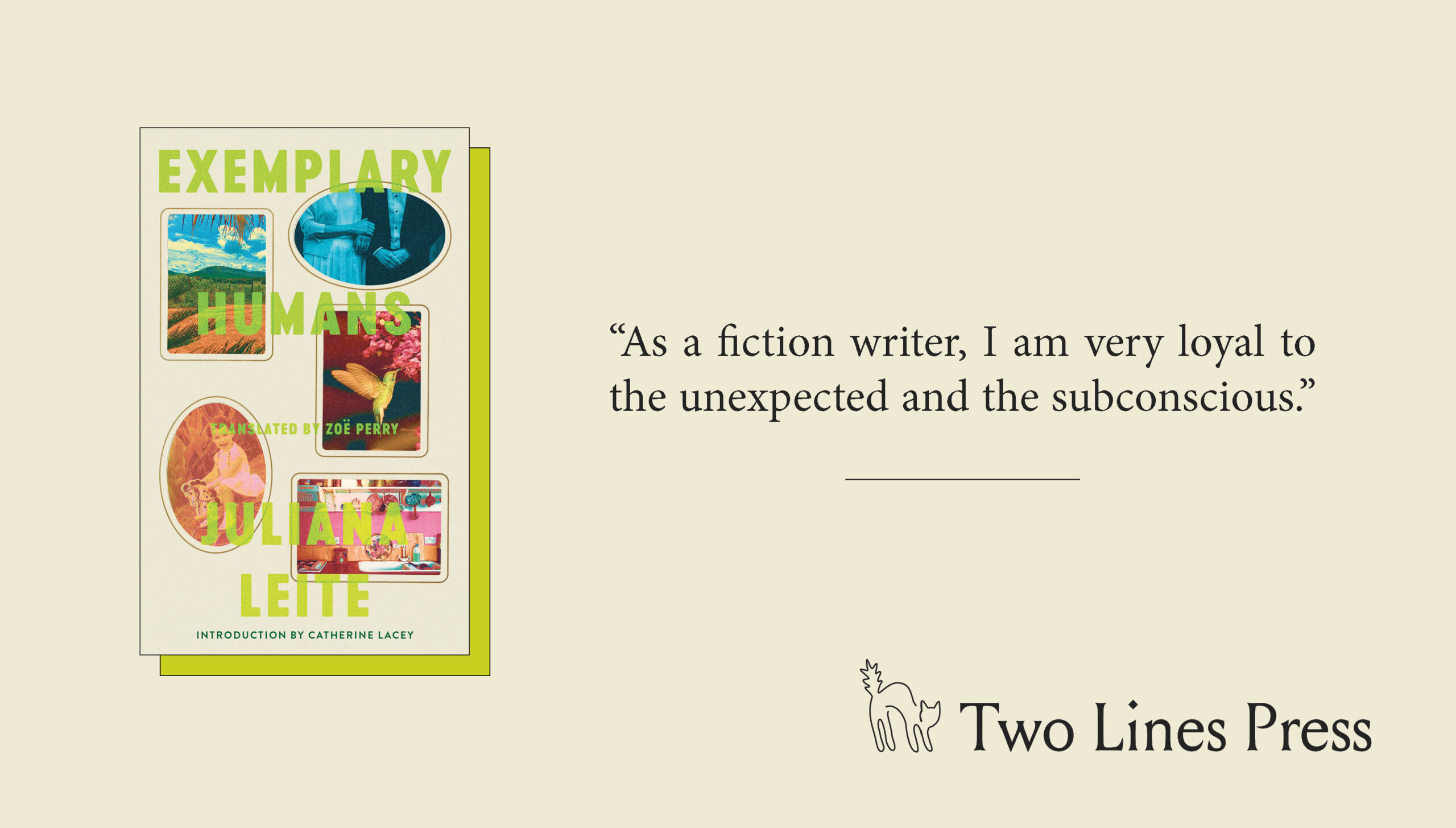
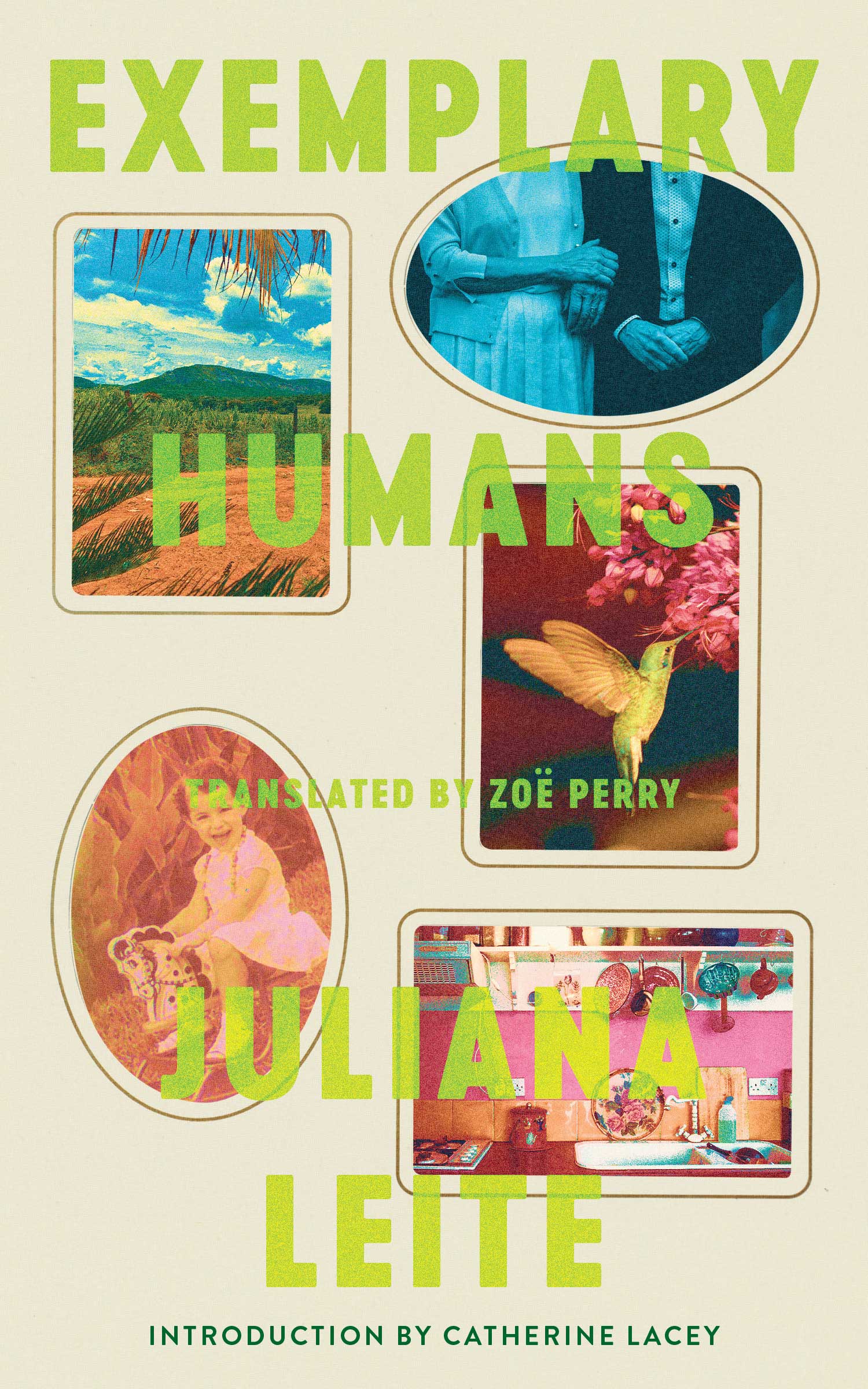
Karen Gu, from our publisher Two Lines Press, interviews Brazilian author Juliana Leite about her debut novel, Exemplary Humans(opens in a new tab). The book, translated from Portuguese by Zoë Perry, centers on Natalia, a widow confined to her Rio de Janeiro apartment, where she contemplates her life and memories. Leite shares insights into her creative process and the inspiration behind the book’s title.
Two Lines Press: The protagonist of Exemplary Humans is Natalia, a 100-year-old woman living in her apartment in Rio de Janeiro. Can you introduce us to Natalia and explain what drew you to her story at this stage of her life?
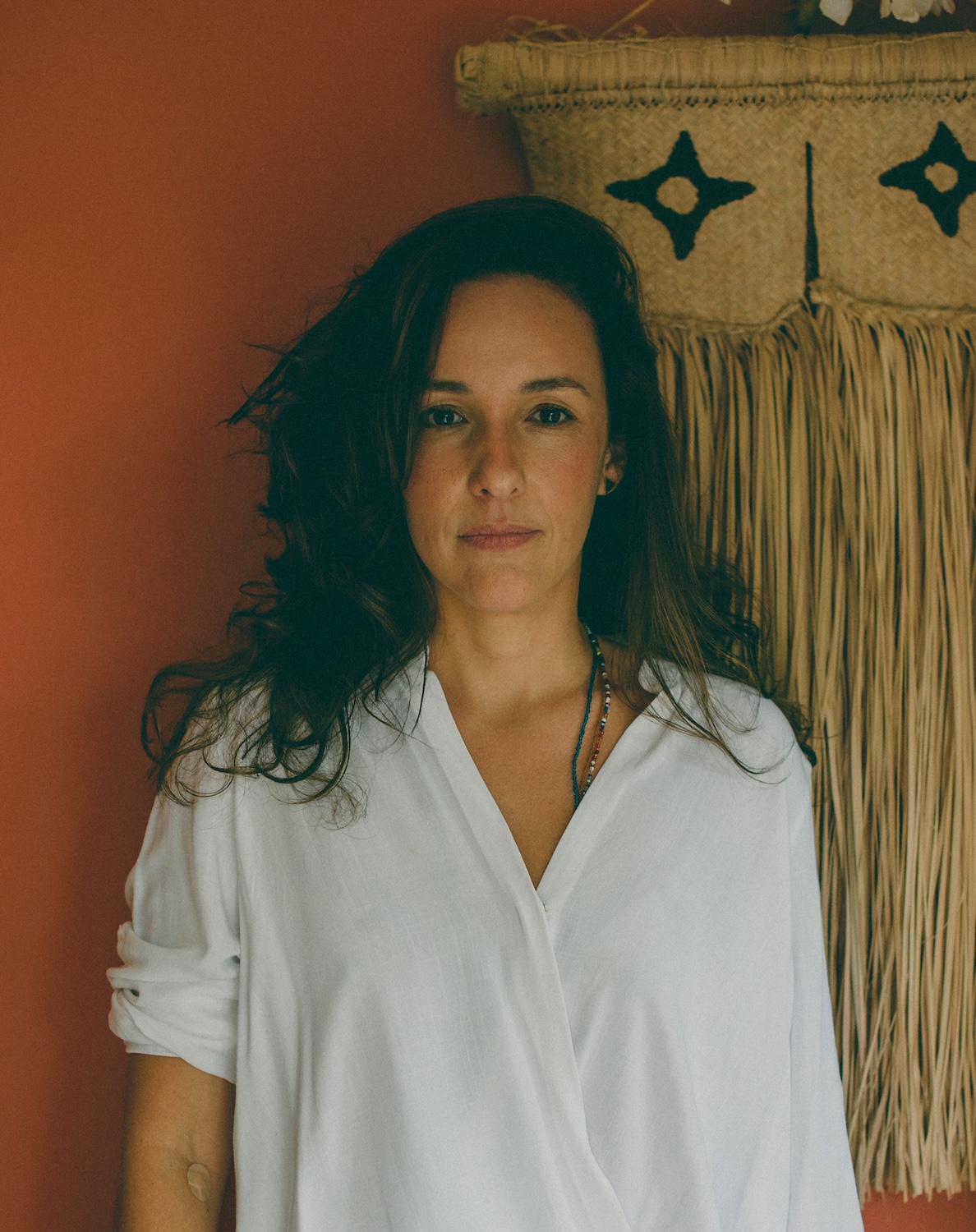
Juliana Leite: Natalia is a retired high-school writing teacher and a widow. She and her husband, Vicente, were part of the resistance against Brazil’s military dictatorship while both were public school teachers. They shared most of their lives and dreams with a close group of friends who loved Brazilian music and raised their children together over big Sunday lunches, imagining a possible and joyful future for all Brazilians.
When we meet her, Natalia is over 100 years old and lives alone in the same apartment where she got married and raised her daughter, a woman who now lives in another country and calls her mother once a day. But, contrary to what one might assume, her isolation and loneliness do not condemn Natalia to melancholy or sadness, thanks to her personality.
With a century of life behind her, having witnessed ten decades of the world with her own eyes, Natalia looks at life from a unique and privileged point of view: perceiving the cycles of humanity, the repetitions, and even the similarities between events that could be registered in isolation due to their importance, but when viewed in perspective, bear many similarities.
The philosophical question raised by the novel is only possible because of Natalia’s age, because she has so much life in her body that we can no longer see her without seeing the timeline of a country, of the human species, the fate of the planet as a whole.
But we can also say, in a simpler and more direct way to introduce Natalia, that she is a woman who knows very well what to do with her memories in order to continue having an interesting life, even when this seems unlikely.
TLP: The novel takes place entirely inside Natalia’s apartment and memories. Can you say more about your decision to set the novel in both in the small space of Natalia’s apartment and the expansive space of her recollections? What is the significance of Natalia’s isolation?
As a fiction writer, I am very loyal to the unexpected and the subconscious.
JL: That was the question I asked myself while writing—“What is the meaning of isolation?”—since in 2020, the year I wrote the book, we were experiencing the COVID-19 lockdown, the first radical experience of isolation for at least two generations living on this planet. My notebooks were filled with notes about what was happening in the present when, without any premeditation, I also began to write about other moments in human history when we, as a species, had to hide in order to survive: from the devouring beast, from floods, from war, from political persecution, from violence, from countless viruses. As a fiction writer, I am very loyal to the unexpected and the subconscious, and at that moment my notes pointed to an instinct inscribed in our DNA for thousands of years: throughout the ages, those who know how to seek shelter are the ones who survive.
My intention as an artist was not to portray the pandemic, but rather, thanks to Natalia’s age, to show how the process of aging is also a process of witnessing life and the world, of observation, suspending the need for protagonism in actions and gestures and surrendering to the chances of the whole, to humanity itself.
The apartment, from a creative point of view, presented an interesting contradiction: isolation, but also security; a window to see the world, but always at a distance from that world—an image that refers to the body of a centenarian, a continent that allows her to exist, but also causes her to gradually depart.
In this restricted environment, the novel doubles down on memory and storytelling itself: regardless of what happens outside over time (outside the apartment, outside the body, in the “real” world), the most important thing will always be the company you keep inside (in your mind, your memories, your thoughts, your heart).
My intention as an artist was not to portray the pandemic, but rather, thanks to Natalia’s age, to show how the process of aging is also a process of witnessing life and the world.
TLP: Natalia’s memories offer an intimate portrait of her life, which was full of community, friendship, and love. Can you say more about how you think of Natalia as an individual as well as a representative witness of a century?
JL: Natalia behaves like the storytellers of ancient times, who believed that by telling our stories over and over again, we would not only be passing on an individual collection, but also proving, in the process, how perfectly we humans belong to one another through time, bound together and made of the same stuff, the same dreams. The more we talk about ourselves as individuals, the more we realize how similar we are to others, melting the boundaries between the self and the world and reinforcing our sense of belonging (that was the ancient practice).
Perhaps because she believes in memory and stories as brilliant companions in everyday life, but also because she has lived so much, Natalia manages to make the individual a magnifying glass for the collective, for family, friendship, love, and the country. By handing over her own narratives to the reader, Natalia introduces herself and at the same time relinquishes the spotlight, like someone offering life back to the world where perhaps one day it originated, less to prove herself extraordinary (which she is not) and more to resemble all other humans once again, starting with those who read her.
TLP: Natalia is an ordinary woman who has lived through extraordinary change. Can you talk about how you arrived at the title Exemplary Humans?
It is an expression that came up while writing the book and immediately seemed to want to take on the role of title. In fact, at various points in the story the characters talk about their desire to call on exemplary people, idols, for help, wondering who might be the models capable of showing them the way, the way out. Where might these humans be in our time? The ambiguity of the expression “exemplary humans,” in my view, accounts for this contradiction: no matter how much we desire examples and idols, no matter how much we desire to be guided by others, we are a species made up of people who can indeed set examples, but without ever being exemplary, betting that having an interesting life, in the end, is to humbly dedicate oneself to telling a good story.
Before joining Two Lines Press, Karen Gu worked in publicity at Graywolf Press. While in graduate school, she worked for The Believer and the National Book Foundation. She is a fiction writer and Kundiman fellow.