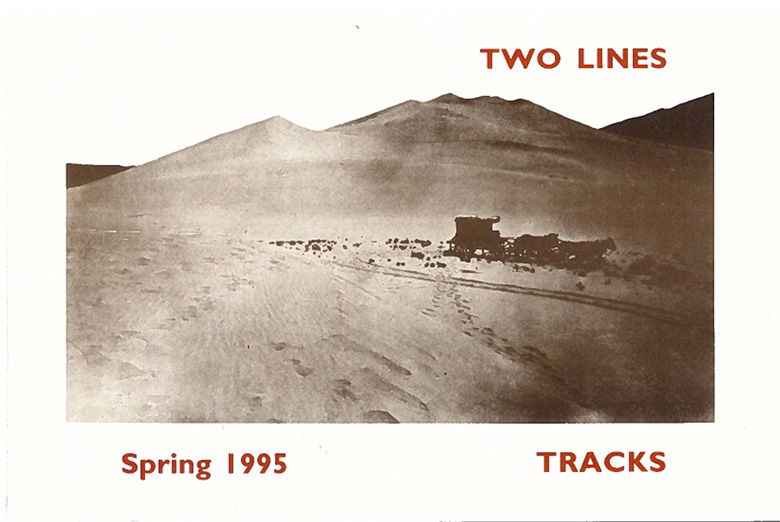
Two Lines 2: Tracks
Out of Print
If two are rowing a boat,
one knowledgeable about the stars,
the other knowledgeable about storms,
one will lead through the stars,
the other will lead through the storms,
and at the end, at the very end
in their recollection the sea
will be blue
The phenomenon of perceiving through traces is not limited to language. Sometimes effects are all we are given. A great medievalist used to compare medieval descriptions of angels with the contemporary definition of a quark: both admit the possibility of never identifying the thing in itself.
Tracks may lead to their maker; they may entirely trace a journey. They could even be fallen remnants, as after a conversation across a dinner table when we discover what is left behind on the table: the messages we sent—messages never received on the other side. In this issue we read about the tracks left by a memory, an animal, a word, a coat, a reflection, a sweating body, a loom; tracks left in the earth, on silk, in language, on poetry, within our minds and hearts and souls. Languages range from Bulgarian to Yiddish, from Oriya to Provençal; authors are Dada poets, or Buddhist monks, or Caribbean intellectuals, or storytellers from the island of Buru deep in the Moluccan Archipelago. —OLIVIA E. SEARS